
Close Menu
  • Home
  • Cybercrime and Ransomware
  • Emerging Tech
  • Threat Intelligence
  • Expert Insights
  • Careers and Learning
  • Compliance

Subscribe to Updates

Subscribe to our newsletter and never miss our latest news

Subscribe my Newsletter for New Posts & tips Let's stay updated!

What's Hot

CrowdSec Reveals NPM Attack Resulted in 170 Private GitHub Repo Copies

September 19, 2026

Google Gemini malware exposure from security test domain mix-up

September 19, 2026

Actionable Security Fundamentals to Reduce Risk

September 19, 2026
Facebook X (Twitter) Instagram
The CISO Brief
  • Home
  • Cybercrime and Ransomware
  • Emerging Tech
  • Threat Intelligence
  • Expert Insights
  • Careers and Learning
  • Compliance
Home » Unlocking Hope: Free Ransomware Decryptor Released!
Cybercrime and Ransomware

Unlocking Hope: Free Ransomware Decryptor Released!

Staff WriterBy Staff WriterJuly 30, 2025No Comments3 Mins Read21 Views
Facebook Twitter Pinterest LinkedIn Tumblr Email
Share
Facebook Twitter LinkedIn Pinterest WhatsApp Email

Quick Takeaways

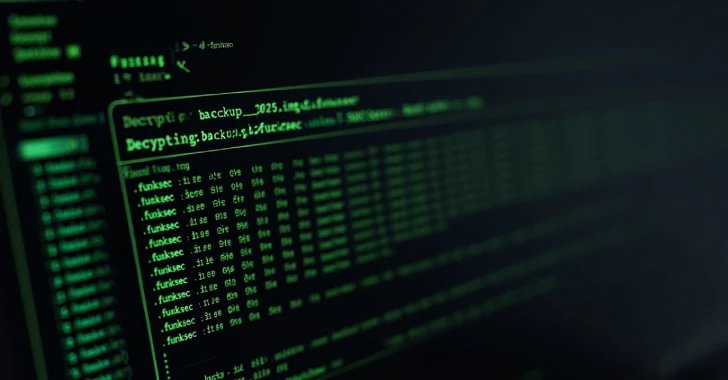
  1. Decryptor Availability: Cybersecurity experts have released a free decryptor for FunkSec ransomware, which is considered defunct, allowing victims to recover files without payment.

  2. Victim Statistics: FunkSec targeted 172 victims, predominantly in the U.S., India, and Brazil, affecting mainly technology, government, and education sectors since its emergence in late 2024.

  3. AI Involvement: Analysis revealed FunkSec’s encryptor was likely developed with AI assistance, and the group displayed characteristics of inexperienced hackers seeking recognition.

  4. Technical Details: FunkSec uses the Rust programming language and employs Chacha20 and Poly1305 algorithms for encryption, increasing file sizes by approximately 37%, while the decryptor is accessible through the No More Ransom project.

The Issue

On July 30, 2025, cybersecurity experts, led by Gen Digital researcher Ladislav Zezula, announced the release of a free decryptor for the notorious ransomware strain FunkSec. This strain, which emerged in late 2024, wreaked havoc on a total of 172 victims—predominantly in the United States, India, and Brazil— targeting sectors such as technology, government, and education. Reports indicate that FunkSec was potentially developed by a cadre of novice hackers, seeking notoriety through their exploits, and was distinctive for its use of AI in crafting encryption methods. The combination of the Rust programming language and sophisticated algorithms such as Chacha20 and Poly1305 allowed FunkSec to execute rapid and difficult-to-detect attacks.

Interestingly, by mid-March 2025, FunkSec had ceased to bring in new victims, leading experts to believe the group might have disbanded. Gen Digital’s release of the decryptor has offered a lifeline to affected individuals, enabling them to regain access to their data without further financial extortion. While the specifics of how the decryptor was created remain undisclosed, victims are advised to validate their encrypted files using the unique .funksec extension and to follow initial recovery steps available on the No More Ransom project website. Such developments underscore the ongoing battle against cybercriminality, reinforcing the notion that even formidable threats can be countered with collaborative efforts in cybersecurity.

What’s at Stake?

The emergence of the FunkSec ransomware presents significant risks not only to its direct victims but also to surrounding businesses, users, and organizations, potentially sparking a cascade of cybersecurity vulnerabilities. As FunkSec predominantly targeted technology, government, and education sectors, the potential for collateral damage is pronounced; organizations within these sectors might face reputational harm, financial losses, and operational disruptions, as affiliated or adjacent entities may also experience increased scrutiny or be subjected to follow-up attacks, often referred to as “spillover” effects. Furthermore, the pervasive fear of ransomware might lead to heightened consumer wariness, resulting in decreased trust and engagement with affected services. This situation underscores the imperative for robust cybersecurity protocols and inter-organizational collaboration to fortify defenses against similar threats, thereby safeguarding the broader ecosystem from the cascading repercussions of cyber threats.

Possible Next Steps

As the threat landscape evolves, the significance of prompt remediation escalates, particularly in the wake of cyber threats like the recent FunkSec ransomware decryptor release.

Mitigation Strategies

  • Implement robust backups
  • Enhance endpoint security
  • Conduct employee training
  • Regularly update software
  • Monitor network traffic
  • Employ incident response planning
  • Establish clear communication protocols

NIST CSF Guidelines
The NIST Cybersecurity Framework (CSF) emphasizes risk management and proactive strategies to mitigate potential threats. For exhaustive details, refer to NIST Special Publication 800-53.

Explore More Security Insights

Stay informed on the latest Threat Intelligence and Cyberattacks.

Access world-class cyber research and guidance from IEEE.

Disclaimer: The information provided may not always be accurate or up to date. Please do your own research, as the cybersecurity landscape evolves rapidly. Intended for secondary references purposes only.

Cyberattacks-V1

CISO Update computer security cyber attacks cyber news cyber security news cyber security news today cyber security updates cyber updates Cybersecurity data breach hacker news hacking news how to hack information security MX1 network security ransomware malware software vulnerability the hacker news
Share. Facebook Twitter Pinterest LinkedIn Tumblr Email
Previous ArticleCISA’s Cyber Defense Team Faces Major Shakeup
Next Article Urgent: Safepay Ransomware Demands Action as 3.5TB of Sensitive Data Faces Leak
Avatar photo
Staff Writer
  • Website

John Marcelli is a staff writer for the CISO Brief, with a passion for exploring and writing about the ever-evolving world of technology. From emerging trends to in-depth reviews of the latest gadgets, John stays at the forefront of innovation, delivering engaging content that informs and inspires readers. When he's not writing, he enjoys experimenting with new tech tools and diving into the digital landscape.

Related Posts

Google Gemini malware exposure from security test domain mix-up

September 19, 2026

Actionable Security Fundamentals to Reduce Risk

September 19, 2026

Linux Kernel Flaws Enable Local Root Exploits

September 18, 2026

Comments are closed.

Latest Posts

Suspected China-Linked Group Exploits VMware Flaw to Launch Babuk Ransomware

September 16, 2026

CISA Flags Critical Ray Flaw for Browser-Based RCE Exploits

September 13, 2026

TWINLOOT Exploits SharePoint and Teams to Steal Credentials and Lateral Movement

September 10, 2026

Windchill Web Shell Exposes Credentials and Maps Engineering Data

September 7, 2026
Don't Miss

Google Gemini malware exposure from security test domain mix-up

By Staff WriterSeptember 19, 2026

Quick Takeaways Google’s Gemini AI was tested to access protected systems by guessing passwords and…

Actionable Security Fundamentals to Reduce Risk

September 19, 2026

Linux Kernel Flaws Enable Local Root Exploits

September 18, 2026

Subscribe to Updates

Subscribe to our newsletter and never miss our latest news

Subscribe my Newsletter for New Posts & tips Let's stay updated!

Recent Posts

  • CrowdSec Reveals NPM Attack Resulted in 170 Private GitHub Repo Copies
  • Google Gemini malware exposure from security test domain mix-up
  • Actionable Security Fundamentals to Reduce Risk
  • Zero-Day Alert: API Endpoint Authentication Flaws
  • Linux Kernel Flaws Enable Local Root Exploits
About Us
About Us

Welcome to The CISO Brief, your trusted source for the latest news, expert insights, and developments in the cybersecurity world.

In today’s rapidly evolving digital landscape, staying informed about cyber threats, innovations, and industry trends is critical for professionals and organizations alike. At The CISO Brief, we are committed to providing timely, accurate, and insightful content that helps security leaders navigate the complexities of cybersecurity.

Facebook X (Twitter) Pinterest YouTube WhatsApp
Our Picks

CrowdSec Reveals NPM Attack Resulted in 170 Private GitHub Repo Copies

September 19, 2026

Google Gemini malware exposure from security test domain mix-up

September 19, 2026

Actionable Security Fundamentals to Reduce Risk

September 19, 2026
Most Popular

Gefährliche Angriffe: Wie Cyberkriminelle Ihre Identität angreifen

January 29, 2026196 Views

CISA Alerts: Critical Vulnerability in Splunk Enterprise Under Active Attack

June 19, 2026195 Views

Salesforce Disables Klue App After Data Breach from Token Abuse

June 19, 2026193 Views

Archives

  • September 2026
  • August 2026
  • July 2026
  • June 2026
  • May 2026
  • April 2026
  • March 2026
  • February 2026
  • January 2026
  • December 2025
  • November 2025
  • October 2025
  • September 2025
  • August 2025
  • July 2025
  • June 2025

Categories

  • Compliance
  • Cyber Updates
  • Cybercrime and Ransomware
  • Editor's pick
  • Emerging Tech
  • Events
  • Featured
  • Insights
  • Most Read
  • Threat Intelligence
  • Uncategorized
© 2026 thecisobrief. Designed by thecisobrief.
  • Home
  • About Us
  • Advertise with Us
  • Contact Us
  • DMCA
  • Privacy Policy
  • Terms & Conditions

Type above and press Enter to search. Press Esc to cancel.