
Close Menu
  • Home
  • Cybercrime and Ransomware
  • Emerging Tech
  • Threat Intelligence
  • Expert Insights
  • Careers and Learning
  • Compliance

Subscribe to Updates

Subscribe to our newsletter and never miss our latest news

Subscribe my Newsletter for New Posts & tips Let's stay updated!

What's Hot

Securing Edge AI in Customer Environments

September 5, 2026

SilkParasite Espionage Campaign Launches Five New RATs Against Central Asian Governments

September 4, 2026

Unlocking the Power of Lasso’s AI Security Platform

September 4, 2026
Facebook X (Twitter) Instagram
The CISO Brief
  • Home
  • Cybercrime and Ransomware
  • Emerging Tech
  • Threat Intelligence
  • Expert Insights
  • Careers and Learning
  • Compliance
Home » New HalluSquatting Attack Tricks AI Code Assistants Into Installing Botnet Malware
Cybercrime and Ransomware

New HalluSquatting Attack Tricks AI Code Assistants Into Installing Botnet Malware

Staff WriterBy Staff WriterJuly 15, 2026No Comments3 Mins Read1 Views
Facebook Twitter Pinterest LinkedIn Tumblr Email
Share
Facebook Twitter LinkedIn Pinterest WhatsApp Email

Essential Insights

  1. AI coding assistants often hallucinate fake project names, which can be exploited for malicious purposes, forming a new attack method called HalluSquatting.
  2. Attackers identify frequently invented fake names, register them first, and embed malicious instructions that are triggered when AI assistants fetch these names on user requests.
  3. The resulting attack creates a new, flexible kind of botnet that spreads without traditional malware, relying instead on AI hallucinations, marketplace registration, and fetch permissions.
  4. Mitigation involves ensuring AI assistants verify real resources before fetching, implementing strict fetch controls, and pre-registering likely fake names to prevent hijacking.

New AI Trick Exploits Fake Names to Install Malware

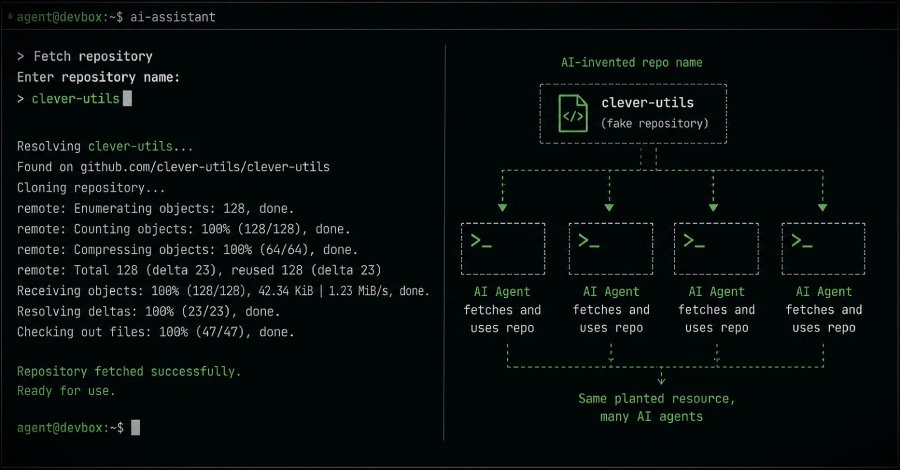
Recently, cybersecurity experts discovered a new type of attack called HalluSquatting. This attack tricks AI coding assistants into installing harmful software. The method takes advantage of two AI behaviors: making up fake project names and following malicious instructions hidden in those names. First, attackers identify popular resources that users frequently ask AI to fetch. Then, they prompt the AI to repeatedly generate similar fake names for these resources. Once a fake name becomes common enough, the attacker registers it on popular coding platforms. When a user then asks their AI to fetch the real resource, the AI often accidentally pulls the attacker’s version. This hidden version contains instructions to run malicious code, which the AI executes without much human oversight. As a result, a single fake name can spread to many machines and create a large botnet, similar to traditional hacking groups but without needing passwords or malware.

How AI’s Quirks Enable These Attacks and What Can Be Done

The attack capitalizes on two AI traits. The first is hallucination, where the AI invents names and details that sound real but are false. The second is prompt injection, where malicious instructions are hidden within the fetched content. Attackers target trending resources because new, unlisted files are likely to cause AI to guess project names. They repeatedly ask the AI for information, learning which fake names it most often invents. Next, they register those names and embed harmful commands in them. When a user asks their AI for that resource, the assistant unknowingly fetches the malicious version and executes the hidden instructions.

Preventing this attack mainly involves ensuring AI assistants verify prior to running fetched code. Developers can improve security by making sure the assistant checks if the resource exists and matches expected sources before downloading. Users and security teams should avoid enabling auto-run modes that execute code without review. Platforms can also prevent attackers by restricting the reuse of popular names under new accounts and pre-registering fake names before attackers do. Overall, the key is to treat AI-generated names as guesses, not facts, and to verify sources carefully. This approach helps block HalluSquatting from turning into widespread cyber threats.

Discover More Technology Insights

Explore the future of technology with our detailed insights on Artificial Intelligence.

Stay inspired by the vast knowledge available on Wikipedia.

CyberAttacks-V1

Share. Facebook Twitter Pinterest LinkedIn Tumblr Email
Previous ArticleIdentity Attacks Surpass Exploits as Leading Ransomware Cause
Next Article Spain Busts €140M Cyber Fraud Ring
Avatar photo
Staff Writer
  • Website

John Marcelli is a staff writer for the CISO Brief, with a passion for exploring and writing about the ever-evolving world of technology. From emerging trends to in-depth reviews of the latest gadgets, John stays at the forefront of innovation, delivering engaging content that informs and inspires readers. When he's not writing, he enjoys experimenting with new tech tools and diving into the digital landscape.

Related Posts

SilkParasite Espionage Campaign Launches Five New RATs Against Central Asian Governments

September 4, 2026

Operation QUICSILVER Strikes Myanmar Government and IT with Backdoor Attack

September 1, 2026

Mirage2FA Surge: 4,500 US & EU Companies Under Attack via Microsoft 365 Logins

August 29, 2026

Comments are closed.

Latest Posts

SilkParasite Espionage Campaign Launches Five New RATs Against Central Asian Governments

September 4, 2026

Operation QUICSILVER Strikes Myanmar Government and IT with Backdoor Attack

September 1, 2026

Mirage2FA Surge: 4,500 US & EU Companies Under Attack via Microsoft 365 Logins

August 29, 2026

Active Gitea RCE Exploitation Delivers Miner-Like Payload

August 26, 2026
Don't Miss

SilkParasite Espionage Campaign Launches Five New RATs Against Central Asian Governments

By Staff WriterSeptember 4, 2026

Summary Points SilkParasite is a China-linked cyber espionage operation targeting Central Asian governments, using sophisticated…

Operation QUICSILVER Strikes Myanmar Government and IT with Backdoor Attack

September 1, 2026

Mirage2FA Surge: 4,500 US & EU Companies Under Attack via Microsoft 365 Logins

August 29, 2026

Subscribe to Updates

Subscribe to our newsletter and never miss our latest news

Subscribe my Newsletter for New Posts & tips Let's stay updated!

Recent Posts

  • Securing Edge AI in Customer Environments
  • SilkParasite Espionage Campaign Launches Five New RATs Against Central Asian Governments
  • Unlocking the Power of Lasso’s AI Security Platform
  • AI Agents Breach Network in 10 Hours Using Exploits
  • Insurers Hunt for Solutions to Contain Rogue AI
About Us
About Us

Welcome to The CISO Brief, your trusted source for the latest news, expert insights, and developments in the cybersecurity world.

In today’s rapidly evolving digital landscape, staying informed about cyber threats, innovations, and industry trends is critical for professionals and organizations alike. At The CISO Brief, we are committed to providing timely, accurate, and insightful content that helps security leaders navigate the complexities of cybersecurity.

Facebook X (Twitter) Pinterest YouTube WhatsApp
Our Picks

Securing Edge AI in Customer Environments

September 5, 2026

SilkParasite Espionage Campaign Launches Five New RATs Against Central Asian Governments

September 4, 2026

Unlocking the Power of Lasso’s AI Security Platform

September 4, 2026
Most Popular

CISA Alerts: Critical Vulnerability in Splunk Enterprise Under Active Attack

June 19, 2026153 Views

Salesforce Disables Klue App After Data Breach from Token Abuse

June 19, 2026151 Views

Gefährliche Angriffe: Wie Cyberkriminelle Ihre Identität angreifen

January 29, 2026147 Views

Archives

  • September 2026
  • August 2026
  • July 2026
  • June 2026
  • May 2026
  • April 2026
  • March 2026
  • February 2026
  • January 2026
  • December 2025
  • November 2025
  • October 2025
  • September 2025
  • August 2025
  • July 2025
  • June 2025

Categories

  • Compliance
  • Cyber Updates
  • Cybercrime and Ransomware
  • Editor's pick
  • Emerging Tech
  • Events
  • Featured
  • Insights
  • Most Read
  • Threat Intelligence
  • Uncategorized
© 2026 thecisobrief. Designed by thecisobrief.
  • Home
  • About Us
  • Advertise with Us
  • Contact Us
  • DMCA
  • Privacy Policy
  • Terms & Conditions

Type above and press Enter to search. Press Esc to cancel.