

Essential Insights
- An exposed LiteLLM master key—left unrevoked after a May leak—let an attacker access the platform months later.
- The attacker stole organization-level GitHub credentials, secretly harvested more secrets, and hijacked LiteLLM’s release pipeline.
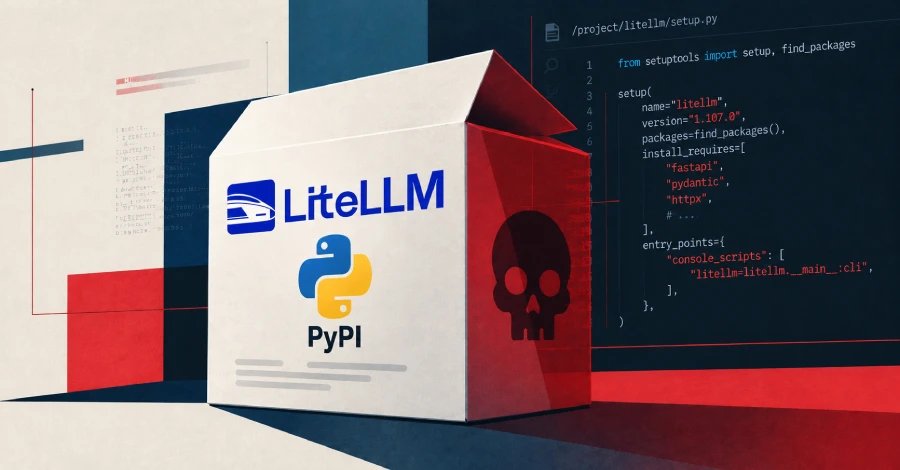
- LiteLLM 1.107.0 was malicious: it could steal credentials and install a backdoor that fetched attacker-controlled code.
- The compromised release was quarantined and affected image tags removed; LiteLLM began revoking credentials across its systems.
Leaked LiteLLM Key Enabled GitHub Token Theft and Release Pipeline Hijack
An old key opened the door
LiteLLM says an attacker used a master key that its team accidentally posted to a public GitHub repository in May 2026. The team removed the key from the visible commit, but did not revoke it. In October, the attacker used it to access LiteLLM’s agent platform and steal a GitHub token with owner-level access across the company’s repositories.
Next, the attacker used hidden, short-lived workflows to seek more credentials. The stolen access helped them alter LiteLLM’s release process and publish version 1.107.0 of the Python package. The attacker also published related container images. PyPI quarantined the package after researchers reported the attack, and LiteLLM removed or replaced affected image tags.
Why the incident matters
The compromised package could run code when Python started, even if a program did not import LiteLLM. It could collect credentials and system data, then send them to the attacker. A separate component could also download and run new code. As a result, simply removing the LiteLLM application might not clear every malicious file.
LiteLLM says it is revoking credentials tied to its internal systems and vendors. Users should check whether their environments ran version 1.107.0, follow official security guidance, and rotate exposed credentials. The incident also shows why teams must revoke leaked keys, limit each token’s access, and protect release approvals. These safeguards can make widely used AI tools safer to build and adopt, while preserving the practical benefits they offer developers and their users.
Stay Ahead with the Latest Tech Trends
Explore the future of technology with our detailed insights on Artificial Intelligence.
Explore past and present digital transformations on the Internet Archive.
DataProtection-V1
