

Top Highlights
- Over 300 Tor exits were hijacked in early October, redirecting SSH traffic through attacker-controlled servers.
- Password logins were at risk only if users accepted an unfamiliar SSH host key; key-based logins couldn’t be relayed to the real server.
- Tor removed the affected relays by October 5. Anyone who entered a password after accepting a changed or unfamiliar key should change it and check the server.
- Ebury was found on two relay-operator servers, exploiting weak password practices; how attackers accessed other affected hosts remains unknown.
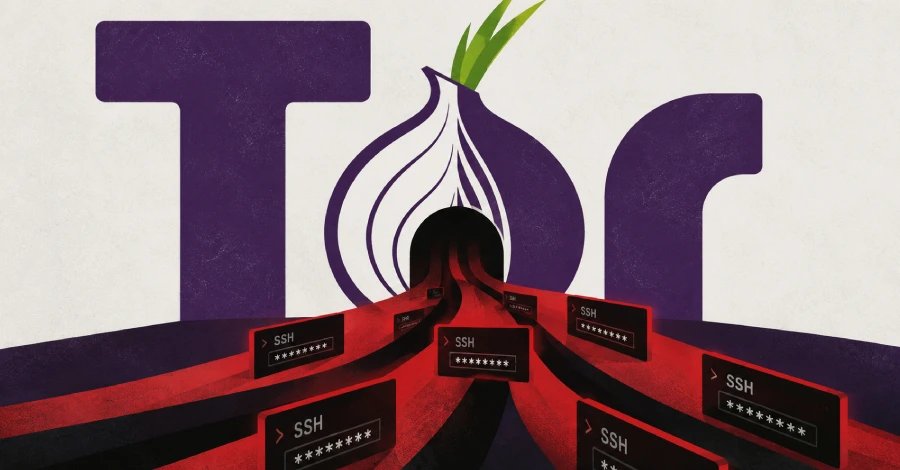
Attackers altered more than 300 Tor exit relays in early October to redirect SSH connections through servers that could steal passwords. The incident shows how a privacy network can still face risks when traffic reaches its destination—and why secure login habits matter.
How the relay attack worked
Tor sends internet traffic through a series of relays. The exit relay, the final stop, passes that traffic to its destination. Researchers found that attackers changed relay settings to allow SSH connections and send them to one of 12 interception servers.
A scan on October 2 found 333 relays redirecting SSH traffic. A separate review counted 377 relays whose settings matched the attack pattern. That match does not prove every relay had been compromised. At the peak, the affected relays represented 7.46% of Tor’s exit capacity.
The interception server could show users a different SSH security key. Anyone who accepted an unfamiliar key and then logged in with a password risked giving that password to the attackers. The server could still pass the session to its real destination, making the connection appear to work.
However, the attack could not use this method to steal a password from someone who logged in with an SSH key. It also required several conditions: a person had to connect through an affected exit between October 1 and October 5, accept the wrong key, and use password login. Researchers have no count of how many people met those conditions.
What users and relay operators should know
The Tor Project flagged affected relays, and by October 5, none remained on the network’s official relay list. An investigation traced one relay group’s compromise to Ebury, a backdoor that can steal login details. The exact cause of the other affected relays remains unclear.
Tor still offers a practical way to make internet activity harder to trace. But this incident shows that privacy tools cannot protect every connection after it leaves their network. Users who accepted an unfamiliar or changed SSH key during the attack window should treat any password they entered as stolen, change it, and check the server for signs of compromise.
For everyday SSH use, key-based login offers stronger protection against this specific interception method than passwords. Relay operators should also review their settings and investigate unexpected changes. The episode is a reminder that online privacy depends not only on the tools people choose, but also on careful security practices and continued monitoring.
Continue Your Tech Journey
Learn how the Internet of Things (IoT) is transforming everyday life.
Discover archived knowledge and digital history on the Internet Archive.
CyberAttacks-V1
