
Close Menu
  • Home
  • Cybercrime and Ransomware
  • Emerging Tech
  • Threat Intelligence
  • Expert Insights
  • Careers and Learning
  • Compliance

Subscribe to Updates

Subscribe to our newsletter and never miss our latest news

Subscribe my Newsletter for New Posts & tips Let's stay updated!

What's Hot

Strobes Security Welcomes Ed Adams as Strategic Advisor

March 18, 2026

Your Browser Turns Against You: The Rise of AI-Driven Attacks

March 18, 2026

Enhancing AI Systems: Unlocking Visibility for Proactive Risk Detection

March 18, 2026
Facebook X (Twitter) Instagram
The CISO Brief
  • Home
  • Cybercrime and Ransomware
  • Emerging Tech
  • Threat Intelligence
  • Expert Insights
  • Careers and Learning
  • Compliance
Home » Sparta v3.1 Enhances Space Cybersecurity with Advanced Controls and Innovative Research
Cybercrime and Ransomware

Sparta v3.1 Enhances Space Cybersecurity with Advanced Controls and Innovative Research

Staff WriterBy Staff WriterSeptember 11, 2025No Comments4 Mins Read1 Views
Facebook Twitter Pinterest LinkedIn Tumblr Email
Share
Facebook Twitter LinkedIn Pinterest WhatsApp Email

Summary Points

  1. The Aerospace Corporation’s SPARTA v3.1 update aligns space cybersecurity controls with NIST standards and enhances usability with new guides, mappings to MITRE’s EMB3D, and integration of attacker techniques.
  2. It introduces two novel techniques—host compromise for initial access and component collusion for defense evasion—highlighting emerging threats in space systems security.
  3. The update strengthens defense by linking high-level attack techniques to embedded hardware vulnerabilities through the SPARTA-EMB3D mapping, enabling prioritized and standardized mitigation strategies.
  4. The release of the SPARTA User’s Guide and related research promotes accessible, threat-informed risk assessment and defense practices while connecting space cybersecurity with broader industrial standards and frameworks.

Underlying Problem

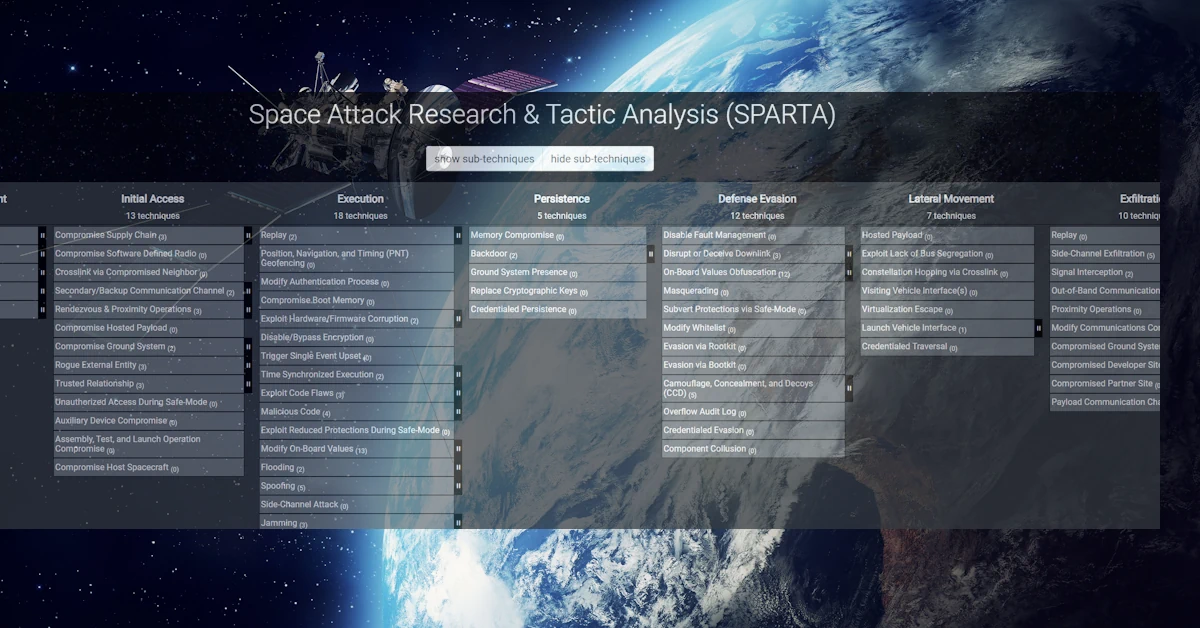
The Aerospace Corporation has recently released SPARTA v3.1, a comprehensive framework for assessing and defending space systems against cyber threats. This update introduces space-specific guidance aligned with U.S. security standards and incorporates new threat techniques, such as targeting host spacecraft for lateral attacks and exploiting multiple components simultaneously during manufacturing to evade detection. These techniques highlight how adversaries could compromise spacecraft hardware and software, especially through vulnerabilities in onboard systems or supply chain manipulation. The report detailing these developments emphasizes that these measures are aimed at protecting spacecraft from sophisticated cyber adversaries, with the Aerospace Corporation acting as the source documenting this progress, reflecting ongoing efforts to bolster space cybersecurity.

Moreover, the update enhances the framework’s interoperability by linking it with the MITRE EMB3D knowledge base, which maps embedded device threats to technical mitigations, enabling engineers to prioritize defenses based on risk and development stage. This integrated approach helps standardize threat assessments, making space systems more resilient at both mission and hardware levels. Alongside this, a new user guide aims to democratize the use of SPARTA tools, guiding users through threat modeling and defense strategies, ensuring that industry, government, and academia can effectively implement these advanced security measures. The overall narrative underscores the importance of evolving cybersecurity practices to address the increasing sophistication of space-based threats, with the Aerospace Corporation actively leading these initiatives.

Risks Involved

The Aerospace Corporation’s release of SPARTA v3.1 underscores escalating cyber risks to space systems by translating high-level security controls, like those from NIST and CNSSI, into space-specific contexts that address unique threats, vulnerabilities, and embedded device weaknesses. Notable threats, such as targeting spacecraft hosts to pivot into payloads or sophisticated supply chain component collusion, exemplify adversaries’ evolving tactics aimed at compromising both hardware and firmware. The integration with frameworks like MITRE EMB3D enhances threat detection and mitigation by linking mission-level attack techniques to underlying embedded vulnerabilities, fostering a standardized, tiered approach that balances immediate and long-term defenses amidst the constraints of spacecraft design. Additionally, the comprehensive user guide and cross-framework mappings democratize threat modeling, enabling engineers and operators to implement prioritized defenses aligned with global standards, ultimately fortifying space operations against increasingly sophisticated cyber adversaries and ensuring resilience across the entire mission architecture.

Possible Remediation Steps

Effective and timely remediation is crucial to safeguard space assets and maintain operational integrity, especially as SPARTA v3.1 advances cybersecurity measures through updated controls, innovative techniques, and ongoing research. Rapid response minimizes vulnerabilities, prevents exploitation, and ensures continued protection of critical space infrastructure.

Mitigation Steps:

  • Conduct Immediate Threat Assessment
  • Deploy Updated Security Controls
  • Implement Patch Management
  • Increase Monitoring and Detection
  • Conduct Staff Training and Awareness
  • Collaborate with Space Defense Authorities
  • Develop Incident Response Plans

Continue Your Cyber Journey

Stay informed on the latest Threat Intelligence and Cyberattacks.

Learn more about global cybersecurity standards through the NIST Cybersecurity Framework.

Disclaimer: The information provided may not always be accurate or up to date. Please do your own research, as the cybersecurity landscape evolves rapidly. Intended for secondary references purposes only.

Cyberattacks-V1

Aerospace Corporation CISO Update cyber attacks cyber threats Cybersecurity embedded device IEC 62443 intrusion detection MITRE EMB3D MX1 NIST space cybersecurity SPARTA v3.1
Share. Facebook Twitter Pinterest LinkedIn Tumblr Email
Previous ArticleCyberTech Daily: Key Insights and Highlights
Next Article Kaseya Welcomes New Chief Revenue Officer and CTO
Avatar photo
Staff Writer
  • Website

John Marcelli is a staff writer for the CISO Brief, with a passion for exploring and writing about the ever-evolving world of technology. From emerging trends to in-depth reviews of the latest gadgets, John stays at the forefront of innovation, delivering engaging content that informs and inspires readers. When he's not writing, he enjoys experimenting with new tech tools and diving into the digital landscape.

Related Posts

Your Browser Turns Against You: The Rise of AI-Driven Attacks

March 18, 2026

Enhancing AI Systems: Unlocking Visibility for Proactive Risk Detection

March 18, 2026

Uncovering the Hidden Pattern Behind Cisco’s Rising Vulnerabilities

March 18, 2026

Comments are closed.

Latest Posts

Uncovering the Hidden Pattern Behind Cisco’s Rising Vulnerabilities

March 18, 2026

Critical Firewall Zero-Day Breach Sparks Interlock Ransomware Attacks

March 18, 2026

New iOS Exploit: Advanced Tools Targeting iPhone Users to Steal Personal Data

March 18, 2026

FancyBear Server Leak Exposes Credentials, 2FA Secrets, and NATO-Linked Targets

March 18, 2026
Don't Miss

Your Browser Turns Against You: The Rise of AI-Driven Attacks

By Staff WriterMarch 18, 2026

Summary Points AI-powered browsers like Perplexity’s Comet can be hijacked through hidden prompt injections, leading…

Enhancing AI Systems: Unlocking Visibility for Proactive Risk Detection

March 18, 2026

Uncovering the Hidden Pattern Behind Cisco’s Rising Vulnerabilities

March 18, 2026

Subscribe to Updates

Subscribe to our newsletter and never miss our latest news

Subscribe my Newsletter for New Posts & tips Let's stay updated!

Recent Posts

  • Strobes Security Welcomes Ed Adams as Strategic Advisor
  • Your Browser Turns Against You: The Rise of AI-Driven Attacks
  • Enhancing AI Systems: Unlocking Visibility for Proactive Risk Detection
  • C2 Implant ‘SnappyClient’ Turns Its Focus to Crypto Wallets
  • Uncovering the Hidden Pattern Behind Cisco’s Rising Vulnerabilities
About Us
About Us

Welcome to The CISO Brief, your trusted source for the latest news, expert insights, and developments in the cybersecurity world.

In today’s rapidly evolving digital landscape, staying informed about cyber threats, innovations, and industry trends is critical for professionals and organizations alike. At The CISO Brief, we are committed to providing timely, accurate, and insightful content that helps security leaders navigate the complexities of cybersecurity.

Facebook X (Twitter) Pinterest YouTube WhatsApp
Our Picks

Strobes Security Welcomes Ed Adams as Strategic Advisor

March 18, 2026

Your Browser Turns Against You: The Rise of AI-Driven Attacks

March 18, 2026

Enhancing AI Systems: Unlocking Visibility for Proactive Risk Detection

March 18, 2026
Most Popular

Protecting MCP Security: Defeating Prompt Injection & Tool Poisoning

January 30, 202624 Views

The New Face of DDoS is Impacted by AI

August 4, 202523 Views

Absolute Launches GenAI Tools to Tackle Endpoint Risk

August 7, 202515 Views

Archives

  • March 2026
  • February 2026
  • January 2026
  • December 2025
  • November 2025
  • October 2025
  • September 2025
  • August 2025
  • July 2025
  • June 2025

Categories

  • Compliance
  • Cyber Updates
  • Cybercrime and Ransomware
  • Editor's pick
  • Emerging Tech
  • Events
  • Featured
  • Insights
  • Threat Intelligence
  • Uncategorized
© 2026 thecisobrief. Designed by thecisobrief.
  • Home
  • About Us
  • Advertise with Us
  • Contact Us
  • DMCA
  • Privacy Policy
  • Terms & Conditions

Type above and press Enter to search. Press Esc to cancel.