
Close Menu
  • Home
  • Cybercrime and Ransomware
  • Emerging Tech
  • Threat Intelligence
  • Expert Insights
  • Careers and Learning
  • Compliance

Subscribe to Updates

Subscribe to our newsletter and never miss our latest news

Subscribe my Newsletter for New Posts & tips Let's stay updated!

What's Hot

CISA Highlights Exploitation of Linux Root Access Vulnerability CVE-2026-31431

May 3, 2026

Security Flaw Triggers CI/CD Supply Chain Attack

May 2, 2026

Secure the Future: Why PAM with ITDR Is Key to 2026 Identity Defense

May 2, 2026
Facebook X (Twitter) Instagram
The CISO Brief
  • Home
  • Cybercrime and Ransomware
  • Emerging Tech
  • Threat Intelligence
  • Expert Insights
  • Careers and Learning
  • Compliance
Home » 30,000 Facebook Accounts Compromised in Massive Phishing Scam
Uncategorized

30,000 Facebook Accounts Compromised in Massive Phishing Scam

Staff WriterBy Staff WriterMay 2, 2026No Comments3 Mins Read1 Views
Facebook Twitter Pinterest LinkedIn Tumblr Email
Share
Facebook Twitter LinkedIn Pinterest WhatsApp Email

Quick Takeaways

  1. A Vietnamese-linked operation, known as AccountDumpling, uses Google AppSheet as a "phishing relay" to target Facebook accounts, compromising around 30,000 users.
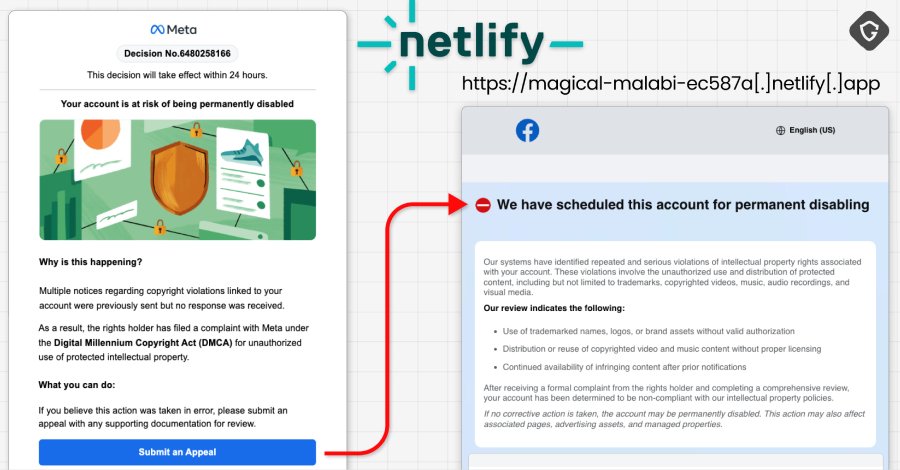
  2. The attack starts with spoofed emails claiming to be from Meta Support, prompting victims to a fake webpage designed to steal login credentials.
  3. The campaign employs various scare tactics—like account disablement and job offers—and hosts fake help pages and PDFs to harvest sensitive data.
  4. Evidence links the operation to a Vietnamese digital marketing business ("phamtaitan.vn"), highlighting a large, organized cybercriminal ecosystem trading stolen Facebook assets.

Phishing Campaign Uses Google AppSheet to Steal Facebook Accounts

Recently, a new type of cyberattack has emerged that targets Facebook users. Hackers from Vietnam are using a Google AppSheet platform to send deceptive emails. These emails pretend to be from Meta Support, warning users to act quickly or lose access to their accounts forever. The emails contain a false sense of urgency, pushing victims to click on fake links. Once clicked, victims land on fake web pages designed to steal their login details and personal information. This method cleverly bypasses spam filters because the emails come from a legitimate-looking AppSheet address. In just a few weeks, around 30,000 Facebook accounts have been compromised through this campaign.

The attackers have created a sophisticated operation. They set up real-time control panels, use advanced ways to avoid detection, and keep evolving their tactics. This ongoing criminal effort is not just about stealing accounts; it also involves selling these accounts on underground markets. The stolen accounts are most often sold for monetary gain. This campaign shows how cybercriminals continually adapt, using trusted platforms creatively to carry out illegal activities. It highlights a broader problem of cyber threats evolving rapidly and finding new ways to exploit popular social media platforms.

Fake Emails and Phishing Tactics Fueling the Attack

The attack begins with phishing emails that look very convincing. They claim to be from Meta Support, warning about account issues like disablement or verification problems. These emails are sent from a Google AppSheet address, making them seem legitimate and helping them get past spam filters. The message then directs users to fake websites hosted on platforms like Netlify and Vercel. These sites mimic official Facebook pages, asking for personal data such as birth dates, phone numbers, and government IDs. Some of these fake pages include CAPTCHA checks before collecting user information.

Furthermore, the hackers use a variety of tactics to tempt victims. They send PDFs that appear to contain account verification instructions, fake job offers from well-known companies, and alerts about account problems. These tricks entice users into revealing passwords, two-factor authentication codes, and browsing screenshots. Most of the victims are based in countries like the United States, Italy, Canada, India, and others. The collected data is then transferred through Telegram channels for the hackers’ benefit. Evidence from the campaign points to a large operation run by individuals using a website offering digital marketing services, revealing a complex network behind these malicious activities.

Expand Your Tech Knowledge

Explore the future of technology with our detailed insights on Artificial Intelligence.

Discover archived knowledge and digital history on the Internet Archive.

DataProtection-V1

Share. Facebook Twitter Pinterest LinkedIn Tumblr Email
Previous ArticleTrellix Breach: Hackers Gain Unauthorized Repository Access
Next Article Secure the Future: Why PAM with ITDR Is Key to 2026 Identity Defense
Avatar photo
Staff Writer
  • Website

John Marcelli is a staff writer for the CISO Brief, with a passion for exploring and writing about the ever-evolving world of technology. From emerging trends to in-depth reviews of the latest gadgets, John stays at the forefront of innovation, delivering engaging content that informs and inspires readers. When he's not writing, he enjoys experimenting with new tech tools and diving into the digital landscape.

Related Posts

Trellix Confirms Security Breach via Unauthorized Repository Access

May 2, 2026

Cybersecurity Duo Sentenced to 4 Years for BlackCat Ransomware Attacks

May 2, 2026

China-Linked Hackers Attack Asian Governments, NATO, Journalists, and Activists

May 1, 2026

Comments are closed.

Latest Posts

Trellix Breach: Hackers Gain Unauthorized Repository Access

May 2, 2026

Global Cyber Threat Brief: Identity Breaches, Supply Chain Attacks, and Organized Crime Surge

May 2, 2026

cPanelSniper: PoC Exploit Exposes 44,000 Servers

May 2, 2026

Inside the Revolt: GitHub Tensions, AI Data Deletion, and Claude Security Beta

May 1, 2026
Don't Miss

Trellix Confirms Security Breach via Unauthorized Repository Access

By Staff WriterMay 2, 2026

Essential Insights Trellix experienced a breach exposing part of its source code, prompting immediate investigation…

Cybersecurity Duo Sentenced to 4 Years for BlackCat Ransomware Attacks

May 2, 2026

China-Linked Hackers Attack Asian Governments, NATO, Journalists, and Activists

May 1, 2026

Subscribe to Updates

Subscribe to our newsletter and never miss our latest news

Subscribe my Newsletter for New Posts & tips Let's stay updated!

Recent Posts

  • CISA Highlights Exploitation of Linux Root Access Vulnerability CVE-2026-31431
  • Security Flaw Triggers CI/CD Supply Chain Attack
  • Secure the Future: Why PAM with ITDR Is Key to 2026 Identity Defense
  • 30,000 Facebook Accounts Compromised in Massive Phishing Scam
  • Trellix Breach: Hackers Gain Unauthorized Repository Access
About Us
About Us

Welcome to The CISO Brief, your trusted source for the latest news, expert insights, and developments in the cybersecurity world.

In today’s rapidly evolving digital landscape, staying informed about cyber threats, innovations, and industry trends is critical for professionals and organizations alike. At The CISO Brief, we are committed to providing timely, accurate, and insightful content that helps security leaders navigate the complexities of cybersecurity.

Facebook X (Twitter) Pinterest YouTube WhatsApp
Our Picks

CISA Highlights Exploitation of Linux Root Access Vulnerability CVE-2026-31431

May 3, 2026

Security Flaw Triggers CI/CD Supply Chain Attack

May 2, 2026

Secure the Future: Why PAM with ITDR Is Key to 2026 Identity Defense

May 2, 2026
Most Popular

Protecting MCP Security: Defeating Prompt Injection & Tool Poisoning

January 30, 202631 Views

Unlock the Power of Free WormGPT: Harnessing DeepSeek, Gemini, and Kimi-K2 AI Models

November 27, 202527 Views

The New Face of DDoS is Impacted by AI

August 4, 202526 Views

Archives

  • May 2026
  • April 2026
  • March 2026
  • February 2026
  • January 2026
  • December 2025
  • November 2025
  • October 2025
  • September 2025
  • August 2025
  • July 2025
  • June 2025

Categories

  • Compliance
  • Cyber Updates
  • Cybercrime and Ransomware
  • Editor's pick
  • Emerging Tech
  • Events
  • Featured
  • Insights
  • Most Read
  • Threat Intelligence
  • Uncategorized
© 2026 thecisobrief. Designed by thecisobrief.
  • Home
  • About Us
  • Advertise with Us
  • Contact Us
  • DMCA
  • Privacy Policy
  • Terms & Conditions

Type above and press Enter to search. Press Esc to cancel.