
Close Menu
  • Home
  • Cybercrime and Ransomware
  • Emerging Tech
  • Threat Intelligence
  • Expert Insights
  • Careers and Learning
  • Compliance

Subscribe to Updates

Subscribe to our newsletter and never miss our latest news

Subscribe my Newsletter for New Posts & tips Let's stay updated!

What's Hot

Malicious npm Package Exfiltrates Credentials via Twilio Probe

September 22, 2026

Microsoft and Google disrupt RedVDS cybercrime marketplace.

September 22, 2026

CAIRN Detects AI-Driven Malware via Frontier Tracking

September 22, 2026
Facebook X (Twitter) Instagram
The CISO Brief
  • Home
  • Cybercrime and Ransomware
  • Emerging Tech
  • Threat Intelligence
  • Expert Insights
  • Careers and Learning
  • Compliance
Home » Oracle Fixes Critical Bug in Cloud Code Editor
Uncategorized

Oracle Fixes Critical Bug in Cloud Code Editor

Staff WriterBy Staff WriterJuly 16, 2025No Comments4 Mins Read8 Views
Facebook Twitter Pinterest LinkedIn Tumblr Email
Share
Facebook Twitter LinkedIn Pinterest WhatsApp Email


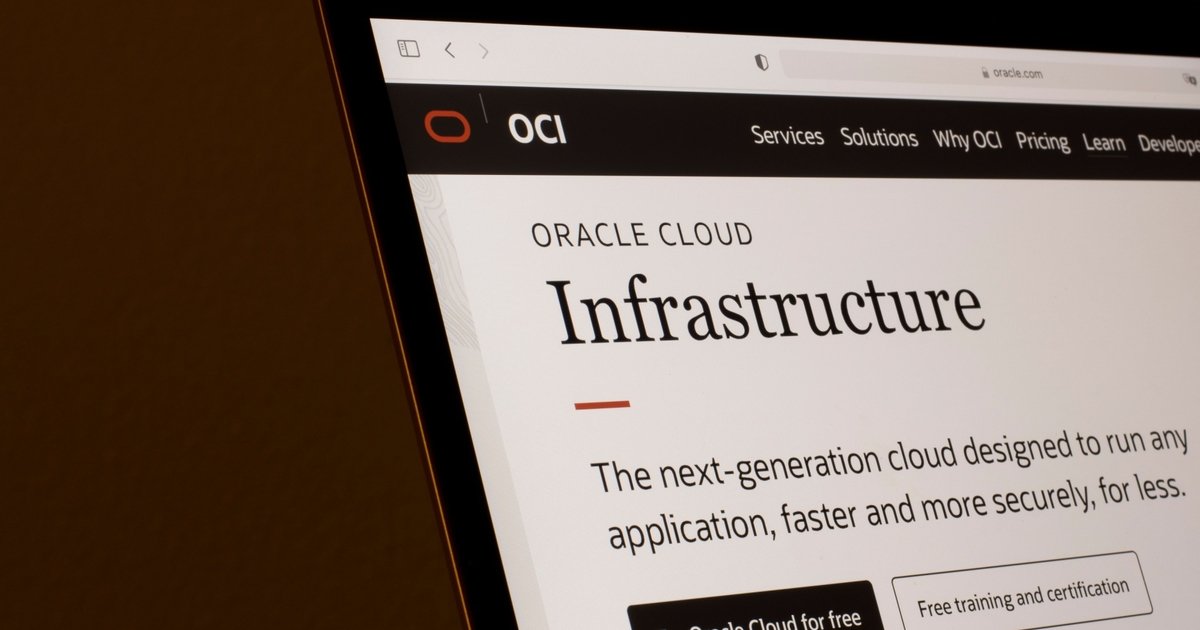
Cloud integrations promise easier access to tools, shared sessions, and unified workflows. But as a newly discovered vulnerability in Oracle Cloud Infrastructure (OCI) Code Editor shows, they can also quietly expose critical security gaps.

Researchers at Tenable identified the now-remediated critical remote code execution (RCE) flaw while analyzing how Code Editor interacts with its Cloud Shell command-line environment.

Tightly Integrated

Code Editor is an integrated development environment in OCI that lets developers write, edit, and manage code directly in their cloud environment without leaving the browser. It eliminates the need for them to download, install, and configure local development tools. Code Editor is integrated with other OCI developer services such as Resource Manager and Functions and Data Science. It also uses Cloud Shell to run commands and scripts.

Oracle Cloud Shell itself is a browser-based command-line interface that provides pre-authenticated access to Oracle Cloud resources. Code Editor and Cloud Shell share the same underlying file system and user session data within OCI, meaning files edited or created in either environment are immediately accessible in the other.

Tenable decided to look for potential vulnerabilities and entry points for attacks in these tightly integrated OCI services. “Code Editor is often treated by researchers and users as a sandboxed, isolated space, but its deep interface with Resource Manager, Functions and Data Science suggests otherwise,” Tenable security researcher Liv Matan wrote in a blog this week. “Our intuition was simple: if a developer can upload files easily, can an attacker?” The answer, it quickly turned out, was a yes.

Related:Cognida.ai Launches Codien: An AI Agent to Modernize Legacy Test Automation and Fast-Track Test Creation

Tenable researchers first probed Cloud Shell and its file upload mechanisms for potential security issues and found nothing to suggest trouble. So they switched their attention to Code Editor and found an issue with a file upload endpoint that it shared with Cloud Shell.

Specifically, the vulnerability stemmed from a missing Cross-Site Request Forgery (CSRF) check on a router that handles file uploads and downloads within Code Editor.

CSRF checks are essential to preventing malicious websites from tricking a user’s browser into performing actions on other Web apps and sites where they might be logged in. Tenable found the router’s handling of authentication cookies to be insecure and offering no protection at all against CSRF requests, meaning any website could trigger the endpoint and take action on behalf of the user so long as they are logged into OCI.

Related:Lessons Learned From McDonald’s Big AI Flub

Open Door

“In essence: an attacker could create a webpage that, when visited by an authenticated Oracle Cloud Infrastructure user, would upload a malicious file to their Cloud Editor without their knowledge,” Matan wrote. “Since Code Editor uses Cloud Shell’s file system behind the scenes, the file uploaded will be uploaded to the victim’s Cloud Shell.”

Tenable found that once an attacker successfully hijacks a victim’s Cloud Shell, they could then quickly move to other tightly integrated OCI services such as Resource Manager, Functions and Data Science. “In essence, what begins as a simple CSRF exploit targeting file uploads on Cloud Shell quickly escalates into a multi-surface threat, compromising not just the shell, but the full suite of developer tools around it,” Matan noted. The vulnerability gave attackers a way to use a victim’s permissions on OCI to access sensitive data, deploy unauthorized resources, and move laterally to integrated OCI services. All that was required was for a user to be authenticated to their OCI account when they visited the malicious website.

Oracle has since patched the vulnerability by enforcing CSRF protections, which included requiring a custom token header. Requests without the custom header are summarily rejected, meaning the vulnerability is no longer exploitable, Matan said.

Related:Agentic AI’s Risky MCP Backbone Opens Brand-New Attack Vectors

The vulnerability highlights the often hidden risks in tightly integrated, Jenga-like cloud environments where cloud providers tend to stack services on top of each other, often WITH unseen building blocks. In such environments, if one service is compromised, services built on top of it MAY inherit those same risks and vulnerabilities. “This realization is a critical lesson in modern cloud security research: integrations aren’t just conveniences; they’re potential points for vulnerabilities,” Matan said.


Source link

Share. Facebook Twitter Pinterest LinkedIn Tumblr Email
Previous ArticleCyber Threat: Hackers Use Teams to Deploy Matanbuchus 3.0 Malware
Next Article Army Soldier Admits Guilt in Tech Extortion Scheme
Avatar photo
Staff Writer
  • Website

John Marcelli is a staff writer for the CISO Brief, with a passion for exploring and writing about the ever-evolving world of technology. From emerging trends to in-depth reviews of the latest gadgets, John stays at the forefront of innovation, delivering engaging content that informs and inspires readers. When he's not writing, he enjoys experimenting with new tech tools and diving into the digital landscape.

Related Posts

CrowdSec Reveals NPM Attack Resulted in 170 Private GitHub Repo Copies

September 19, 2026

Gyazo Breach Exposes Over 23 Million User Records and Nearly 500 Million Image Metadata Entries

September 17, 2026

Russian State Hackers Rebuild Malware Using Claude After Detection

September 11, 2026
Leave A Reply Cancel Reply

Latest Posts

Urgent: Exploitation of SAP Commerce Cloud CVE-2026-58231 Sparks Immediate Threat

September 19, 2026

Suspected China-Linked Group Exploits VMware Flaw to Launch Babuk Ransomware

September 16, 2026

CISA Flags Critical Ray Flaw for Browser-Based RCE Exploits

September 13, 2026

TWINLOOT Exploits SharePoint and Teams to Steal Credentials and Lateral Movement

September 10, 2026
Don't Miss

CrowdSec Reveals NPM Attack Resulted in 170 Private GitHub Repo Copies

By Staff WriterSeptember 19, 2026

Essential Insights CrowdSec’s private GitHub repositories were copied by an attacker using an employee’s compromised…

Gyazo Breach Exposes Over 23 Million User Records and Nearly 500 Million Image Metadata Entries

September 17, 2026

Russian State Hackers Rebuild Malware Using Claude After Detection

September 11, 2026

Subscribe to Updates

Subscribe to our newsletter and never miss our latest news

Subscribe my Newsletter for New Posts & tips Let's stay updated!

Recent Posts

  • Malicious npm Package Exfiltrates Credentials via Twilio Probe
  • Microsoft and Google disrupt RedVDS cybercrime marketplace.
  • CAIRN Detects AI-Driven Malware via Frontier Tracking
  • SideCopy uses reverse RAT spear-phishing to target Indian academia
  • Hidden meta settings enable AI backdoor exploitation
About Us
About Us

Welcome to The CISO Brief, your trusted source for the latest news, expert insights, and developments in the cybersecurity world.

In today’s rapidly evolving digital landscape, staying informed about cyber threats, innovations, and industry trends is critical for professionals and organizations alike. At The CISO Brief, we are committed to providing timely, accurate, and insightful content that helps security leaders navigate the complexities of cybersecurity.

Facebook X (Twitter) Pinterest YouTube WhatsApp
Our Picks

Malicious npm Package Exfiltrates Credentials via Twilio Probe

September 22, 2026

Microsoft and Google disrupt RedVDS cybercrime marketplace.

September 22, 2026

CAIRN Detects AI-Driven Malware via Frontier Tracking

September 22, 2026
Most Popular

Gefährliche Angriffe: Wie Cyberkriminelle Ihre Identität angreifen

January 29, 2026205 Views

CISA Alerts: Critical Vulnerability in Splunk Enterprise Under Active Attack

June 19, 2026204 Views

Salesforce Disables Klue App After Data Breach from Token Abuse

June 19, 2026202 Views

Archives

  • September 2026
  • August 2026
  • July 2026
  • June 2026
  • May 2026
  • April 2026
  • March 2026
  • February 2026
  • January 2026
  • December 2025
  • November 2025
  • October 2025
  • September 2025
  • August 2025
  • July 2025
  • June 2025

Categories

  • Compliance
  • Cyber Updates
  • Cybercrime and Ransomware
  • Editor's pick
  • Emerging Tech
  • Events
  • Featured
  • Insights
  • Most Read
  • Threat Intelligence
  • Uncategorized
© 2026 thecisobrief. Designed by thecisobrief.
  • Home
  • About Us
  • Advertise with Us
  • Contact Us
  • DMCA
  • Privacy Policy
  • Terms & Conditions

Type above and press Enter to search. Press Esc to cancel.