

Quick Takeaways
-
Impersonation Campaign: Threat actors are using fake Microsoft OAuth applications, impersonating businesses like Adobe and Docusign, to execute credential harvesting attacks as part of account takeover efforts.
-
Phishing Techniques: Victims receive phishing emails from compromised accounts, luring them to grant permissions on a fake Microsoft OAuth page, which utilizes adversary-in-the-middle (AiTM) phishing to capture credentials and MFA codes.
-
Widespread Impact: Since early 2025, nearly 3,000 accounts across over 900 Microsoft 365 environments have been compromised, with the threat landscape progressively evolving toward targeted user identity attacks.
- Security Enhancements: Microsoft plans to enhance security by blocking legacy authentication and requiring admin consent for third-party apps by August 2025, which could mitigate these kinds of attacks and improve overall system security.
What’s the Problem?
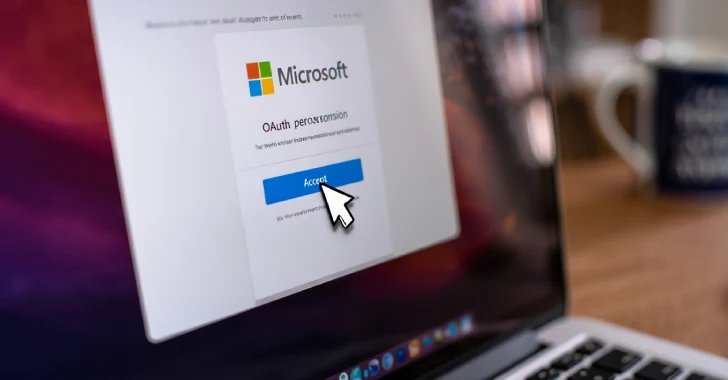
Cybersecurity researchers have recently unveiled a sophisticated campaign targeting users of Microsoft 365, orchestrated by threat actors who exploit fake Microsoft OAuth applications to harvest credentials. The attackers, masquerading as reputable enterprises such as RingCentral and Adobe, initiate their schemes through phishing emails sent from compromised accounts. These missives entice recipients with deceptively benign links—presented under the guise of sharing requests or business contracts—that direct users to a fraudulent Microsoft OAuth page named “iLSMART.” Here, victims, regardless of their consent to the requested permissions, inadvertently grant access to their profiles, which sets the stage for advanced adversary-in-the-middle (AitM) phishing tactics to capture not only usernames and passwords but also multi-factor authentication codes, thereby facilitating account takeovers.
This alarming development, which first came to light in early 2025, has culminated in roughly 3,000 attempted compromises across more than 900 Microsoft 365 environments, with the most recent campaigns reflecting an evolving threat landscape. Researchers from Proofpoint highlight the innovative nature of these attacks and predict that credential phishing will rise as a prevalent modus operandi for cybercriminals. In response to this increasing threat, Microsoft has announced forthcoming enhancements to its security protocols, including the blocking of legacy authentication and requiring administrator consent for third-party app access. These updates, expected by August 2025, aim to curb the effectiveness of such phishing attempts and solidify defenses against the rising tide of identity theft orchestrated by organized threat actors.
Security Implications
The recent surge in cyberattacks leveraging bogus Microsoft OAuth applications presents significant risks not only to the targeted organizations but also extends far-reaching implications for other businesses, users, and industries at large. As threat actors strategically impersonate trusted platforms like Adobe and SharePoint, they exploit common reliance on OAuth for authentication, enabling an environment ripe for credential harvesting and account takeover. This contagion effect risks undermining user trust across entire ecosystems, potentially leading to widespread financial loss, data breaches, and reputational damage for uninvolved entities. Additionally, as compromised accounts proliferate, the security posture of interconnected organizations becomes increasingly vulnerable; a breach in one could cascade into collateral damage, jeopardizing sensitive data and prompting costly remediation efforts. The ongoing evolution of these cyber tactics underscores the urgent need for enhanced vigilance and proactive security measures to safeguard collective interests against this insidious cyber threat landscape.
Possible Next Steps
In an era where cyber threats evolve at a breakneck pace, timely remediation is paramount, particularly regarding the utilization of counterfeit OAuth applications, such as those deployed with the Tycoon Kit, to compromise Microsoft 365 accounts.
Mitigation Steps
- User Education: Conduct training sessions on recognizing phishing attempts.
- App Vetting: Implement stringent app approval processes for OAuth applications.
- Multi-Factor Authentication (MFA): Enforce MFA across all accounts to add an additional security layer.
- Monitoring and Alerts: Utilize monitoring tools to detect unusual account activities and set alerts for suspicious OAuth app activity.
- Endpoint Protection: Ensure robust endpoint security solutions are in place to detect malicious activities.
- Access Management: Regularly review and revoke unnecessary permissions for OAuth apps.
NIST CSF Guidance
The NIST Cybersecurity Framework (CSF) emphasizes continuous risk assessment and effective response strategies. For issues surrounding unauthorized access and OAuth vulnerabilities, refer to NIST Special Publication 800-63, which provides extensive guidance on identity verification and authentication measures.
Stay Ahead in Cybersecurity
Discover cutting-edge developments in Emerging Tech and industry Insights.
Understand foundational security frameworks via NIST CSF on Wikipedia.
Disclaimer: The information provided may not always be accurate or up to date. Please do your own research, as the cybersecurity landscape evolves rapidly. Intended for secondary references purposes only.
Cyberattacks-V1
