

Essential Insights
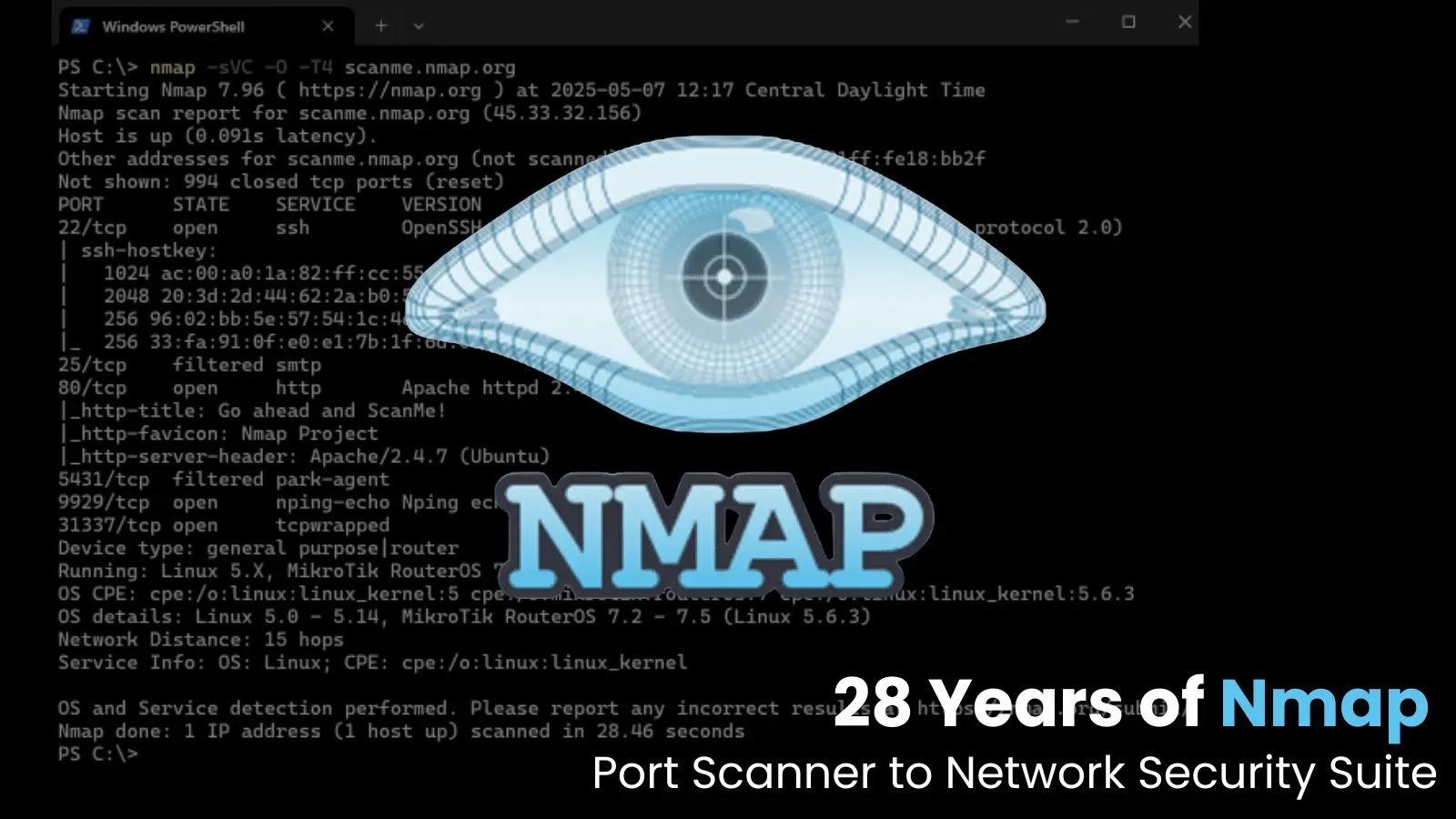
- Nmap, launched in 1997, has evolved from a simple Linux port scanner into a comprehensive toolkit for network discovery, OS detection, scripting, and security assessment, supporting Windows, UNIX, and IPv6.
- Key milestones include introducing OS detection (2000), Windows support (2000), the Nmap Scripting Engine (2006), and widespread adoption in media, notably in "The Matrix Reloaded" (2003).
- The project heavily relies on community contributions, with ongoing development of advanced features like web scanning, cloud-based services, and expanded scripting, ensuring its adaptability to modern network challenges.
- Future plans focus on enhancing scripting, web integration, virtualized infrastructure, internationalization, and cloud-based scanning to address emerging network security needs and evolving technologies.
The Issue
Nmap, a powerful network discovery and security assessment tool, has evolved dramatically since its modest inception in 1997, when Fyodor released a simple Linux port scanner. Over the years, through continual innovation driven by its open-source community, Nmap expanded from a basic scanner into a comprehensive toolkit featuring OS detection, scripting capabilities, and support for multiple operating systems, including Windows. Its development has been marked by significant milestones—such as the introduction of XML output, the Nmap Scripting Engine, and support for IPv6—transforming it into a crucial resource for cybersecurity professionals, researchers, and even popular culture, notably being showcased in The Matrix Reloaded. The team behind Nmap, including individual contributors and organizations like Google Summer of Code, actively reports on its progress and future plans, which focus on enhancing scripting, web scanning, cloud integration, and internationalization, ensuring that Nmap remains at the forefront of network security tools amid evolving technological challenges.
The story of Nmap is one of relentless innovation, community-driven development, and adaptability, with its 28-year history demonstrating how a simple port scanner grew into an indispensable utility in the cybersecurity landscape. Its creators and maintainers—reporting on its progress and future goals—highlight ongoing efforts to improve and expand its features, ensuring that Nmap continues to meet the complex needs of modern network security. As it ventures into new territories like cloud-based scanning and web integration, the overarching narrative underscores its enduring commitment to exploration, open-source collaboration, and tackling emerging network threats, solidifying its place as a vital instrument for safeguarding digital infrastructure worldwide.
Security Implications
Nmap, a foundational tool in network discovery and security assessment since 1997, has evolved into a comprehensive, open-source suite that significantly influences cybersecurity by mapping networks, identifying vulnerabilities, and detecting malicious activities. Its capabilities—ranging from OS detection, scripting, and packet crafting to automation—permit cyber adversaries to probe and exploit network weaknesses, underscoring risks like unauthorized access, data breaches, and service disruptions. As Nmap progresses, these very functionalities can be weaponized, making organizations vulnerable to reconnaissance efforts, advanced scans, and evasive tactics. Consequently, while Nmap’s innovation advances network security, it simultaneously amplifies the attack surface for cybercriminals, emphasizing the critical need for robust defenses, vigilant monitoring, and continuous security improvement to mitigate potential damage from exploitation.
Fix & Mitigation
Ensuring timely remediation of vulnerabilities identified by Nmap is crucial in maintaining a secure network environment, especially given the evolution of Nmap from a basic port scanner to a robust security suite. Prompt action prevents potential exploitation, minimizes damage, and sustains organizational integrity.
Mitigation Steps
Patch Management
Regularly applying software updates and patches to operating systems, services, and applications to close known vulnerabilities.
Firewall Configuration
Refining firewall rules to restrict unauthorized access based on insights gained from Nmap scans.
Access Controls
Implementing strict user permissions and multi-factor authentication to limit sensitive resource exposure.
Network Segmentation
Dividing the network into segments to contain potential breaches and limit lateral movement.
Regular Monitoring
Continuous surveillance of network traffic to detect and respond to unusual activities swiftly.
Vulnerability Scanning
Complementing Nmap scans with dedicated vulnerability assessments for in-depth insights.
Incident Response Planning
Developing and rehearsing procedures for quick reaction to security incidents prompted by scan findings.
Stay Ahead in Cybersecurity
Stay informed on the latest Threat Intelligence and Cyberattacks.
Access world-class cyber research and guidance from IEEE.
Disclaimer: The information provided may not always be accurate or up to date. Please do your own research, as the cybersecurity landscape evolves rapidly. Intended for secondary references purposes only.
Cyberattacks-V1
