

Quick Takeaways
- AI data centers, like traditional ones, are vulnerable to common cyber threats such as DDoS, ransomware, supply chain, and social engineering attacks, with added risk from side-channel attacks due to hardware vulnerabilities.
- Hardware components in data centers, including CPUs, GPUs, ASICs, and FPGAs, can leak sensitive information through side-channel attacks, exemplified by AMD’s 2025 processor vulnerabilities.
- AI data centers employ specialized hardware like GPUs, ASICs (e.g., Google’s TPU), and FPGAs to meet high compute demands, but these components are also targets for sophisticated side-channel attacks.
- The increasing use of powerful, customizable hardware in AI data centers expands the attack surface, with recent threats like TPUXtract exemplifying how adversaries can infer AI model parameters through side-channel exploits.
The Core Issue
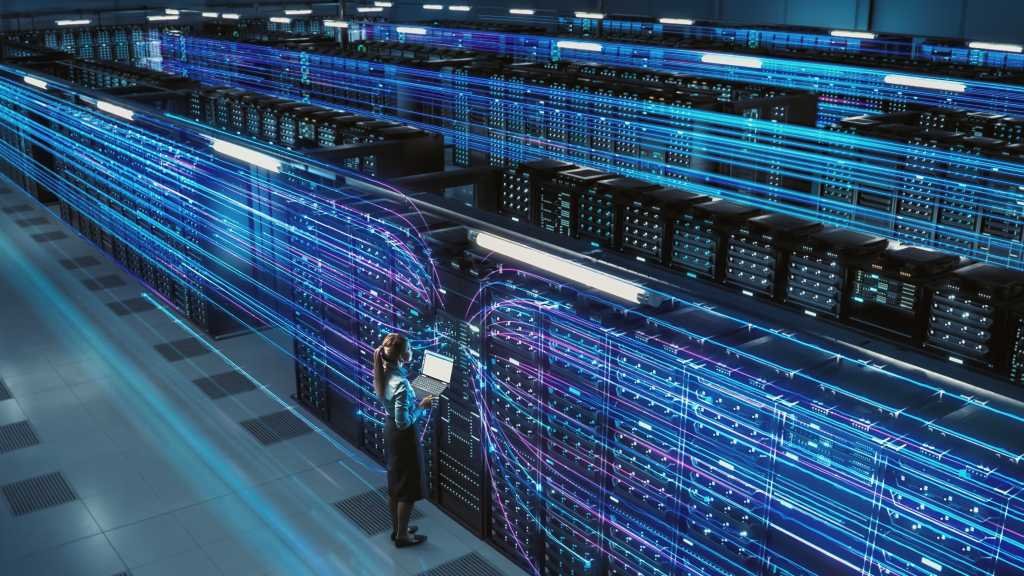
The image portrays a cybersecurity incident involving AI data centers, which are critical hubs for processing artificial intelligence workloads. These centers, equipped with advanced hardware such as GPUs, ASICs, and FPGAs—crucial for AI tasks—are increasingly targeted by cyber threats like DDoS attacks, ransomware, and social engineering schemes. Of particular concern are side-channel attacks, which exploit shared hardware components, such as CPUs, to secretly gather sensitive information about the system’s operations. For instance, in July 2025, AMD uncovered four new processor vulnerabilities that could enable such covert data leaks. The situation is even more perilous for AI data centers because their resource-intensive hardware, especially with specialized chips like Google’s Tensor Processing Units, is highly susceptible; in January 2025, researchers identified a side-channel attack called TPUXtract that could potentially expose AI model details by exploiting these hardware vulnerabilities. This escalating threat landscape is being reported by cybersecurity researchers and tech companies aiming to alert organizations about the heightened risks and the need for stronger defenses against these sophisticated attacks.
Risks Involved
AI data centers, integral to advanced computing, face heightened cybersecurity risks compared to traditional data centers due to their specialized hardware such as GPUs, ASICs like Google’s Tensor Processing Units, and FPGAs, which are essential for high-performance AI workloads. These components, while vital for processing large-scale AI data efficiently, are increasingly targeted by sophisticated cyber threats including DDoS, ransomware, and supply chain attacks, alongside others like social engineering. Moreover, they are highly susceptible to side-channel attacks—exploits that glean sensitive information from hardware activity—highlighted by vulnerabilities such as the April 2025 discovery of TPUXtract, which can reveal model parameters and data architecture. The convergence of powerful, customizable hardware with inherent vulnerabilities amplifies the risks, making AI data centers prime targets for malicious actors seeking to compromise data integrity, extract proprietary AI models, or disrupt operations, thereby emphasizing the critical importance of robust, specialized cybersecurity measures in this evolving landscape.
Possible Remediation Steps
Ensuring the policies governing AI data centers are regularly reviewed and promptly remediated is crucial for maintaining operational integrity, safeguarding data security, and adapting to evolving technological and regulatory landscapes.
Mitigation & Remediation Steps:
- Conduct frequent policy audits
- Implement continuous monitoring tools
- Update security protocols regularly
- Train staff on new policies
- Establish clear incident response plans
- Engage in third-party compliance assessments
- Utilize automated compliance checks
- Document policy changes meticulously
Continue Your Cyber Journey
Stay informed on the latest Threat Intelligence and Cyberattacks.
Explore engineering-led approaches to digital security at IEEE Cybersecurity.
Disclaimer: The information provided may not always be accurate or up to date. Please do your own research, as the cybersecurity landscape evolves rapidly. Intended for secondary references purposes only.
Cyberattacks-V1
