

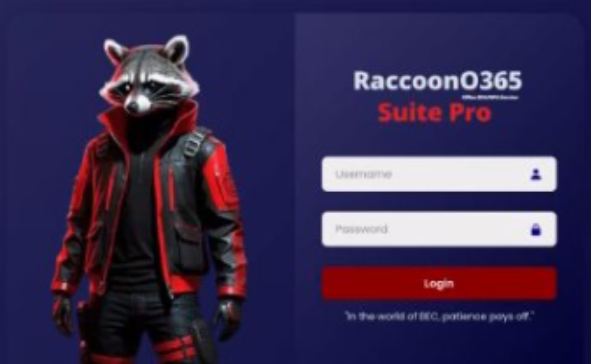
Quick Takeaways
- Microsoft’s Digital Crime Unit is targeting “RaccoonO365,” a Phishing-as-a-Service operation involved in BEC, with legal action including a court restraining order, revealing infrastructure and key player Joshua Ogundipe from Nigeria.
- The operation compromised at least 25 healthcare firms, using various phishing kits and methods such as IRS-themed scams during tax season, leading to malware infections and credential theft.
- Financially, RaccoonO365 received nearly $34,000 via Bitcoin and other cryptocurrencies, with infrastructure hidden behind Cloudflare, and used numerous domains registered through email accounts linked to targeted scams.
- Despite court seizures and the Telegram shutdown, operators continue selling compromised accounts and services like spam campaigns, with evolving pricing plans, highlighting ongoing cybercrime activity.
The Core Issue
In 2025, Microsoft’s Digital Crime Unit, in partnership with Health-ISAC, launched a major legal and technical crackdown against the cybercriminal enterprise known as “RaccoonO365,” a sophisticated phishing-as-a-service platform primarily targeting the healthcare sector and banking institutions. The operation, centered in Nigeria and facilitated through masked infrastructure on Cloudflare, uncovered a network run by Joshua Ogundipe, who was identified by Microsoft through digital footprints, including domain registrations and linked social media accounts. Over a period of nearly a year, RaccoonO365 circulated counterfeit phishing kits and malware, successfully compromising over 25 organizations, with some employees unwittingly sharing sensitive credentials amid targeted campaigns—most notably during tax season with IRS-themed scams. Microsoft’s legal filings allege numerous violations, including federal cybercrime statutes and trademark infringements, and revealed that the group managed to launder tens of thousands of dollars through cryptocurrency exchanges — funds that flowed into Nigerian mobile money platforms. Although Microsoft seized a significant portion of the criminal infrastructure, including disarming RaccoonO365’s operations on Telegram, the group appears to have pivoted, reselling access to already-compromised accounts and adapting their spam tactics, pointing to a resilient cybercrime ecosystem deeply embedded in Nigeria’s illegal online economy.
Risk Summary
Cyber risks stemming from operations like the RaccoonO365 phishing enterprise illustrate a profound threat to digital security and economic stability, with sinister impacts. Criminal actors, orchestrating phishing-as-a-service from Nigeria, employ sophisticated infrastructure tactics—hiding behind Cloudflare, using multiple domain registrants linked to compromised email accounts, and orchestrating large-scale credential and malware theft. These operations target vital sectors, including healthcare and government agencies, deploying aggressive schemes such as IRS-themed tax fraud and credential-stealing PDFs, resulting in financial losses, compromised personal data, and potential malware infections. The illicit ecosystem also facilitates the sale of hacked accounts, bulk spam services, and hacking tools on platforms like Telegram, fueling a vicious cycle of cybercrime that undermines trust, inflates operational costs for organizations, and poses serious national security concerns. Despite law enforcement takedowns, these cybercriminal networks quickly adapt, demonstrating the persistent and evolving nature of cyber risks that threaten both individual privacy and broader societal infrastructure.
Possible Actions
In the realm of cybersecurity, swift action is crucial when responding to threats like Microsoft’s DCU’s takedown of RaccoonO365, as delays can lead to increased damage, data loss, and compromised systems. Prompt remediation not only minimizes potential harm but also restores trust and security integrity within the organization.
Mitigation Measures
-
Threat Assessment: Conduct a detailed analysis to understand the scope and impact of the takedown.
- User Notification: Inform relevant users and stakeholders of the incident and any necessary precautions.
Remediation Steps
-
Account Review: Examine all affected accounts for signs of compromise or abnormal activity.
-
Security Patch: Apply applicable updates or patches to address vulnerabilities exploited during the attack.
-
Credential Reset: Change passwords and issue new authentication tokens as a precautionary measure.
-
Enhanced Monitoring: Increase surveillance of network activity to identify residual threats or breaches.
- Mitigation of Similar Threats: Implement advanced defenses, such as multi-factor authentication, to prevent future incidents.
Explore More Security Insights
Discover cutting-edge developments in Emerging Tech and industry Insights.
Explore engineering-led approaches to digital security at IEEE Cybersecurity.
Disclaimer: The information provided may not always be accurate or up to date. Please do your own research, as the cybersecurity landscape evolves rapidly. Intended for secondary references purposes only.
Cyberattacks-V1
