

Quick Takeaways
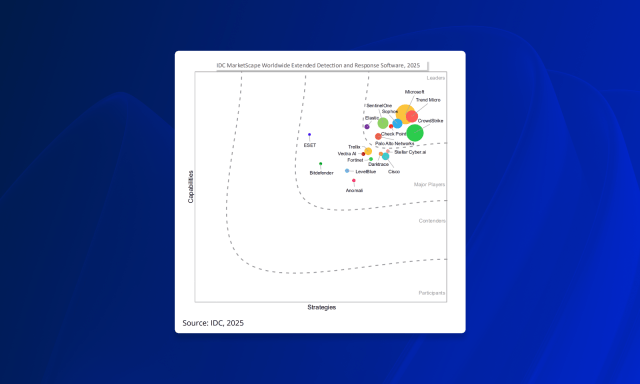
- Sophos has been recognized as a Leader in the IDC MarketScape™: Worldwide Extended Detection and Response (XDR) Software 2025, underscoring its commitment to scalable, intelligent security solutions.
- The report praises Sophos’ protection capabilities, including standard features like host firewalls, IDS/IPS, device control, and encryption, alongside proactive defense tools such as Adaptive Attack Protection (‘Shields Up’).
- Sophos XDR integrates AI-driven threat detection, automated defenses, and extensive ecosystem flexibility, enabling rapid threat investigation, response, and seamless integration across diverse IT environments.
- The acquisition of Secureworks enhances Sophos’ platform, providing combined prevention, detection, and response, with plans for full integration into the Sophos Central platform, further strengthening industry trust and future innovation.
What’s the Problem?
In a recent industry report by IDC MarketScape™, Sophos has been recognized as a leader in the field of Extended Detection and Response (XDR) software for 2025, reflecting its strong reputation for innovative and comprehensive cybersecurity solutions. The report praises Sophos for its robust protection features, which include firewalls, intrusion detection, device control, and encryption, all integrated into its platform, alongside advanced proactive defenses like Adaptive Attack Protection, introduced in 2023, that automatically activate in the face of active threats. This recognition is based on Sophos’ ability to deliver scalable and intelligent security measures suitable for organizations of all sizes, enabled further by the recent integration of the Taegis XDR platform, which enhances its capabilities and speeds up the development of new features.
The report highlights that Sophos’ XDR platform effectively combines AI-driven automation, real-time threat insights, and a unified view of an organization’s entire IT environment—covering endpoints, cloud workloads, and identity layers—making it adaptable for both beginners and cybersecurity experts. The recent acquisition and integration of Secureworks, which now allows for combined prevention, detection, and response within a single platform, marks a significant milestone, strengthening protection while reducing costs. This industry validation underscores Sophos’ reputation as a trusted leader, committed to shaping the future of cybersecurity with continuous innovation, particularly as it plans to fully embed Taegis XDR into its broader platform to better serve a diverse global client base.
Potential Risks
Sophos, recognized as a Leader in the IDC MarketScape™ for Extended Detection and Response (XDR) Software 2025, exemplifies a comprehensive approach to cyber security by integrating advanced threat detection, AI-driven investigation, and adaptive defenses across diverse digital environments. Cyber risks, including sophisticated malware, insider threats, and zero-day exploits, pose significant challenges, potentially leading to data breaches, operational disruptions, and costly reputational damage. Sophos addresses these risks through robust protection features like host-based firewalls, IDS/IPS, endpoint encryption, and proactive threat mitigation such as ‘Shields Up’ Adaptive Attack Protection, which activates defenses during active attacks. Its open platform and recent acquisition of Secureworks enable seamless integration with existing IT infrastructures, offering real-time insights, automated responses, and deep visibility into identity and cloud environments. This integrated, scalable approach minimizes attack surfaces, accelerates threat neutralization, and reduces operational complexity, thereby safeguarding organizational assets and maintaining trust amidst an evolving threat landscape.
Possible Remediation Steps
Ensuring prompt and effective remediation is crucial in addressing vulnerabilities within worldwide Extended Detection and Response (XDR) software by 2025, as delays can lead to severe security breaches, data loss, and financial repercussions. Rapid response not only minimizes damage but also reinforces the resilience and trustworthiness of cybersecurity infrastructure in an increasingly interconnected digital landscape.
Mitigation Steps:
- Immediate patch deployment
- Software updates installation
- Security configuration review
Remediation Actions:
- Incident isolation and containment
- Malware removal procedures
- Systems and network scans
- User access controls tightening
- Incident documentation and reporting
Stay Ahead in Cybersecurity
Stay informed on the latest Threat Intelligence and Cyberattacks.
Access world-class cyber research and guidance from IEEE.
Disclaimer: The information provided may not always be accurate or up to date. Please do your own research, as the cybersecurity landscape evolves rapidly. Intended for secondary references purposes only.
Cyberattacks-V1
