

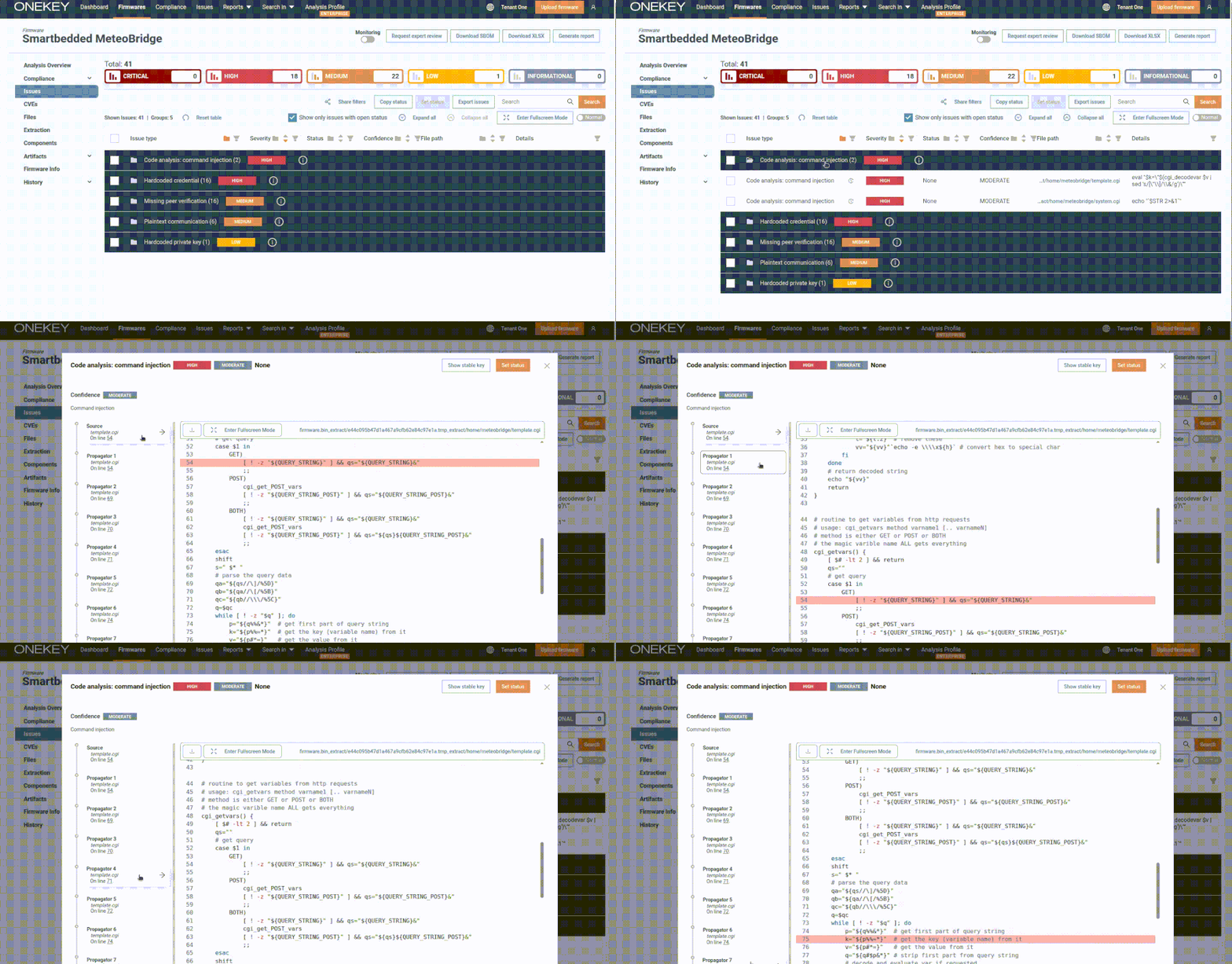
Summary Points
-
High-Severity Vulnerability: The U.S. CISA has added CVE-2025-4008, a command injection vulnerability in Smartbedded Meteobridge, to its KEV catalog due to evidence of active exploitation.
-
Exploitation Risks: This flaw allows unauthenticated remote attackers to execute arbitrary commands with root privileges through the vulnerable web interface, particularly via a CGI script.
-
Immediate Action Required: Federal agencies must apply software updates by October 23, 2025, to mitigate risks associated with this vulnerability and protect their systems.
- Additional Vulnerabilities Listed: CISA has also highlighted four other critical vulnerabilities, including those affecting Samsung devices and Jenkins, which also pose significant security threats.
CISA Identifies Significant Vulnerability in Meteobridge
The U.S. Cybersecurity and Infrastructure Security Agency (CISA) recently flagged a severe security flaw within the Smartbedded Meteobridge. This vulnerability, labeled as CVE-2025-4008, has garnered attention due to its active exploitation in the wild. Specifically, CISA listed it in the Known Exploited Vulnerabilities (KEV) catalog, citing its high CVSS score of 8.7. This flaw originates from a command injection vulnerability found in the Meteobridge web interface. As a result, remote, unauthenticated attackers could potentially execute arbitrary commands with elevated permissions on affected devices.
The security issue stems from the web interface that manages weather station data via CGI shell scripts. Attackers can manipulate requests targeting the template.cgi script. This exploitation does not require user authentication, as it resides in a public directory. Security researcher Quentin Kaiser highlighted the potential for remote exploitation through a malicious webpage. Interestingly, the vulnerability was fixed in version 6.2 of Meteobridge, released on May 13, 2025.
Federal Agencies Urged to Act
In response to the identified threat, CISA has mandated that Federal Civilian Executive Branch (FCEB) agencies implement necessary updates by October 23, 2025. This proactive approach underscores the importance of cybersecurity, especially in the realm of Internet of Things (IoT) devices. Alongside CVE-2025-4008, CISA added four other vulnerabilities to its catalog, representing a broader trend of increasing cybersecurity risks.
While the current state indicates active exploitation, security professionals are collaborating to track and resolve these vulnerabilities. Addressing issues such as CVE-2025-4008 fosters a more secure technological environment, promoting trust in emerging technologies. As organizations worldwide adopt IoT devices, safeguarding against such risks will be crucial for the future of innovation and connectivity.
Discover More Technology Insights
Stay informed on the revolutionary breakthroughs in Quantum Computing research.
Explore past and present digital transformations on the Internet Archive.
DataProtection-V1
