
Close Menu
  • Home
  • Cybercrime and Ransomware
  • Emerging Tech
  • Threat Intelligence
  • Expert Insights
  • Careers and Learning
  • Compliance

Subscribe to Updates

Subscribe to our newsletter and never miss our latest news

Subscribe my Newsletter for New Posts & tips Let's stay updated!

What's Hot

European Commission Confirms Data Breach After AWS Account Hack

March 28, 2026

Cybertech Weekly: Top Highlights and Trends

March 27, 2026

European Commission Web Hosts Hit by Major Data Breach

March 27, 2026
Facebook X (Twitter) Instagram
The CISO Brief
  • Home
  • Cybercrime and Ransomware
  • Emerging Tech
  • Threat Intelligence
  • Expert Insights
  • Careers and Learning
  • Compliance
Home » Critical 0-Day Exploited: Remote Access Flaw in Windows Connection Manager
Cybercrime and Ransomware

Critical 0-Day Exploited: Remote Access Flaw in Windows Connection Manager

Staff WriterBy Staff WriterOctober 15, 2025No Comments4 Mins Read0 Views
Facebook Twitter Pinterest LinkedIn Tumblr Email
Share
Facebook Twitter LinkedIn Pinterest WhatsApp Email

Quick Takeaways

  1. Microsoft has revealed a critical zero-day (CVE-2025-59230) in Windows’ RasMan service, allowing low-privilege users to escalate to SYSTEM level and potentially take full control of affected systems.
  2. The vulnerability, affecting multiple Windows versions (including Windows 10, 11, and Server editions from 2019 onwards), is actively exploited in the wild with proof-of-exploit evidence observed.
  3. Exploiting RasMan involves manipulating service files via registry edits or DLL injections, facilitating privilege escalation and further lateral movement post-initial breach.
  4. With a high severity score of 7.8, Microsoft urges immediate patching through October 2025 updates, as unpatched systems face heightened risks from advanced threat actors including nation-states and ransomware groups.

What’s the Problem?

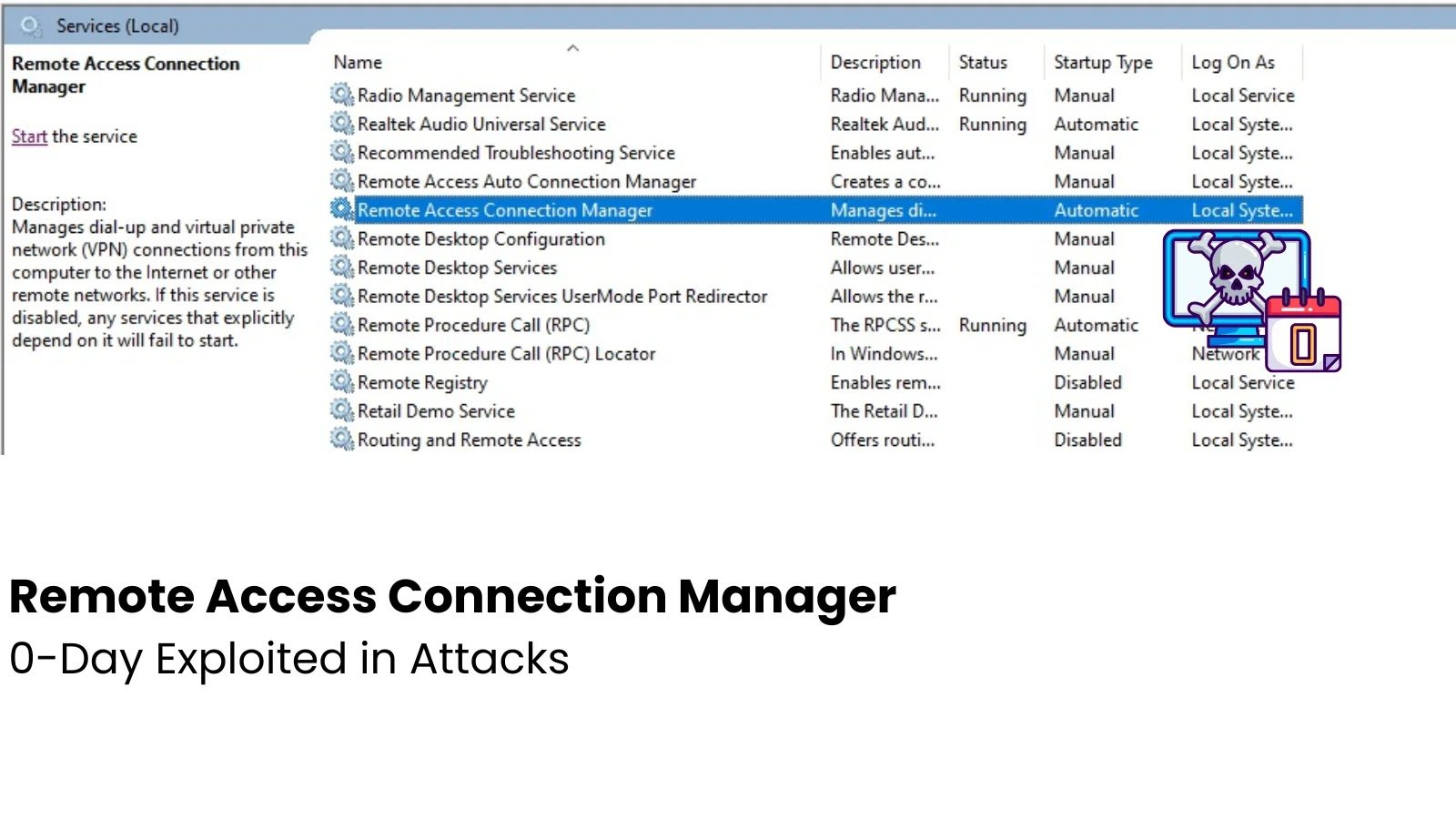
Microsoft has confirmed that a dangerous vulnerability, identified as CVE-2025-59230, is actively being exploited in Windows’ Remote Access Connection Manager (RasMan), a crucial component responsible for remote connectivity services like VPNs. This flaw stems from weak access controls within RasMan, allowing malicious actors with only basic local access and low privileges to escalate their privileges to the highest level—SYSTEM—potentially compromising entire systems. The vulnerability’s high severity score of 7.8 underscores its potential for widespread damage, especially since threat actors are already exploiting it in real-world attacks, although detailed victim information remains private. Cybercriminals or nation-state hackers can manipulate RasMan’s configuration or inject malicious code via registry hacks or DLL injections, enabling them to take full control of affected machines, often as a step in larger attack chains involving phishing or exploitation of unpatched software.

This security flaw impacts multiple Windows versions, including Windows 10 (from version 1809 onward), Windows 11, and Windows Server editions from 2019 through 2025. Microsoft’s urgent advice is to apply the latest October 2025 patches immediately, as the vulnerability not only facilitates system takeovers but also leaves unpatched devices highly vulnerable to further exploitation by sophisticated threat actors, including ransomware groups and state-sponsored hackers. With proof-of-exploit activity already detected in the wild, the urgency to mitigate this flaw has never been greater, emphasizing the necessity for organizations and users to patch promptly to prevent potentially catastrophic breaches.

Risk Summary

Microsoft has revealed a critical zero-day vulnerability (CVE-2025-59230) in the Windows Remote Access Connection Manager (RasMan) service, which allows malicious actors to escalate privileges from low-level user accounts to SYSTEM-level control, potentially leading to total system compromise. Exploited through weak access controls in a core component responsible for remote connections like VPNs, this flaw affects multiple Windows versions, including Windows 10, 11, and Server editions, and has already been targeted in active attacks. With a high severity CVSS score of 7.8, the vulnerability permits local attackers, without user interaction, to manipulate service configurations and inject malicious code—using methods like registry modification or DLL injection—thus enabling full system takeover. The threat is heightened by the ease of exploitation and its presence in the wild, especially since unpatched systems are vulnerable to nation-state assaults and ransomware, underscoring the urgent need for immediate patching to prevent widespread damage.

Possible Actions

Ensuring prompt remediation of the Windows Remote Access Connection Manager 0-Day Vulnerability is crucial in safeguarding critical systems and preventing widespread exploitation. If left unaddressed, attackers can leverage this vulnerability to gain unauthorized access and control over affected devices, leading to data breaches, system disruptions, and potential infrastructure compromise.

Mitigation Strategies:

  • Apply Security Patches
  • Disable Affected Services
  • Implement Network Segmentation
  • Enable Firewall Restrictions
  • Monitor Network Traffic
  • Conduct Vulnerability Scans
  • Update Antivirus Signatures

Stay Ahead in Cybersecurity

Stay informed on the latest Threat Intelligence and Cyberattacks.

Access world-class cyber research and guidance from IEEE.

Disclaimer: The information provided may not always be accurate or up to date. Please do your own research, as the cybersecurity landscape evolves rapidly. Intended for secondary references purposes only.

Cyberattacks-V1

CISO Update Cybersecurity MX1
Share. Facebook Twitter Pinterest LinkedIn Tumblr Email
Previous ArticleTop 8 File Types That Invite Malware Attacks
Next Article Authorities dismantle Southeast Asia cybercrime rings, seizing $15B
Avatar photo
Staff Writer
  • Website

John Marcelli is a staff writer for the CISO Brief, with a passion for exploring and writing about the ever-evolving world of technology. From emerging trends to in-depth reviews of the latest gadgets, John stays at the forefront of innovation, delivering engaging content that informs and inspires readers. When he's not writing, he enjoys experimenting with new tech tools and diving into the digital landscape.

Related Posts

European Commission Confirms Data Breach After AWS Account Hack

March 28, 2026

European Commission Web Hosts Hit by Major Data Breach

March 27, 2026

RSAC: Uniting Cybersecurity Insights, Innovation, and Community

March 27, 2026

Comments are closed.

Latest Posts

European Commission Confirms Data Breach After AWS Account Hack

March 28, 2026

European Commission Web Hosts Hit by Major Data Breach

March 27, 2026

RSAC: Uniting Cybersecurity Insights, Innovation, and Community

March 27, 2026

Security Leaders Foresee the Next Two Years as ‘Insane’

March 27, 2026
Don't Miss

European Commission Confirms Data Breach After AWS Account Hack

By Staff WriterMarch 28, 2026

Top Highlights The European Commission confirmed a data breach caused by a targeted cyberattack on…

European Commission Web Hosts Hit by Major Data Breach

March 27, 2026

RSAC: Uniting Cybersecurity Insights, Innovation, and Community

March 27, 2026

Subscribe to Updates

Subscribe to our newsletter and never miss our latest news

Subscribe my Newsletter for New Posts & tips Let's stay updated!

Recent Posts

  • European Commission Confirms Data Breach After AWS Account Hack
  • Cybertech Weekly: Top Highlights and Trends
  • European Commission Web Hosts Hit by Major Data Breach
  • RSAC: Uniting Cybersecurity Insights, Innovation, and Community
  • Security Leaders Foresee the Next Two Years as ‘Insane’
About Us
About Us

Welcome to The CISO Brief, your trusted source for the latest news, expert insights, and developments in the cybersecurity world.

In today’s rapidly evolving digital landscape, staying informed about cyber threats, innovations, and industry trends is critical for professionals and organizations alike. At The CISO Brief, we are committed to providing timely, accurate, and insightful content that helps security leaders navigate the complexities of cybersecurity.

Facebook X (Twitter) Pinterest YouTube WhatsApp
Our Picks

European Commission Confirms Data Breach After AWS Account Hack

March 28, 2026

Cybertech Weekly: Top Highlights and Trends

March 27, 2026

European Commission Web Hosts Hit by Major Data Breach

March 27, 2026
Most Popular

Protecting MCP Security: Defeating Prompt Injection & Tool Poisoning

January 30, 202629 Views

The New Face of DDoS is Impacted by AI

August 4, 202523 Views

Absolute Launches GenAI Tools to Tackle Endpoint Risk

August 7, 202515 Views

Archives

  • March 2026
  • February 2026
  • January 2026
  • December 2025
  • November 2025
  • October 2025
  • September 2025
  • August 2025
  • July 2025
  • June 2025

Categories

  • Compliance
  • Cyber Updates
  • Cybercrime and Ransomware
  • Editor's pick
  • Emerging Tech
  • Events
  • Featured
  • Insights
  • Threat Intelligence
  • Uncategorized
© 2026 thecisobrief. Designed by thecisobrief.
  • Home
  • About Us
  • Advertise with Us
  • Contact Us
  • DMCA
  • Privacy Policy
  • Terms & Conditions

Type above and press Enter to search. Press Esc to cancel.