

Top Highlights
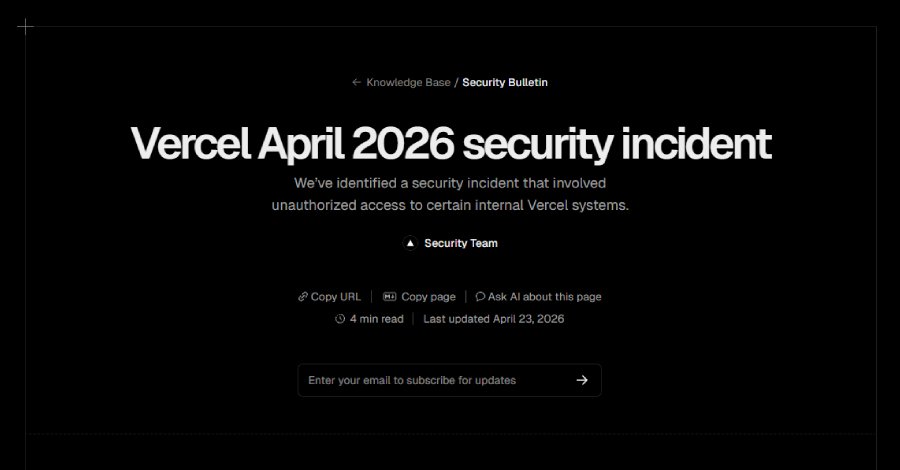
- Vercel experienced a security breach involving compromised customer accounts linked to a wider internal system compromise.
- The attack stemmed from a breach in Context.ai, used by a Vercel employee, which led to unauthorized access to Vercel’s environment.
- Investigation suggests malware infection, including Lumma Stealer, as a possible "patient zero," with threat actors actively distributing malware targeting tokens and credentials.
- The incident underscores risks of OAuth integrations, emphasizing the importance of rapid detection and containment rather than solely prevention.
Discovery of More Compromised Accounts Highlights Ongoing Risks
Recently, Vercel announced they found additional customer accounts that had been compromised. These accounts were vulnerable due to a security breach that gave hackers unauthorized access to Vercel’s internal systems. The company explained that their investigation expanded after detecting more signs of suspicious activity. By reviewing network requests and environment variable logs, they identified these compromised accounts. Vercel also revealed that some customers had been affected even before this incident, possibly through social engineering or malware attacks. They promptly notified the affected users to help mitigate potential damage. However, the company did not specify exactly how many customers were impacted.
How a Third-Party Breach Enabled the Attack Chain
The breach’s origin traced back to a compromised tool called Context.ai, which was used by a Vercel employee. This incident allowed hackers to control the employee’s Google Workspace account. With this access, attackers moved into Vercel’s environment and explored system data. They managed to decrypt some non-sensitive environment variables, which could be useful for further attacks. An investigation revealed that one Context.ai employee was infected with malware earlier in February. This infection, linked to searches for gaming scripts, may have been the starting point of the entire attack sequence. Experts note that the malware aimed to steal valuable tokens, such as account keys, to access other systems. The situation underscores the risks of using third-party AI tools without proper oversight, as well as the importance of rapid detection and response in cybersecurity.
Expand Your Tech Knowledge
Dive deeper into the world of Cryptocurrency and its impact on global finance.
Explore past and present digital transformations on the Internet Archive.
DataProtection-V1
