

Fast Facts
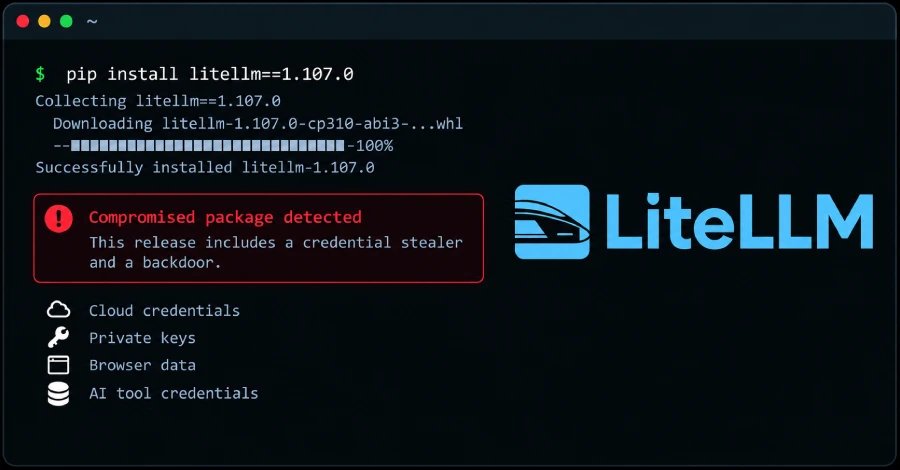
- LiteLLM 1.107.0 was compromised; malicious PyPI packages and Docker images have been removed.
- Attackers reportedly used stolen GitHub CLI OAuth tokens from three engineers’ accounts to publish the release.
- The malware steals cloud and developer credentials, private keys, browser data, and AI-tool secrets—and includes a backdoor for running attacker-supplied code.
- If affected, revoke and replace exposed credentials from a clean environment; pin LiteLLM to 1.106.2 by digest.
Malicious release targeted AI development tools
Attackers compromised LiteLLM 1.107.0, a Python package that helps software connect with AI models. They distributed the release through PyPI and Docker images.
The malicious code could collect cloud credentials, private keys, browser data, and sign-in files used by AI development tools. It could also target saved credentials and model settings in LiteLLM deployments. A hidden file made the code run when Python started, even before a user imported LiteLLM. The malware also installed a backdoor that could fetch and run more code.
LiteLLM says attackers appear to have used stolen access tokens tied to three engineers’ GitHub accounts. The company revoked the tokens and restricted access while it investigates how the attackers obtained them. PyPI quarantined the affected package, and LiteLLM removed the malicious Docker images.
Users should replace exposed credentials
Because LiteLLM connects applications to AI services, a compromised release could put more than one project at risk. However, the incident does not show that every LiteLLM user suffered a breach. It highlights how a widely used software component can become a route into the systems that depend on it.
Anyone who installed version 1.107.0 should work from a clean environment, revoke exposed credentials, and replace them. LiteLLM recommends pinning version 1.106.2 by its package digest. Meanwhile, the investigation continues. The incident is a reminder that AI tools can make development more practical, but teams must also protect the code and credentials that power them.
Expand Your Tech Knowledge
Learn how the Internet of Things (IoT) is transforming everyday life.
Access comprehensive resources on technology by visiting Wikipedia.
CyberAttacks-V1
