
Close Menu
  • Home
  • Cybercrime and Ransomware
  • Emerging Tech
  • Threat Intelligence
  • Expert Insights
  • Careers and Learning
  • Compliance

Subscribe to Updates

Subscribe to our newsletter and never miss our latest news

Subscribe my Newsletter for New Posts & tips Let's stay updated!

What's Hot

Enhancing Federal Security: Claroty & Corsha Combine OT Threat Detection with Machine Identity Protection

May 26, 2026

Stop Using AI Governance as Just a Review Layer — Unleash Its Infrastructure Power

May 26, 2026

Ransomware Leverages ChaCha20 & Curve25519 to Encrypt Windows Files

May 26, 2026
Facebook X (Twitter) Instagram
The CISO Brief
  • Home
  • Cybercrime and Ransomware
  • Emerging Tech
  • Threat Intelligence
  • Expert Insights
  • Careers and Learning
  • Compliance
Home » MFA: Essential, But Not Sufficient
Cybercrime and Ransomware

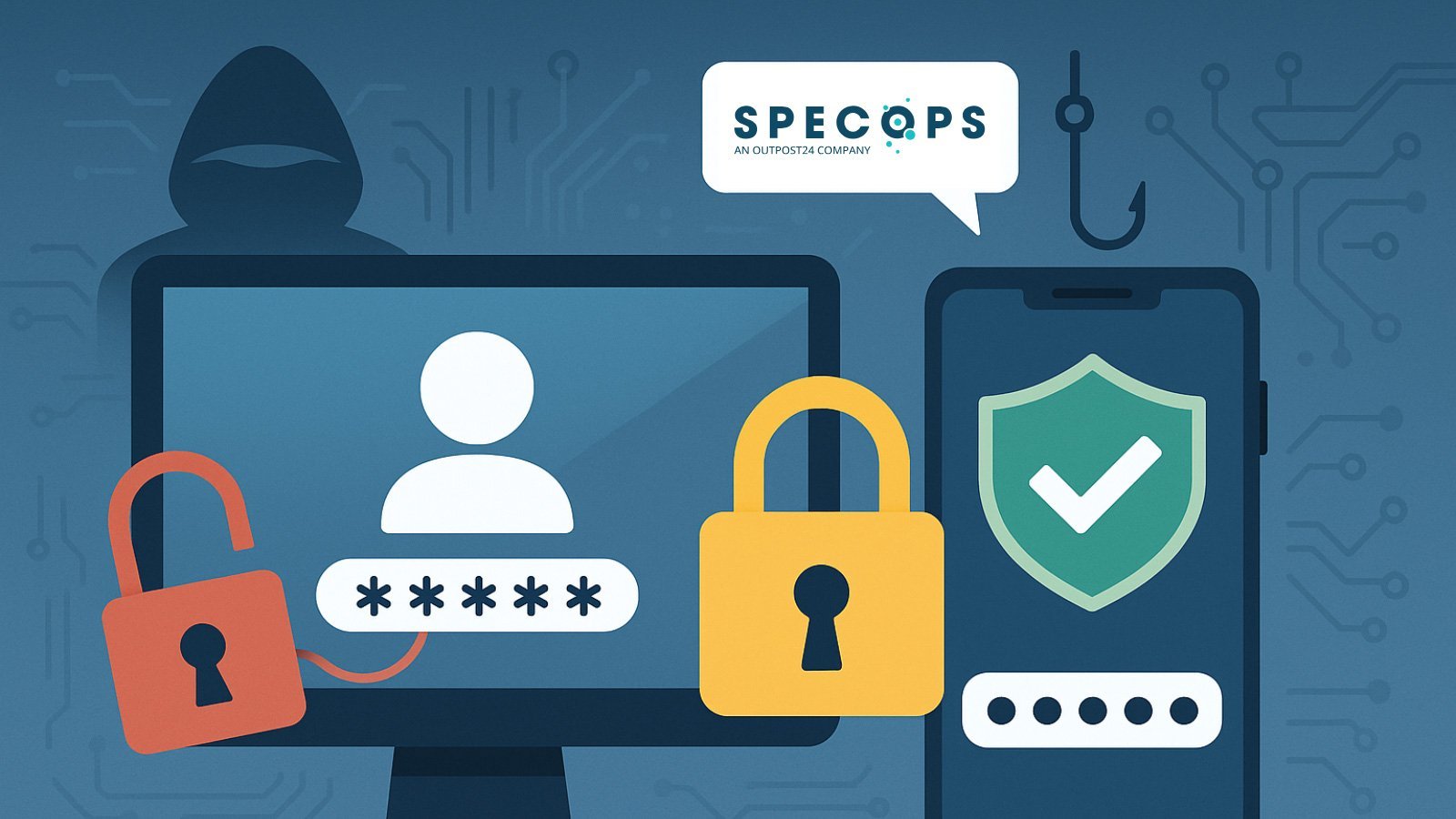
MFA: Essential, But Not Sufficient

Staff WriterBy Staff WriterAugust 6, 2025No Comments4 Mins Read4 Views
Facebook Twitter Pinterest LinkedIn Tumblr Email
Share
Facebook Twitter LinkedIn Pinterest WhatsApp Email

Essential Insights

  1. MFA as a Critical Defense: Multi-factor authentication (MFA) can block over 99% of automated credential attacks, making it essential for strong security, but it doesn’t replace the need for robust password hygiene.

  2. Weak Passwords Create Vulnerabilities: Attacks can bypass MFA through weak, reused, or compromised passwords, making it crucial to enforce strong password policies in tandem with MFA.

  3. Common MFA Bypass Techniques: Attackers use methods like MFA fatigue, SIM swapping, and social engineering to circumvent MFA, highlighting that it should not be the sole defense mechanism.

  4. Layered Security Approach: Combining strong password hygiene with MFA at every login point creates multiple barriers for attackers, significantly enhancing overall security and resilience.

Underlying Problem

The crux of the narrative revolves around the inadequacies of relying solely on multi-factor authentication (MFA) against account takeover attacks, particularly when weak, reused, or compromised passwords are involved. It emphasizes that while MFA has emerged as a vital security standard—proven to thwart over 99% of automated threats—this layered defense is compromised if passwords aren’t robust. The text articulates that despite MFA’s protective measures, attackers can exploit vulnerabilities such as user trickery and sophisticated social engineering tactics to circumvent defenses, thus stressing that both password integrity and MFA should coalesce in a comprehensive security strategy.

This warning is underscored by reports from various cybersecurity guidelines and research, including findings from Microsoft and practical anecdotes related to high-profile breaches, such as the targeted hack on MGM Resorts. Specops Software, the entity behind this exposé, advocates for an integrated approach that mandates strong password policies alongside unwavering MFA application across all login portals. This collaboration is essential to fortify defenses against evolving cyber threats and ensure the safety of organizational and individual accounts alike.

What’s at Stake?

Unprotected usernames and passwords pose significant risks to businesses, users, and organizations alike, particularly in an era where account takeover attacks are alarmingly prevalent. While multi-factor authentication (MFA) rightly bolsters security, an overreliance on it can foster complacency regarding fundamental password hygiene. If weak, reused, or compromised passwords form the foundation of a user’s security, attackers can readily exploit these vulnerabilities even when MFA protocols are in place. This not only jeopardizes individual accounts but can precipitate broader systemic failures, impacting organizational integrity by allowing attackers to navigate through interconnected systems. An incident involving a breach in one enterprise can lead to cascading effects, undermining user trust, incurring financial liabilities, and disrupting operational continuity across associated businesses and industries. Therefore, cultivating a comprehensive layered defense that emphasizes robust password policies alongside MFA is essential to mitigate these risks and enhance the overarching security posture of all entities involved.

Possible Action Plan

Timely remediation is pivotal in mitigating risks associated with Multi-Factor Authentication (MFA). While MFA significantly enhances security, it is not a panacea; vigilance and proactive measures are essential.

Mitigation Steps

  • User Education
    Implement comprehensive training on MFA best practices.

  • Regular Audits
    Conduct periodic assessments of MFA implementations for vulnerabilities.

  • Adaptive Strategies
    Employ context-aware authentication to enhance security dynamically.

  • Incident Response Plans
    Develop and test thorough response protocols for MFA-related breaches.

  • System Updates
    Ensure all systems and applications are consistently updated to guard against exploits.

NIST CSF Guidance
NIST’s Cybersecurity Framework stresses the importance of continuous monitoring and ongoing risk management. Refer to NIST SP 800-63 for detailed compliance and implementation strategies regarding MFA.

Advance Your Cyber Knowledge

Discover cutting-edge developments in Emerging Tech and industry Insights.

Understand foundational security frameworks via NIST CSF on Wikipedia.

Disclaimer: The information provided may not always be accurate or up to date. Please do your own research, as the cybersecurity landscape evolves rapidly. Intended for secondary references purposes only.

Cyberattacks-V1

CISO Update Cybersecurity MX1
Share. Facebook Twitter Pinterest LinkedIn Tumblr Email
Previous ArticleRTX Wins DARPA Deal to Advance Cyber Threat Detection
Next Article SandboxAQ, EY US Partner on AI & Post-Quantum Security
Avatar photo
Staff Writer
  • Website

John Marcelli is a staff writer for the CISO Brief, with a passion for exploring and writing about the ever-evolving world of technology. From emerging trends to in-depth reviews of the latest gadgets, John stays at the forefront of innovation, delivering engaging content that informs and inspires readers. When he's not writing, he enjoys experimenting with new tech tools and diving into the digital landscape.

Related Posts

Enhancing Federal Security: Claroty & Corsha Combine OT Threat Detection with Machine Identity Protection

May 26, 2026

Stop Using AI Governance as Just a Review Layer — Unleash Its Infrastructure Power

May 26, 2026

Ransomware Leverages ChaCha20 & Curve25519 to Encrypt Windows Files

May 26, 2026

Comments are closed.

Latest Posts

Enhancing Federal Security: Claroty & Corsha Combine OT Threat Detection with Machine Identity Protection

May 26, 2026

Stop Using AI Governance as Just a Review Layer — Unleash Its Infrastructure Power

May 26, 2026

Ransomware Leverages ChaCha20 & Curve25519 to Encrypt Windows Files

May 26, 2026

Vulnerabilities: Cyber Attackers’ Number One Entry Point

May 26, 2026
Don't Miss

Enhancing Federal Security: Claroty & Corsha Combine OT Threat Detection with Machine Identity Protection

By Staff WriterMay 26, 2026

Quick Takeaways Claroty’s Continuous Threat Detection (CTD) and Corsha’s Machine Identity Provider (mIDP) have integrated…

Stop Using AI Governance as Just a Review Layer — Unleash Its Infrastructure Power

May 26, 2026

Ransomware Leverages ChaCha20 & Curve25519 to Encrypt Windows Files

May 26, 2026

Subscribe to Updates

Subscribe to our newsletter and never miss our latest news

Subscribe my Newsletter for New Posts & tips Let's stay updated!

Recent Posts

  • Enhancing Federal Security: Claroty & Corsha Combine OT Threat Detection with Machine Identity Protection
  • Stop Using AI Governance as Just a Review Layer — Unleash Its Infrastructure Power
  • Ransomware Leverages ChaCha20 & Curve25519 to Encrypt Windows Files
  • Vulnerabilities: Cyber Attackers’ Number One Entry Point
  • Researchers reveal LLM exploitation in cyber threat data.
About Us
About Us

Welcome to The CISO Brief, your trusted source for the latest news, expert insights, and developments in the cybersecurity world.

In today’s rapidly evolving digital landscape, staying informed about cyber threats, innovations, and industry trends is critical for professionals and organizations alike. At The CISO Brief, we are committed to providing timely, accurate, and insightful content that helps security leaders navigate the complexities of cybersecurity.

Facebook X (Twitter) Pinterest YouTube WhatsApp
Our Picks

Enhancing Federal Security: Claroty & Corsha Combine OT Threat Detection with Machine Identity Protection

May 26, 2026

Stop Using AI Governance as Just a Review Layer — Unleash Its Infrastructure Power

May 26, 2026

Ransomware Leverages ChaCha20 & Curve25519 to Encrypt Windows Files

May 26, 2026
Most Popular

Protecting MCP Security: Defeating Prompt Injection & Tool Poisoning

January 30, 202632 Views

Unlock the Power of Free WormGPT: Harnessing DeepSeek, Gemini, and Kimi-K2 AI Models

November 27, 202530 Views

The New Face of DDoS is Impacted by AI

August 4, 202528 Views

Archives

  • May 2026
  • April 2026
  • March 2026
  • February 2026
  • January 2026
  • December 2025
  • November 2025
  • October 2025
  • September 2025
  • August 2025
  • July 2025
  • June 2025

Categories

  • Compliance
  • Cyber Updates
  • Cybercrime and Ransomware
  • Editor's pick
  • Emerging Tech
  • Events
  • Featured
  • Insights
  • Most Read
  • Threat Intelligence
  • Uncategorized
© 2026 thecisobrief. Designed by thecisobrief.
  • Home
  • About Us
  • Advertise with Us
  • Contact Us
  • DMCA
  • Privacy Policy
  • Terms & Conditions

Type above and press Enter to search. Press Esc to cancel.