

Summary Points
-
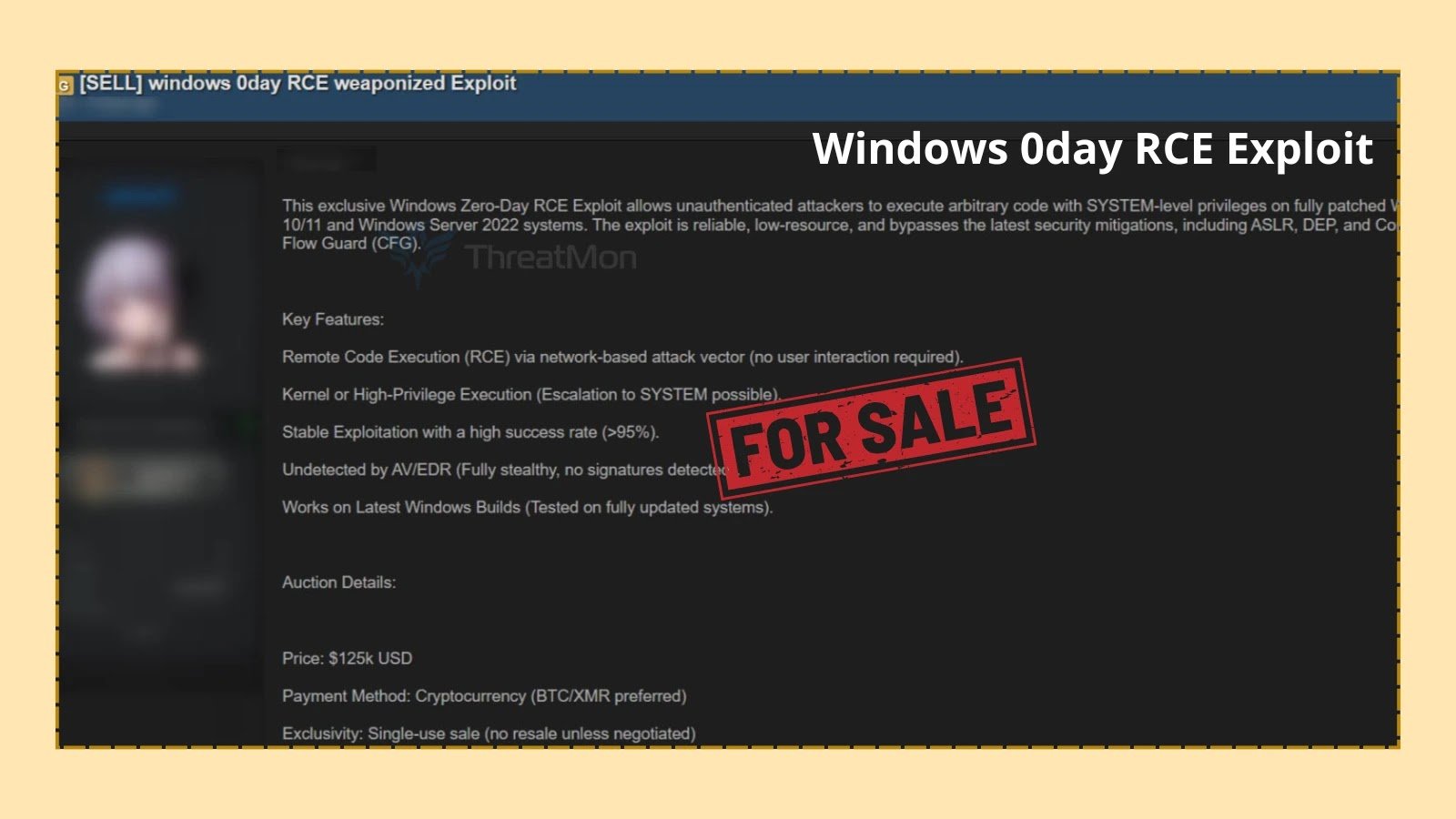
An alleged threat actor is selling a $125,000 Windows Zero-Day RCE exploit capable of bypassing security features and granting SYSTEM privileges on fully patched Windows 10, 11, and Server 2022 systems.
-
The exploit is designed for remote, network-based attacks with no user interaction, evading detection by leading antivirus and EDR solutions, and boasting a success rate over 95%.
-
It facilitates kernel-level code execution and privilege escalation, posing significant risks for enterprise and individual systems, especially from cybercriminal groups and APTs.
- Organizations should enhance monitoring of kernel activities, prioritize timely patching, and leverage threat intelligence to detect and respond to such sophisticated zero-day exploit attempts.
Key Challenge
A cybercriminal marketplace has listed a highly dangerous Windows Zero-Day Remote Code Execution (RCE) exploit for sale, targeting fully updated Windows 10, Windows 11, and Windows Server 2022 systems. The seller claims that this exploit, priced at $125,000 and available for purchase with cryptocurrency, can remotely compromise machines without any user interaction, bypassing key security defenses like ASLR, DEP, and CFG. It is designed to grant attackers SYSTEM-level privileges by executing code at the kernel level, effectively allowing malicious actors—likely advanced persistent threats (APTs) or ransomware gangs—to hack into secured systems undetected, as the exploit reportedly evades the most common antivirus and endpoint detection solutions with a success rate above 95%. This situation underscores the ongoing danger posed by unpatched vulnerabilities on widely used enterprise and personal devices and highlights why organizations should bolster their monitoring, patching routines, and threat intelligence efforts to detect and mitigate such critical threats before they are exploited.
Threat intelligence sources, such as ThreatMon, are reporting that this exploit appears to be manufactured with sophisticated capabilities to conduct stealthy, network-based attacks, which do not require user involvement. The detailed sale listing emphasizes its exclusivity and high reliability, making it an attractive tool for cybercriminals seeking persistent, undetectable access to targeted systems. The sale’s confidential conditions prevent resale without permission, indicating a niche market for highly valuable exploits in criminal circles. The report recommends organizations stay vigilant by monitoring for anomalous kernel activity, applying the latest patches, and keeping abreast of emerging threat intelligence. In the face of such threats, proactive defense measures and timely response strategies are critical to prevent exploitation of these zero-day vulnerabilities and protect sensitive data and infrastructure.
Potential Risks
A cybercriminal marketplace has listed a highly sophisticated Windows Zero-Day Remote Code Execution (RCE) exploit, capable of targeting fully patched Windows 10, Windows 11, and Windows Server 2022 systems without user interaction, and granting attacker control at the highest privilege level—SYSTEM. The exploit bypasses advanced security features like ASLR, DEP, and CFG, making it undetectable by standard antivirus and endpoint detection tools, with an impressive success rate exceeding 95%. Priced at $125,000 and sold via cryptocurrency, this underground transaction underscores the significant threat posed by such undisclosed vulnerabilities, especially as it enables network-based, privileged access attacks that can facilitate malware deployment, ransomware infections, or persistent system compromise. Its existence elevates the operational risk for organizations, emphasizing the critical need for rapid patch management, enhanced monitoring of kernel activities, and proactive threat intelligence to detect and mitigate potential exploitation before malicious actors can leverage such powerful tools.
Fix & Mitigation
Timely remediation in the context of threats such as the alleged sale of a Windows zero-day remote code execution (RCE) exploit on the dark web is crucial because it directly impacts an organization’s ability to prevent unauthorized access, data breaches, and potential system compromises before malicious actors can exploit vulnerabilities. Swift action helps contain damage, protect sensitive information, and maintain operational integrity.
Mitigation Strategies
-
Patch Management:
Deploy updates and patches promptly once verified, especially targeting the specific zero-day vulnerability if a patch is available. -
Vulnerability Scanning:
Conduct comprehensive scans to identify and assess systems potentially exposed to the exploit. - Monitoring & Alerts:
Enhance real-time monitoring and establish alert mechanisms for suspicious activities indicative of exploitation attempts.
Remediation Steps
-
Isolate Affected Systems:
Quickly disconnect compromised or vulnerable machines from the network to prevent lateral movement. -
Incident Response Activation:
Initiate your incident response plan to investigate, contain, and remediate system breaches. -
Security Policy Review:
Reevaluate security policies and access controls to reinforce defenses against exploitation. -
User Education:
Inform employees about potential phishing or social engineering attacks that could leverage the zero-day exploit. - Collaborate with Vendors and Authorities:
Stay coordinated with software vendors for official patches and monitor advisories from cybersecurity agencies for emerging threats and guidance.
Stay Ahead in Cybersecurity
Discover cutting-edge developments in Emerging Tech and industry Insights.
Access world-class cyber research and guidance from IEEE.
Disclaimer: The information provided may not always be accurate or up to date. Please do your own research, as the cybersecurity landscape evolves rapidly. Intended for secondary references purposes only.
Cyberattacks-V1
