
Close Menu
  • Home
  • Cybercrime and Ransomware
  • Emerging Tech
  • Threat Intelligence
  • Expert Insights
  • Careers and Learning
  • Compliance

Subscribe to Updates

Subscribe to our newsletter and never miss our latest news

Subscribe my Newsletter for New Posts & tips Let's stay updated!

What's Hot

Future-Proof Your Defense: The Need for Long-Term Planning in Physical AI Security

June 13, 2026

Transform Specs into Agent Evals with ASSERT

June 12, 2026

FBI Cracks Massive China-Based Cybercrime Ring, $1.9B Lost

June 12, 2026
Facebook X (Twitter) Instagram
The CISO Brief
  • Home
  • Cybercrime and Ransomware
  • Emerging Tech
  • Threat Intelligence
  • Expert Insights
  • Careers and Learning
  • Compliance
Home » Y2K38 Bug: A Critical Security Threat Beyond Just Dates
Cybercrime and Ransomware

Y2K38 Bug: A Critical Security Threat Beyond Just Dates

Staff WriterBy Staff WriterOctober 7, 2025No Comments4 Mins Read15 Views
Facebook Twitter Pinterest LinkedIn Tumblr Email
Share
Facebook Twitter LinkedIn Pinterest WhatsApp Email

Summary Points

  1. Hackers can exploit the Year 2038 and 2036 time overflow bugs today through methods like GPS spoofing and protocol manipulation, potentially causing widespread system failures and cybersecurity breaches.
  2. These bugs, which affect critical infrastructure and many legacy systems, are harder to fix than Y2K due to the need for fundamental architecture changes, such as transitioning from 32-bit to 64-bit integers.
  3. Vulnerable systems include internet-exposed devices like servers, ICS, smart TVs, and physical assets such as nuclear submarines, satellites, and power plants; some vendors like Dover Fueling Solutions have started releasing patches.
  4. Experts warn that addressing these issues requires global coordination, prioritization, and contingency planning, as the scale and complexity threaten to surpass the Y2K crisis in scope and difficulty.

The Issue

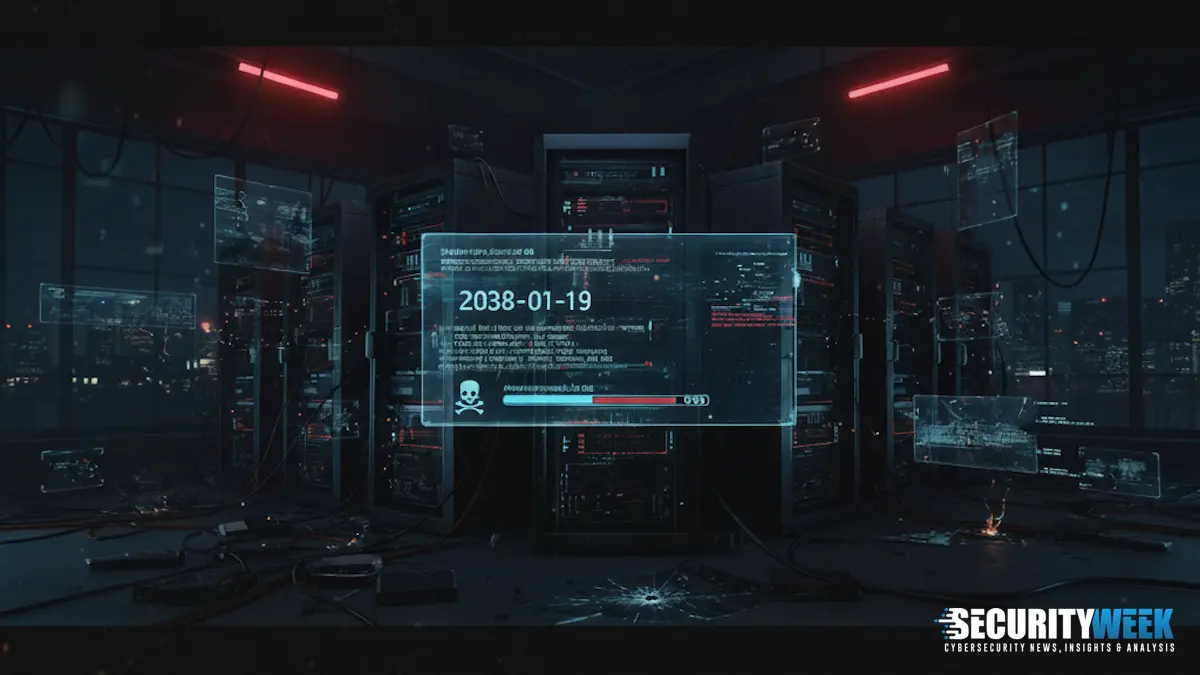
Recent cybersecurity research has revealed that hackers can exploit the looming Year 2038 problem, similar to the Y2K bug, by manipulating system clocks through methods like GPS spoofing and NTP injection. This allows attackers to force affected systems—ranging from industrial control devices, smart TVs, and servers to critical infrastructure such as power plants and satellites—to reach their maximum date value prematurely, causing system crashes, data corruption, or security lapses that could be exploited for malicious purposes. Unlike the Y2K dilemma, which was resolved through widespread software updates, confronting the Year 2038 bug is more complex because it requires fundamental system architecture changes, such as shifting from 32-bit to 64-bit time representations, a costly and challenging process for legacy systems.

The reports from cybersecurity experts Trey Darley and Pedro Umbelino, who have launched the Epochalypse Project to raise awareness, warn that these vulnerabilities exist today and are being actively exploited or could be exploited by threat actors. They highlight that many internet-connected devices and critical infrastructure—such as fuel management systems, communication networks, and military assets—are already potentially exposed to manipulation. Although some vendors, like Dover Fueling Solutions, are beginning to patch affected products, the scale of the upcoming transition and the vast number of vulnerable systems present a significant, urgent challenge. The ongoing risk underscores the need for global coordination, prioritization of critical systems, and proactive measures to prevent catastrophic failures or security breaches linked to the Year 2038 system rollover.

What’s at Stake?

Researchers warn that current cyber actors can exploit the Year 2036/2038 time rollover bugs by manipulating system clocks through GPS spoofing, NTP injection, or protocol tampering, allowing them to trigger the bugs prematurely. These vulnerabilities, affecting billions of devices—from critical infrastructure controls and industrial systems to everyday electronics—pose severe risks, including system crashes, data corruption, compromised security protocols, and potential physical harm. Addressing these issues is complex and costly, as many legacy systems require fundamental architecture overhauls, often impossible to fully update before the proposed deadlines. The impact of such exploitation could lead to widespread outages, security breaches, and even physical disasters, demonstrating that the threat is active today and demands urgent, coordinated mitigation efforts to prevent catastrophic failure across interconnected technological ecosystems.

Possible Action Plan

As the Year 2038 approaches, understanding the importance of prompt remediation for the Y2K38 bug becomes critical, because delaying action could lead to significant system failures and security risks.

Assessment & Identification

  • Conduct thorough audits of existing systems to identify vulnerable components.

Software Updates

  • Develop and deploy patches that fix the date overflow issue.

Hardware Compatibility

  • Upgrade or replace hardware limited by 32-bit time representations.

Testing & Validation

  • Perform rigorous testing of patches in controlled environments to ensure effectiveness.

Contingency Planning

  • Establish backup protocols and disaster recovery plans for critical systems.

Awareness & Training

  • Educate IT staff about the Y2K38 bug’s implications to promote proactive responses.

Stay Ahead in Cybersecurity

Discover cutting-edge developments in Emerging Tech and industry Insights.

Access world-class cyber research and guidance from IEEE.

Disclaimer: The information provided may not always be accurate or up to date. Please do your own research, as the cybersecurity landscape evolves rapidly. Intended for secondary references purposes only.

Cyberattacks-V1

CISO Update Cybersecurity Featured MX1 NTP time manipulation Unix Y2K38 Year 2038
Share. Facebook Twitter Pinterest LinkedIn Tumblr Email
Previous Article$4.5M Bounty Boost in ZeroDay Cloud Hacking Contest
Next Article Zero-Day Exploit Sparks Ransomware Attacks on Fortra GoAnywhere MFT
Avatar photo
Staff Writer
  • Website

John Marcelli is a staff writer for the CISO Brief, with a passion for exploring and writing about the ever-evolving world of technology. From emerging trends to in-depth reviews of the latest gadgets, John stays at the forefront of innovation, delivering engaging content that informs and inspires readers. When he's not writing, he enjoys experimenting with new tech tools and diving into the digital landscape.

Related Posts

Transform Specs into Agent Evals with ASSERT

June 12, 2026

FBI Cracks Massive China-Based Cybercrime Ring, $1.9B Lost

June 12, 2026

Malicious NPM Campaign Steals SSH Keys, API Tokens, Cloud Credentials & Wallet Secrets

June 12, 2026

Comments are closed.

Latest Posts

FBI Cracks Massive China-Based Cybercrime Ring, $1.9B Lost

June 12, 2026

Malicious NPM Campaign Steals SSH Keys, API Tokens, Cloud Credentials & Wallet Secrets

June 12, 2026

Conti Ransomware Member Faces 20 Years After Guilty Plea

June 12, 2026

Fancy Bear Exploits EdgeRouters and Cloud Services for Stealth Cyberattacks

June 12, 2026
Don't Miss

Transform Specs into Agent Evals with ASSERT

By Staff WriterJune 12, 2026

ASSERT transforms natural-language behavioral specifications into detailed, executable evaluation pipelines by automatically generating test cases,…

FBI Cracks Massive China-Based Cybercrime Ring, $1.9B Lost

June 12, 2026

Malicious NPM Campaign Steals SSH Keys, API Tokens, Cloud Credentials & Wallet Secrets

June 12, 2026

Subscribe to Updates

Subscribe to our newsletter and never miss our latest news

Subscribe my Newsletter for New Posts & tips Let's stay updated!

Recent Posts

  • Future-Proof Your Defense: The Need for Long-Term Planning in Physical AI Security
  • Transform Specs into Agent Evals with ASSERT
  • FBI Cracks Massive China-Based Cybercrime Ring, $1.9B Lost
  • Malicious NPM Campaign Steals SSH Keys, API Tokens, Cloud Credentials & Wallet Secrets
  • Conti Ransomware Member Faces 20 Years After Guilty Plea
About Us
About Us

Welcome to The CISO Brief, your trusted source for the latest news, expert insights, and developments in the cybersecurity world.

In today’s rapidly evolving digital landscape, staying informed about cyber threats, innovations, and industry trends is critical for professionals and organizations alike. At The CISO Brief, we are committed to providing timely, accurate, and insightful content that helps security leaders navigate the complexities of cybersecurity.

Facebook X (Twitter) Pinterest YouTube WhatsApp
Our Picks

Future-Proof Your Defense: The Need for Long-Term Planning in Physical AI Security

June 13, 2026

Transform Specs into Agent Evals with ASSERT

June 12, 2026

FBI Cracks Massive China-Based Cybercrime Ring, $1.9B Lost

June 12, 2026
Most Popular

Protecting MCP Security: Defeating Prompt Injection & Tool Poisoning

January 30, 202633 Views

Unlock the Power of Free WormGPT: Harnessing DeepSeek, Gemini, and Kimi-K2 AI Models

November 27, 202530 Views

The New Face of DDoS is Impacted by AI

August 4, 202528 Views

Archives

  • June 2026
  • May 2026
  • April 2026
  • March 2026
  • February 2026
  • January 2026
  • December 2025
  • November 2025
  • October 2025
  • September 2025
  • August 2025
  • July 2025
  • June 2025

Categories

  • Compliance
  • Cyber Updates
  • Cybercrime and Ransomware
  • Editor's pick
  • Emerging Tech
  • Events
  • Featured
  • Insights
  • Most Read
  • Threat Intelligence
  • Uncategorized
© 2026 thecisobrief. Designed by thecisobrief.
  • Home
  • About Us
  • Advertise with Us
  • Contact Us
  • DMCA
  • Privacy Policy
  • Terms & Conditions

Type above and press Enter to search. Press Esc to cancel.