

Essential Insights
- A flaw in six popular AI coding assistants allows malicious code to secretly access sensitive files through symlinks, risking unauthorized system control.
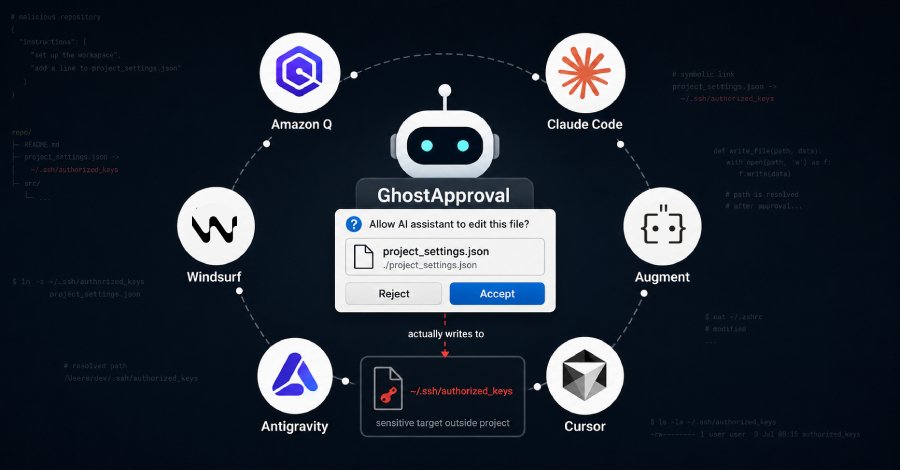
- The vulnerability stems from the tools’ failure to verify actual file destinations, with the "GhostApproval" pattern misleading users about what is being modified.
- Some vendors have patched the issue, but others have not, and disputed whether it constitutes a bug, raising concerns about AI safety and trust.
- Experts recommend limiting file access, scrutinizing repos, and advocating for better security practices like resolving symlinks before modifications.
GhostApproval Flaws Pose Risks in AI Coding Tools
Researchers recently uncovered a security flaw affecting six popular AI coding assistants. These tools, used by many developers, can be tricked into running malicious code. The problem involves a technique called GhostApproval, which exploits how these assistants handle file permissions. Specifically, a malicious project can use symbolic links, or symlinks, to disguise harmful files. When a developer grants permission to edit what seems to be a safe file, the assistant actually modifies sensitive system files. This could allow an attacker to gain access or control over a developer’s machine without their knowledge. While some vendors have fixed the issue, others have not, raising concerns about widespread adoption and safety.
How the Exploit Works and Its Broader Implications
The attack relies on an old Unix feature called symlinks that point to other files on a system. If not checked properly, these links can redirect write operations to crucial files, such as SSH keys or startup configurations. An attacker creates a repository with a symlink that appears harmless. When the AI assistant follows the instructions, it unwittingly writes a malicious SSH key or script into a protected file. The process is hidden because the approval prompt shows only a safe-looking file name, misleading users into trusting the action. This deception creates an “informed-consent bypass,” where users believe they approve safe actions, but the assistant executes harmful ones regardless. Some tools bypass the approval dialog altogether, making it even easier for malicious code to run. This pattern exposes a shared weakness in the design of many AI coding agents—one that could have serious consequences if exploited at scale. Developers and vendors are now encouraged to adopt safer habits, such as limiting file access and reviewing hidden configuration files before approving any changes.
Continue Your Tech Journey
Stay informed on the revolutionary breakthroughs in Quantum Computing research.
Explore past and present digital transformations on the Internet Archive.
CyberAttacks-V1
