
Close Menu
  • Home
  • Cybercrime and Ransomware
  • Emerging Tech
  • Threat Intelligence
  • Expert Insights
  • Careers and Learning
  • Compliance

Subscribe to Updates

Subscribe to our newsletter and never miss our latest news

Subscribe my Newsletter for New Posts & tips Let's stay updated!

What's Hot

Malicious npm Package Exfiltrates Credentials via Twilio Probe

September 22, 2026

Microsoft and Google disrupt RedVDS cybercrime marketplace.

September 22, 2026

CAIRN Detects AI-Driven Malware via Frontier Tracking

September 22, 2026
Facebook X (Twitter) Instagram
The CISO Brief
  • Home
  • Cybercrime and Ransomware
  • Emerging Tech
  • Threat Intelligence
  • Expert Insights
  • Careers and Learning
  • Compliance
Home » Targeted Threat: New PHP Interlock RAT Uses FileFix to Strike Multiple Industries
Cybercrime and Ransomware

Targeted Threat: New PHP Interlock RAT Uses FileFix to Strike Multiple Industries

Staff WriterBy Staff WriterJuly 14, 2025No Comments4 Mins Read5 Views
Facebook Twitter Pinterest LinkedIn Tumblr Email
Share
Facebook Twitter LinkedIn Pinterest WhatsApp Email

Quick Takeaways

  1. New Ransomware Variant: The Interlock ransomware group has launched a PHP variant of its remote access trojan (RAT), utilizing a tool called FileFix, in a widespread campaign since May 2025.

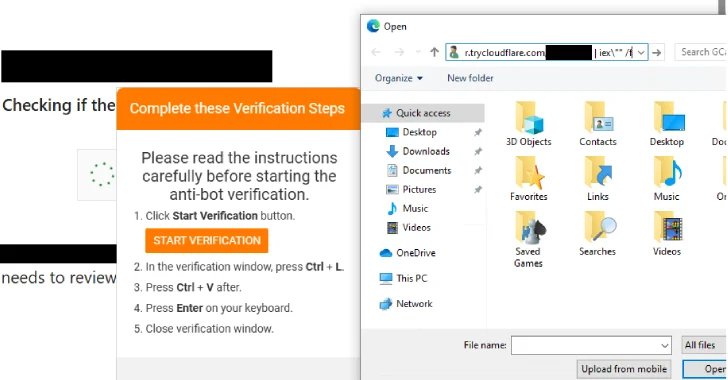
  2. Infection Tactics: The campaign involves compromised websites injecting scripts that redirect users to fake CAPTCHA pages, prompting download and execution of the Interlock RAT via PowerShell.

  3. Operational Features: Once deployed, the RAT performs system reconnaissance, exfiltrates data, and uses Windows Registry changes for persistence, alongside exploiting Cloudflare Tunnel subdomains for command-and-control communication.

  4. Evolving Threat Landscape: The research highlights the operational sophistication of the Interlock group, adapting their malware delivery mechanisms to target a broad range of industries with increasing complexity.

The Issue

In a recent security analysis reported by Ravie Lakshmanan on July 14, 2025, it has come to light that the Interlock ransomware group has advanced its cybercriminal tactics by deploying a new PHP variant of its remote access trojan (RAT), referred to as NodeSnake, integrated into a broader campaign utilizing an evolved mechanism known as FileFix. This sophisticated operation, originating around May 2025 and detailed in collaboration with Proofpoint by the DFIR Report, exploits compromised websites. These sites unwittingly host a malicious one-line script embedded within their HTML. This script acts as a traffic distribution system (TDS), redirecting users to bogus CAPTCHA pages, which then prompt the execution of PowerShell scripts to install the NodeSnake malware.

The implications of this cyber onslaught are extensive, targeting a broad spectrum of industries through opportunistic infiltration tactics. Notably, the previously identified Node.js variant of Interlock RAT was specifically documented in attacks against local government and higher education sectors in the UK earlier this year. The PHP variant enhances the group’s operational sophistication, cleverly utilizing Cloudflare Tunnel subdomains to obscure command-and-control communications, while also embedding fallback IP addresses to maintain connectivity even under threat mitigation efforts. This escalation in technical acumen highlights the relentless evolution of cyber threats in today’s digital landscape, emphasizing the imperative for robust cybersecurity measures.

Risks Involved

The proliferation of the Interlock ransomware group’s PHP variant of its remote access trojan (RAT) significantly elevates risks not only for immediate targets but also for a wide spectrum of businesses, users, and organizations that may inadvertently intersect with this cyber threat landscape. As compromised websites disseminate malicious scripts unnoticed, the consequential compromise of user systems can lead to extensive data breaches, operational disruptions, and financial losses across industries. Moreover, the opportunistic nature of the attacks—exploiting vulnerabilities in various platforms—implies that the ramifications could ripple outward, affecting interconnected systems and supply chains. Organizations could find themselves embroiled in reputational damage, regulatory scrutiny, and cascading failures within their networks, underscoring the critical need for robust cybersecurity measures to counteract these evolving threats and to safeguard both individual and collective digital infrastructures.

Possible Remediation Steps

The rapid emergence of threats such as the New PHP-Based Interlock RAT Variant underscores the critical necessity for swift remediation efforts across various sectors to safeguard sensitive information and maintain operational integrity.

Mitigation Measures

  1. Immediate Patch Deployment
  2. Intrusion Detection Systems
  3. Network Segmentation
  4. User Access Control
  5. Regular System Audits
  6. Security Awareness Training
  7. Incident Response Plan Activation
  8. Threat Intelligence Integration

NIST CSF Guidance
The NIST Cybersecurity Framework (CSF) emphasizes risk management and proactive defense strategies. For comprehensive details, refer specifically to NIST SP 800-53, which outlines security and privacy controls essential for mitigating such risks effectively.

Continue Your Cyber Journey

Explore career growth and education via Careers & Learning, or dive into Compliance essentials.

Explore engineering-led approaches to digital security at IEEE Cybersecurity.

Disclaimer: The information provided may not always be accurate or up to date. Please do your own research, as the cybersecurity landscape evolves rapidly. Intended for secondary references purposes only.

Cyberattacks-V1

CISO Update computer security cyber attacks cyber news cyber security news cyber security news today cyber security updates cyber updates Cybersecurity data breach hacker news hacking news how to hack information security MX1 network security ransomware malware software vulnerability the hacker news
Share. Facebook Twitter Pinterest LinkedIn Tumblr Email
Previous ArticleThe Unusual Suspect: Git Repos
Next Article Military Veterans May Be What Cybersecurity Is Looking For
Avatar photo
Staff Writer
  • Website

John Marcelli is a staff writer for the CISO Brief, with a passion for exploring and writing about the ever-evolving world of technology. From emerging trends to in-depth reviews of the latest gadgets, John stays at the forefront of innovation, delivering engaging content that informs and inspires readers. When he's not writing, he enjoys experimenting with new tech tools and diving into the digital landscape.

Related Posts

Malicious npm Package Exfiltrates Credentials via Twilio Probe

September 22, 2026

Microsoft and Google disrupt RedVDS cybercrime marketplace.

September 22, 2026

CAIRN Detects AI-Driven Malware via Frontier Tracking

September 22, 2026

Comments are closed.

Latest Posts

Urgent: Exploitation of SAP Commerce Cloud CVE-2026-58231 Sparks Immediate Threat

September 19, 2026

Suspected China-Linked Group Exploits VMware Flaw to Launch Babuk Ransomware

September 16, 2026

CISA Flags Critical Ray Flaw for Browser-Based RCE Exploits

September 13, 2026

TWINLOOT Exploits SharePoint and Teams to Steal Credentials and Lateral Movement

September 10, 2026
Don't Miss

Malicious npm Package Exfiltrates Credentials via Twilio Probe

By Staff WriterSeptember 22, 2026

Summary Points Malicious npm package "tw-pkgprobe-7731" impersonates a security tool to harvest sensitive data, including…

Microsoft and Google disrupt RedVDS cybercrime marketplace.

September 22, 2026

CAIRN Detects AI-Driven Malware via Frontier Tracking

September 22, 2026

Subscribe to Updates

Subscribe to our newsletter and never miss our latest news

Subscribe my Newsletter for New Posts & tips Let's stay updated!

Recent Posts

  • Malicious npm Package Exfiltrates Credentials via Twilio Probe
  • Microsoft and Google disrupt RedVDS cybercrime marketplace.
  • CAIRN Detects AI-Driven Malware via Frontier Tracking
  • SideCopy uses reverse RAT spear-phishing to target Indian academia
  • Hidden meta settings enable AI backdoor exploitation
About Us
About Us

Welcome to The CISO Brief, your trusted source for the latest news, expert insights, and developments in the cybersecurity world.

In today’s rapidly evolving digital landscape, staying informed about cyber threats, innovations, and industry trends is critical for professionals and organizations alike. At The CISO Brief, we are committed to providing timely, accurate, and insightful content that helps security leaders navigate the complexities of cybersecurity.

Facebook X (Twitter) Pinterest YouTube WhatsApp
Our Picks

Malicious npm Package Exfiltrates Credentials via Twilio Probe

September 22, 2026

Microsoft and Google disrupt RedVDS cybercrime marketplace.

September 22, 2026

CAIRN Detects AI-Driven Malware via Frontier Tracking

September 22, 2026
Most Popular

Gefährliche Angriffe: Wie Cyberkriminelle Ihre Identität angreifen

January 29, 2026205 Views

CISA Alerts: Critical Vulnerability in Splunk Enterprise Under Active Attack

June 19, 2026204 Views

Salesforce Disables Klue App After Data Breach from Token Abuse

June 19, 2026202 Views

Archives

  • September 2026
  • August 2026
  • July 2026
  • June 2026
  • May 2026
  • April 2026
  • March 2026
  • February 2026
  • January 2026
  • December 2025
  • November 2025
  • October 2025
  • September 2025
  • August 2025
  • July 2025
  • June 2025

Categories

  • Compliance
  • Cyber Updates
  • Cybercrime and Ransomware
  • Editor's pick
  • Emerging Tech
  • Events
  • Featured
  • Insights
  • Most Read
  • Threat Intelligence
  • Uncategorized
© 2026 thecisobrief. Designed by thecisobrief.
  • Home
  • About Us
  • Advertise with Us
  • Contact Us
  • DMCA
  • Privacy Policy
  • Terms & Conditions

Type above and press Enter to search. Press Esc to cancel.