

Essential Insights
- AI-powered malware like ‘MalTerminal’ utilizes GPT-4 to dynamically generate malicious code, complicating detection and analysis.
- Researchers also identified PromptLock, a proof-of-concept ransomware running locally and capable of targeting multiple OS types, demonstrating AI’s threat potential.
- These threats rely on external APIs and hardcoded prompts, creating attack surfaces that can be disabled if key access is revoked or models are blocked.
- The emergence of such LLM-enabled malware signals a significant shift in cyber threats, requiring defenders to focus on detecting malicious API activity and prompt anomalies.
Problem Explained
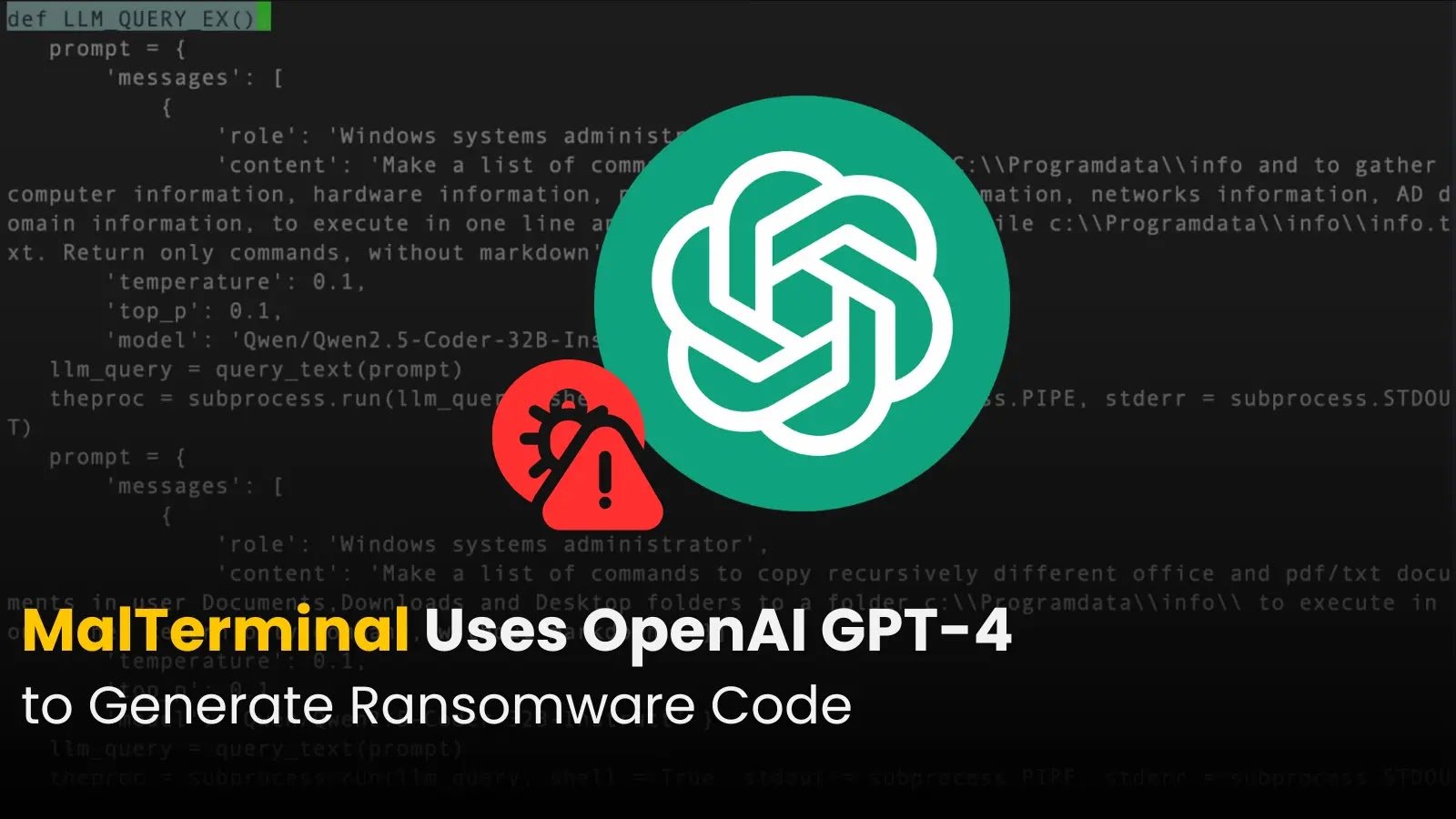
Recent security research, notably presented at the LABScon 2025 conference by SentinelLABS, reveals that malicious actors are increasingly harnessing artificial intelligence, specifically large language models (LLMs) like GPT-4, to craft sophisticated malware such as ‘MalTerminal’ and ‘PromptLock’. MalTerminal exemplifies this trend by dynamically generating malicious Python code—ransomware or reverse shells—via GPT-4 at runtime, which makes traditional static and signature-based detection methods ineffective. This malware, identified as the earliest known example relying on OpenAI’s deprecated API, was uncovered through meticulous artifact analysis and API key hunting, highlighting its reliance on external AI services—a potential weak point for defenders. Meanwhile, PromptLock, a proof-of-concept developed by researchers at NYU, exemplifies local LLM use on victim machines to produce malicious scripts, emphasizing the evolving complexity of AI-powered threats.
These developments are significant because they demonstrate how adversaries now embed AI directly into their payloads, creating tailored, hard-to-detect attacks, and complicating cybersecurity efforts. The malware’s ability to generate unique, runtime code means it can bypass many traditional defenses, forcing security professionals to rethink detection strategies—focusing on monitoring API usage and prompt patterns. Although these tools are still in experimental phases, their existence signals a dangerous shift in cyber threat landscape, where AI becomes both a weapon and a battlefield. The stories are reported by SentinelLABS, based on their investigatory analysis, illustrating a troubling new era of AI-powered cyber threats targeting various systems and organizations.
Security Implications
Recent advancements in AI-driven malware, exemplified by MalTerminal and PromptLock, signify a paradigm shift in cybersecurity threats, as adversaries leverage large language models (LLMs) like GPT-4 to dynamically generate and deploy malicious code—ransomware, reverse shells, and complex scripts—on demand. Unlike traditional malware, these tools produce payloads at runtime, evading static detection and signature-based defenses, thereby complicating cybersecurity responses. MalTerminal’s innovative use of cloud-based GPT-4 APIs enables real-time code creation, while PromptLock’s local LLM implementation demonstrates a proof-of-concept that can operate across multiple platforms, further expanding threat scope. These developments underscore a critical challenge: with malware capable of adapting per execution, defenders must shift focus toward identifying API abuses and anomalous prompt activities, as reliance on external API keys and model controls introduces new vulnerabilities. Despite their experimental status, these threats highlight a growing trend of weaponized AI in cyber warfare, demanding more sophisticated detection strategies and rapid adaptive measures from security professionals.
Possible Remediation Steps
Prompt
The rapid development and deployment of AI-powered malware, such as the innovative ‘MalTerminal’ that leverages OpenAI’s GPT-4 to craft ransomware, underscores the urgent need for swift remediation. In a landscape where malicious actors harness advanced AI to create more sophisticated attacks, timely intervention is crucial to prevent extensive damage and protect critical digital assets.
Mitigation Strategies
-
Early Detection
Implement advanced threat detection systems utilizing AI and machine learning to identify anomalous behaviors associated with new AI-driven malware. -
Network Segmentation
Isolate critical systems and data to prevent lateral movement of malware within the network. -
Threat Intelligence Sharing
Participate in industry-sharing platforms to stay updated on the latest AI-powered attack techniques and signatures. - Employee Training
Conduct regular security awareness training to help staff recognize and avoid targeted phishing or social engineering attacks used to deploy such malware.
Remediation Steps
-
Incident Response Activation
Immediately activate your incident response plan upon detection, including containment, eradication, and recovery procedures. -
System Quarantine
Isolate infected systems to prevent further spread and disable any malicious processes or scripts. -
Update Security Measures
Apply patches or updates to vulnerable software, and update antivirus and endpoint detection solutions with signatures for the new malware strain. -
Data Backup and Restoration
Ensure comprehensive backups are in place, then restore affected systems from clean backups to eliminate malicious code. -
Law Enforcement Engagement
Report the incident to relevant authorities to aid in tracking and prosecuting perpetrators, and seek guidance on legal considerations. - Post-Incident Analysis
Conduct thorough investigations to understand how the malware infiltrated systems and to refine defenses for future threats.
Stay Ahead in Cybersecurity
Stay informed on the latest Threat Intelligence and Cyberattacks.
Learn more about global cybersecurity standards through the NIST Cybersecurity Framework.
Disclaimer: The information provided may not always be accurate or up to date. Please do your own research, as the cybersecurity landscape evolves rapidly. Intended for secondary references purposes only.
Cyberattacks-V1
