
Close Menu
  • Home
  • Cybercrime and Ransomware
  • Emerging Tech
  • Threat Intelligence
  • Expert Insights
  • Careers and Learning
  • Compliance

Subscribe to Updates

Subscribe to our newsletter and never miss our latest news

Subscribe my Newsletter for New Posts & tips Let's stay updated!

What's Hot

Botnet Exploits Diagnostic Tool Vulnerabilities for Network Control

August 4, 2026

DOUBLECUP exploits ClickFix, cached PNGs for RAT deployments

August 4, 2026

Indonesia faces surge in ransomware, phishing, and APT attacks

August 4, 2026
Facebook X (Twitter) Instagram
The CISO Brief
  • Home
  • Cybercrime and Ransomware
  • Emerging Tech
  • Threat Intelligence
  • Expert Insights
  • Careers and Learning
  • Compliance
Home » Operation BlueDash Deploys RMM & ScreenConnect via Fake Teams Update
Cybercrime and Ransomware

Operation BlueDash Deploys RMM & ScreenConnect via Fake Teams Update

Staff WriterBy Staff WriterAugust 2, 2026No Comments3 Mins Read1 Views
Facebook Twitter Pinterest LinkedIn Tumblr Email
Share
Facebook Twitter LinkedIn Pinterest WhatsApp Email

Quick Takeaways

  1. Cybercriminals are using a Microsoft Teams-themed phishing campaign to deliver remote monitoring and management (RMM) tools via fake update pages and concealed PowerShell downloads.
  2. Attackers are deploying multiple RMM tools simultaneously on infected hosts to establish resilient, persistent remote access, and are actively exploring system details for further exploitation.
  3. The campaign, called Operation BlueDash, is attributed to a Nigerian threat group and has been active since at least February 2026, utilizing sophisticated infrastructure and GitHub-hosted phishing payloads.
  4. This attack framework is part of broader schemes, including multi-brand phishing (e.g., Zoom, Microsoft 365) and credential harvesting, highlighting ongoing threats to corporate communication platforms.

Operation BlueDash Uses Fake Teams Updates to Install Malicious Tools

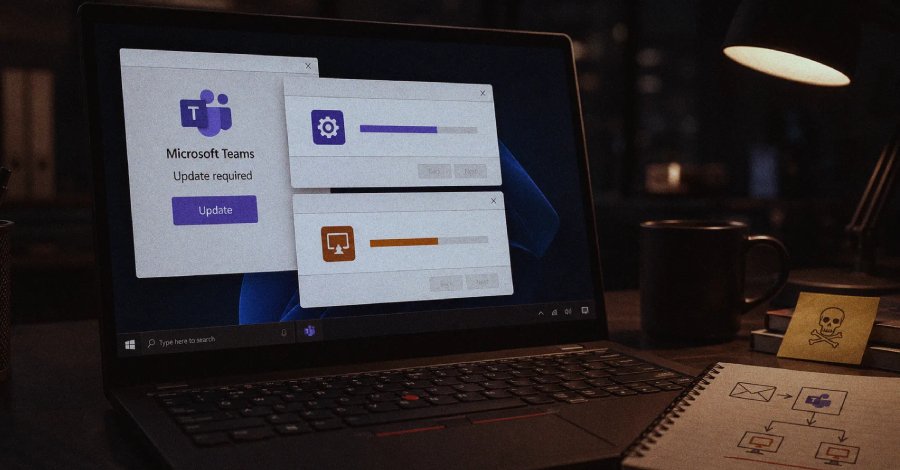
Recently, cybersecurity experts uncovered a new hacking campaign called Operation BlueDash. The attackers send fake Microsoft Teams update messages to trick users. These messages direct victims to a fake website that looks like the real Microsoft Store. Once there, victims are encouraged to download what appears to be an official Teams update. However, in reality, this download secretly installs malicious software.

The malware includes Remote Monitoring and Management (RMM) tools. These tools give hackers remote access to infected computers. In particular, the campaign deploys two main RMM programs: Level RMM and ScreenConnect. The hackers use a script to fetch these tools quietly. They also register infected devices with secret codes controlled by the attackers. This method helps them keep control even if antivirus programs find one of the tools.

By installing multiple RMM programs on the same device, hackers make it harder for defenders to remove them. They also run commands to check the system’s security status. For example, they examine whether the device needs a reboot or if its firewall is active. They look for ways to gain further control by finding out who has administrative rights on the computer. This detailed exploration shows how hackers prepare their next move carefully.

According to cybersecurity analysts, this campaign is linked to a group operating from Nigeria. They estimate this because of the infrastructure used and the code behind these attacks. The hackers have been active since at least February 2026, using various fake websites and repositories on GitHub to hide their activities. These repositories contain the tools and pages used to lure victims and deploy malware.

Furthermore, the hackers seem to run multi-brand schemes, not just focusing on Teams. They also use fake Zoom meeting links to spread their payloads. Their goal is to download remote management agents and register the infected devices to stay connected. This multi-layered approach demonstrates a focus on resilience and persistence in their operations.

Expand Your Tech Knowledge

Learn how the Internet of Things (IoT) is transforming everyday life.

Discover archived knowledge and digital history on the Internet Archive.

CyberAttacks-V1

Share. Facebook Twitter Pinterest LinkedIn Tumblr Email
Previous ArticleLarva-24009 exploits email to conduct phishing attacks
Next Article UK Police and Government Contact Details Leaked on Dark Web
Avatar photo
Staff Writer
  • Website

John Marcelli is a staff writer for the CISO Brief, with a passion for exploring and writing about the ever-evolving world of technology. From emerging trends to in-depth reviews of the latest gadgets, John stays at the forefront of innovation, delivering engaging content that informs and inspires readers. When he's not writing, he enjoys experimenting with new tech tools and diving into the digital landscape.

Related Posts

Public PoC Uncovers Check Point SmartConsole Authentication Bypass

July 30, 2026

China-Aligned Hackers Exploit Roundcube Flaws to Target Universities

July 24, 2026

China-Linked UAT-7810 Expands ORB Network with New LONGLEASH Malware

July 21, 2026

Comments are closed.

Latest Posts

Operation BlueDash Deploys RMM & ScreenConnect via Fake Teams Update

August 2, 2026

Public PoC Uncovers Check Point SmartConsole Authentication Bypass

July 30, 2026

China-Aligned Hackers Exploit Roundcube Flaws to Target Universities

July 24, 2026

China-Linked UAT-7810 Expands ORB Network with New LONGLEASH Malware

July 21, 2026
Don't Miss

Public PoC Uncovers Check Point SmartConsole Authentication Bypass

By Staff WriterJuly 30, 2026

Quick Takeaways A critical vulnerability (CVE-2026-16232) in Check Point Security Management Server allows unauthenticated attackers…

China-Aligned Hackers Exploit Roundcube Flaws to Target Universities

July 24, 2026

China-Linked UAT-7810 Expands ORB Network with New LONGLEASH Malware

July 21, 2026

Subscribe to Updates

Subscribe to our newsletter and never miss our latest news

Subscribe my Newsletter for New Posts & tips Let's stay updated!

Recent Posts

  • Botnet Exploits Diagnostic Tool Vulnerabilities for Network Control
  • DOUBLECUP exploits ClickFix, cached PNGs for RAT deployments
  • Indonesia faces surge in ransomware, phishing, and APT attacks
  • Urgent: Patch Critical N-able N-central Authentication Flaws Now
  • Trace AI Videos Back to Their Origin
About Us
About Us

Welcome to The CISO Brief, your trusted source for the latest news, expert insights, and developments in the cybersecurity world.

In today’s rapidly evolving digital landscape, staying informed about cyber threats, innovations, and industry trends is critical for professionals and organizations alike. At The CISO Brief, we are committed to providing timely, accurate, and insightful content that helps security leaders navigate the complexities of cybersecurity.

Facebook X (Twitter) Pinterest YouTube WhatsApp
Our Picks

Botnet Exploits Diagnostic Tool Vulnerabilities for Network Control

August 4, 2026

DOUBLECUP exploits ClickFix, cached PNGs for RAT deployments

August 4, 2026

Indonesia faces surge in ransomware, phishing, and APT attacks

August 4, 2026
Most Popular

Gefährliche Angriffe: Wie Cyberkriminelle Ihre Identität angreifen

January 29, 202646 Views

Protecting MCP Security: Defeating Prompt Injection & Tool Poisoning

January 30, 202634 Views

Unlock the Power of Free WormGPT: Harnessing DeepSeek, Gemini, and Kimi-K2 AI Models

November 27, 202531 Views

Archives

  • August 2026
  • July 2026
  • June 2026
  • May 2026
  • April 2026
  • March 2026
  • February 2026
  • January 2026
  • December 2025
  • November 2025
  • October 2025
  • September 2025
  • August 2025
  • July 2025
  • June 2025

Categories

  • Compliance
  • Cyber Updates
  • Cybercrime and Ransomware
  • Editor's pick
  • Emerging Tech
  • Events
  • Featured
  • Insights
  • Most Read
  • Threat Intelligence
  • Uncategorized
© 2026 thecisobrief. Designed by thecisobrief.
  • Home
  • About Us
  • Advertise with Us
  • Contact Us
  • DMCA
  • Privacy Policy
  • Terms & Conditions

Type above and press Enter to search. Press Esc to cancel.