

Fast Facts
-
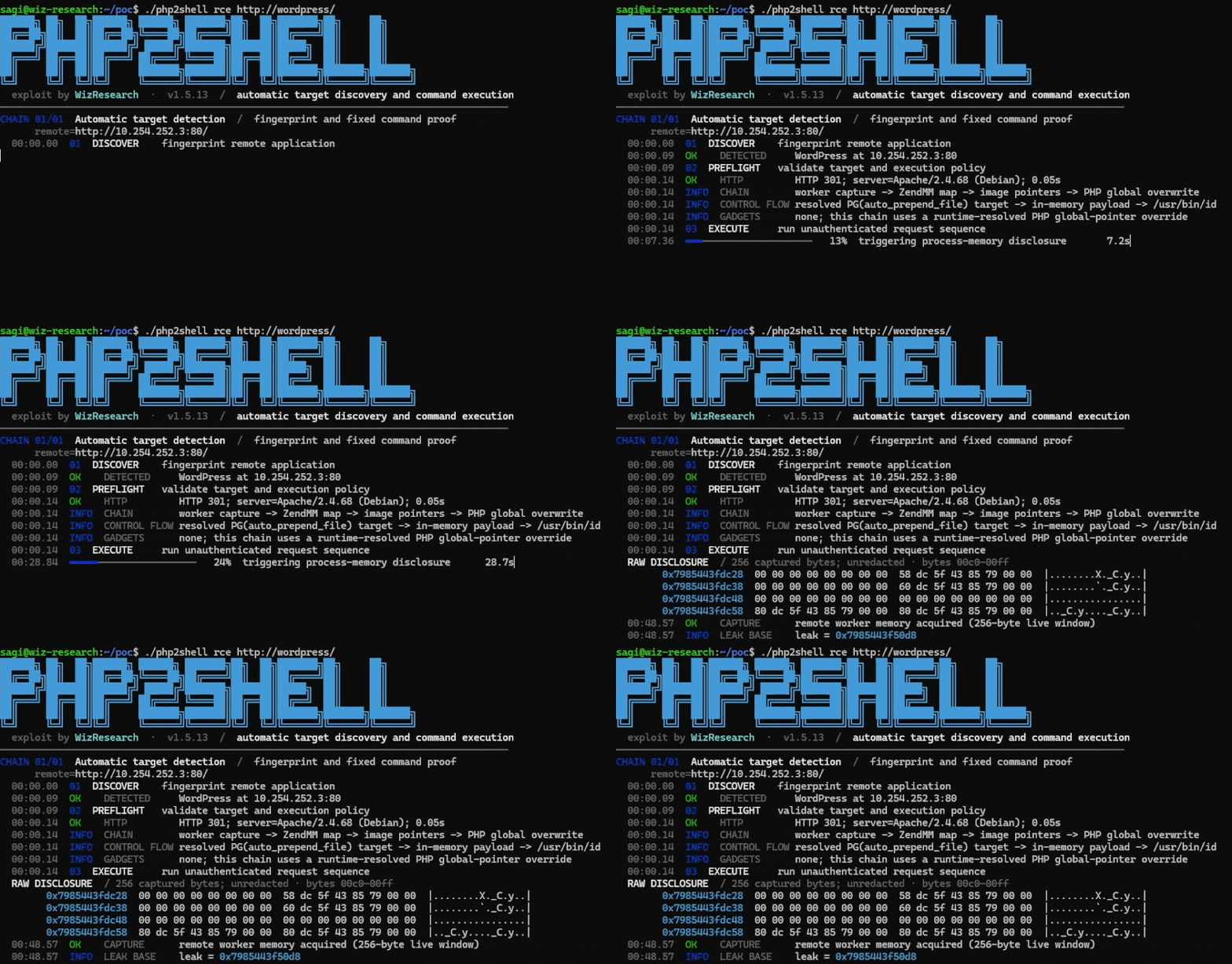
Critical PHP2Shell flaws (CVSS 9.2) can enable unauthenticated code execution and expose sensitive PHP worker memory—even when the application itself is secure.
-
All web-serving PHP setups are affected, including Apache mod_php, PHP-FPM, CGI, FrankenPHP, and LiteSpeed; mod_php is highlighted as especially exposed.
-
Patch immediately: install PHP 8.5.12, 8.4.27, 8.3.36, or 8.2.35 (or your vendor’s patched package), then restart PHP services and workers.
- Workarounds are not a complete fix. Exploitation attempts were reported, but no confirmed breach was reported in the article; review logs and watch for suspicious requests, errors, cookies, or worker restarts.
PHP has issued emergency updates for two critical flaws that could let attackers run code on vulnerable web servers without an account. Security teams have reported attempts to exploit the flaws, but no successful break-in has been confirmed.
What the Flaws Mean for PHP Servers
The flaws, known together as PHP2Shell, affect the PHP runtime—the software that runs PHP sites. As a result, even a secure website can face risk if its server uses an unpatched PHP version. The danger is greatest for servers that use Apache’s mod_php, where one request may trigger an attack before the website’s own code runs.
PHP rates both flaws 9.2 out of 10 for severity. The fixes appear in PHP 8.5.12, 8.4.27, 8.3.36 and 8.2.35. Older versions also face risk, though some no longer receive updates from the PHP project.
Meanwhile, reports of attack attempts make prompt action important. However, attempts do not prove that attackers have broken into a specific server. Some organizations temporarily took services offline as a precaution, showing how a software flaw can disrupt services people rely on for work and everyday tasks.
How Administrators Can Respond
Administrators should update the PHP runtime that handles web requests, then restart the related server processes. Updating a website or its applications alone does not fix the PHP software underneath them. Hosts and organizations should also check whether their system vendor has included the security fixes in its packages.
PHP says only an update fully protects a server. Some settings can reduce exposure while administrators prepare a fix, but they do not remove the risk. After updating, teams should review memory limits and watch for unusual requests, repeated server errors or unexplained worker restarts.
The incident also highlights a practical challenge: PHP runs a large range of websites and services, so a flaw in the shared runtime can affect many systems at once. Fast updates help protect that broad ecosystem—and the people who depend on it.
Discover More Technology Insights
Dive deeper into the world of Cryptocurrency and its impact on global finance.
Explore past and present digital transformations on the Internet Archive.
CyberAttacks-V1
