
Close Menu
  • Home
  • Cybercrime and Ransomware
  • Emerging Tech
  • Threat Intelligence
  • Expert Insights
  • Careers and Learning
  • Compliance

Subscribe to Updates

Subscribe to our newsletter and never miss our latest news

Subscribe my Newsletter for New Posts & tips Let's stay updated!

What's Hot

New JanaWare Ransomware Targets Turkish Users via Customized Adwind RAT

April 20, 2026

Iranian MOIS Orchestrates Coordinated Cyber Campaigns Using Multiple Hacker Personas

April 20, 2026

AI App Builder Data Breach: Thousands of Projects Exposed via API Flaw

April 20, 2026
Facebook X (Twitter) Instagram
The CISO Brief
  • Home
  • Cybercrime and Ransomware
  • Emerging Tech
  • Threat Intelligence
  • Expert Insights
  • Careers and Learning
  • Compliance
Home » $10 Million Reward for Ransomware Admin Who Hit U.S. Healthcare Systems
Cybercrime and Ransomware

$10 Million Reward for Ransomware Admin Who Hit U.S. Healthcare Systems

Staff WriterBy Staff WriterSeptember 11, 2025No Comments4 Mins Read3 Views
Facebook Twitter Pinterest LinkedIn Tumblr Email
Share
Facebook Twitter LinkedIn Pinterest WhatsApp Email

Essential Insights

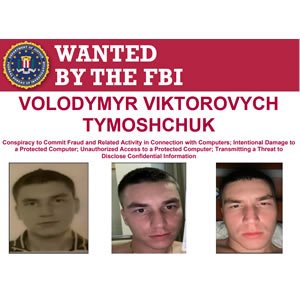
  1. Ukrainian criminal Volodymyr Tymoshchuk orchestrated multiple ransomware operations (LockerGaga, MegaCortex, Nefilim) between 2018-2021, targeting over 250 US victims and causing millions in damages.
  2. International law enforcement recovered decryption keys in 2022, helping victims avoid data encryption and mitigating ransomware damage.
  3. Tymoshchuk faces charges including conspiracy, computer damage, and threats, with the U.S. offering up to $11 million in rewards for information leading to his arrest or conviction.
  4. His ransomware schemes involved recruiting affiliates, demanding ransom shares, and threatening to leak data, highlighting the global scale and sophistication of his cybercriminal operations.

What’s the Problem?

The U.S. Department of Justice has officially accused Volodymyr Viktorovich Tymoshchuk, a Ukrainian hacker known by aliases such as deadforz, Boba, msfv, and farnetwork, of orchestrating extensive ransomware operations that targeted over 250 victims in the United States and many others worldwide between 2018 and 2021. Tymoshchuk acted as the administrator of multiple ransomware groups—including LockerGaga, MegaCortex, and Nefilim—causing billions of dollars in damages by encrypting sensitive data, disrupting business operations, and demanding hefty ransoms. Law enforcement’s international effort in 2022 uncovered decryption keys that helped victims avoid some of this harm, demonstrating global cooperation to combat cybercrime. Tymoshchuk, who enlisted affiliates like Artem Stryzhak—who was prosecuted in Spain—generated significant illicit gains and threatened to leak victim data if demands were not met.

The accusations against Tymoshchuk include conspiracy, computer damage, unauthorized access, and threats to reveal confidential information. His criminal activities predominantly targeted major corporations and healthcare institutions, showcasing his intent to terrorize and financially cripple his victims. The U.S. authorities emphasize that Tymoshchuk actively evaded law enforcement by deploying new malware strains and maintaining a widespread network of cybercriminals. In a bid to curb his influence, the State Department is offering rewards totaling up to $11 million for information leading to his apprehension and the dismantling of his networks, reflecting the serious concern over the threat posed by such organized cybercrime entities.

Risk Summary

Cyber risks posed by ransomware operations like those coordinated by Ukrainian criminal Volodymyr Viktorovich Tymoshchuk are immensely damaging, causing widespread disruption, financial loss, and threats to sensitive data across global industries. Tymoshchuk’s activities, involving over 250 U.S. victims and hundreds worldwide, illustrate how cybercriminal networks leverage sophisticated encryption malware—LockerGaga, MegaCortex, and Nefilim—to lock businesses out of their data, demanding hefty ransoms while causing operational paralysis. The impact extends beyond immediate financial strain, including reputational damage, system destruction, and potential leaks of confidential information, often exacerbated by the targeted nature of these attacks on large corporate and healthcare entities. Law enforcement efforts, aided by international coordination and decryption keys, have mitigated some effects, but the persistent threat underscores the critical need for robust cybersecurity measures and proactive incident response frameworks to safeguard vital assets from evolving ransomware threats.

Possible Action Plan

Understanding and swiftly addressing ransomware attacks, especially those targeting vital sectors like healthcare, is crucial to prevent further damage, protect sensitive data, and ensure continued access to essential services.

Immediate Actions

  • Isolate affected systems to contain the threat.
  • Disconnect compromised devices from networks.
  • Assess infection scope with forensic tools.

Prevention & Defense

  • Implement robust backup solutions and test restore processes regularly.
  • Apply timely security patches and updates to all systems.
  • Strengthen email and network security, including advanced threat detection.

Incident Response

  • Activate incident response protocols to coordinate recovery efforts.
  • Notify relevant authorities and cybersecurity agencies, such as those offering rewards.
  • Communicate transparently with stakeholders and affected entities.

Long-Term Strategies

  • Conduct comprehensive security awareness training for staff.
  • Regularly review and update cybersecurity policies.
  • Invest in advanced cybersecurity infrastructure and threat intelligence.

Advance Your Cyber Knowledge

Explore career growth and education via Careers & Learning, or dive into Compliance essentials.

Access world-class cyber research and guidance from IEEE.

Disclaimer: The information provided may not always be accurate or up to date. Please do your own research, as the cybersecurity landscape evolves rapidly. Intended for secondary references purposes only.

Cyberattacks-V1

CISO Update Cybersecurity MX1
Share. Facebook Twitter Pinterest LinkedIn Tumblr Email
Previous ArticleMitsubishi Electric Acquires Nozomi Networks for $1B
Next Article CyberTech Spotlight: Daily News & Insights
Avatar photo
Staff Writer
  • Website

John Marcelli is a staff writer for the CISO Brief, with a passion for exploring and writing about the ever-evolving world of technology. From emerging trends to in-depth reviews of the latest gadgets, John stays at the forefront of innovation, delivering engaging content that informs and inspires readers. When he's not writing, he enjoys experimenting with new tech tools and diving into the digital landscape.

Related Posts

New JanaWare Ransomware Targets Turkish Users via Customized Adwind RAT

April 20, 2026

Iranian MOIS Orchestrates Coordinated Cyber Campaigns Using Multiple Hacker Personas

April 20, 2026

AI App Builder Data Breach: Thousands of Projects Exposed via API Flaw

April 20, 2026

Comments are closed.

Latest Posts

New JanaWare Ransomware Targets Turkish Users via Customized Adwind RAT

April 20, 2026

Iranian MOIS Orchestrates Coordinated Cyber Campaigns Using Multiple Hacker Personas

April 20, 2026

AI App Builder Data Breach: Thousands of Projects Exposed via API Flaw

April 20, 2026

Transforming QEMU into a Stealth Backdoor for Credential Theft & Ransomware

April 20, 2026
Don't Miss

New JanaWare Ransomware Targets Turkish Users via Customized Adwind RAT

By Staff WriterApril 20, 2026

Essential Insights JanaWare is a targeted ransomware campaign in Turkey, delivered via a heavily modified…

Iranian MOIS Orchestrates Coordinated Cyber Campaigns Using Multiple Hacker Personas

April 20, 2026

AI App Builder Data Breach: Thousands of Projects Exposed via API Flaw

April 20, 2026

Subscribe to Updates

Subscribe to our newsletter and never miss our latest news

Subscribe my Newsletter for New Posts & tips Let's stay updated!

Recent Posts

  • New JanaWare Ransomware Targets Turkish Users via Customized Adwind RAT
  • Iranian MOIS Orchestrates Coordinated Cyber Campaigns Using Multiple Hacker Personas
  • AI App Builder Data Breach: Thousands of Projects Exposed via API Flaw
  • Transforming QEMU into a Stealth Backdoor for Credential Theft & Ransomware
  • Atos enhances defenses against adversarial cyber threats
About Us
About Us

Welcome to The CISO Brief, your trusted source for the latest news, expert insights, and developments in the cybersecurity world.

In today’s rapidly evolving digital landscape, staying informed about cyber threats, innovations, and industry trends is critical for professionals and organizations alike. At The CISO Brief, we are committed to providing timely, accurate, and insightful content that helps security leaders navigate the complexities of cybersecurity.

Facebook X (Twitter) Pinterest YouTube WhatsApp
Our Picks

New JanaWare Ransomware Targets Turkish Users via Customized Adwind RAT

April 20, 2026

Iranian MOIS Orchestrates Coordinated Cyber Campaigns Using Multiple Hacker Personas

April 20, 2026

AI App Builder Data Breach: Thousands of Projects Exposed via API Flaw

April 20, 2026
Most Popular

Protecting MCP Security: Defeating Prompt Injection & Tool Poisoning

January 30, 202630 Views

The New Face of DDoS is Impacted by AI

August 4, 202523 Views

Scams: Unstoppable but Manageable

June 3, 202523 Views

Archives

  • April 2026
  • March 2026
  • February 2026
  • January 2026
  • December 2025
  • November 2025
  • October 2025
  • September 2025
  • August 2025
  • July 2025
  • June 2025

Categories

  • Compliance
  • Cyber Updates
  • Cybercrime and Ransomware
  • Editor's pick
  • Emerging Tech
  • Events
  • Featured
  • Insights
  • Most Read
  • Threat Intelligence
  • Uncategorized
© 2026 thecisobrief. Designed by thecisobrief.
  • Home
  • About Us
  • Advertise with Us
  • Contact Us
  • DMCA
  • Privacy Policy
  • Terms & Conditions

Type above and press Enter to search. Press Esc to cancel.