

Top Highlights
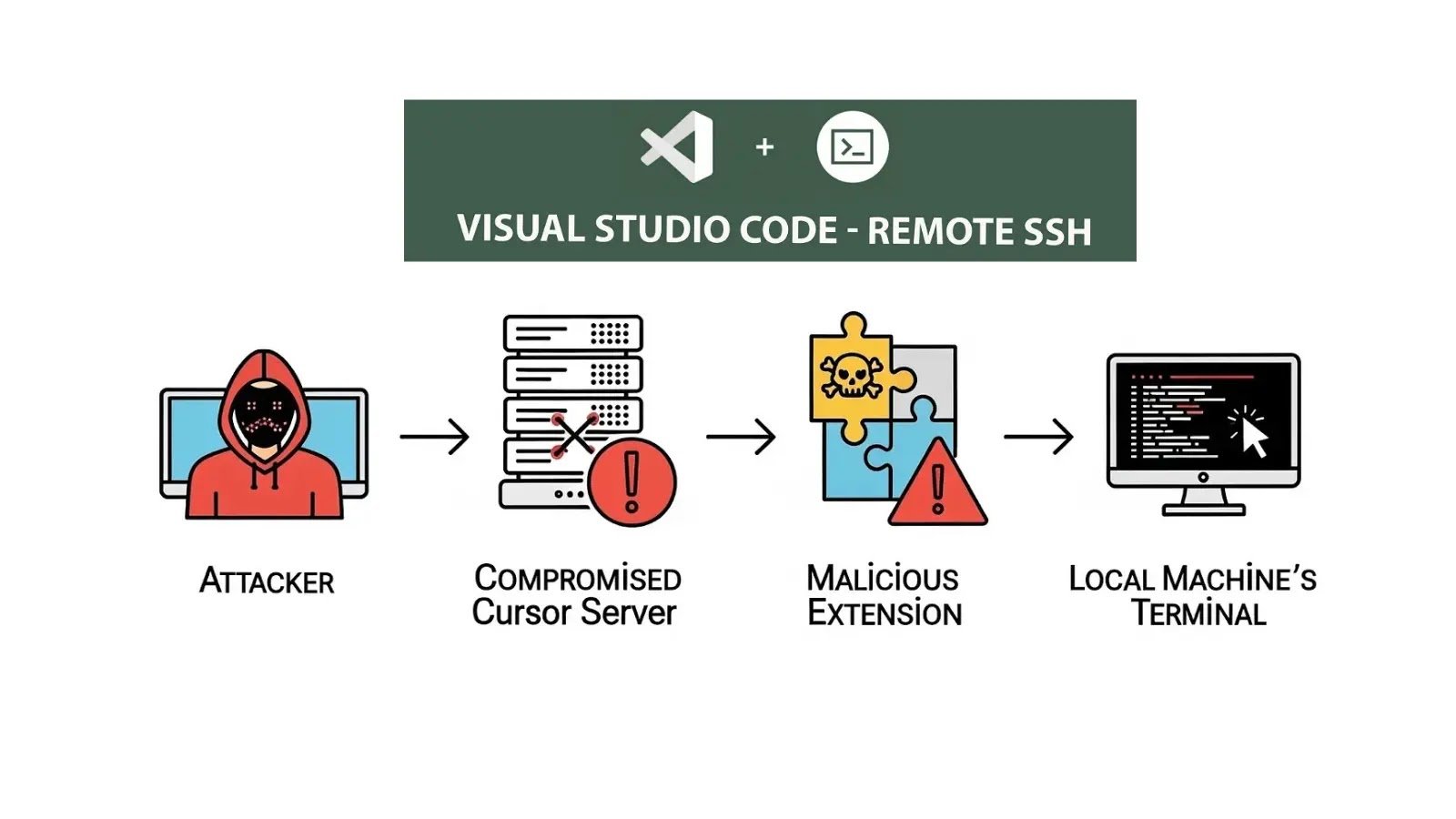
- A security flaw in Microsoft’s VS Code Remote-SSH extension allows attackers to execute malicious code on users’ local machines through compromised remote servers.
- The vulnerability exploits trusted communication channels via built-in commands that open local terminals and send arbitrary code, effectively turning the development environment into an attack vector.
- Once a server is compromised, attackers can pivot to local machines by automating terminal commands, bypassing remote environment isolation assumptions.
- Mitigation includes user approval prompts for remote commands, monitoring suspicious activity, and advocating for secure default designs in development tools to prevent such supply chain attacks.
Key Challenge
A significant security flaw has been uncovered in Microsoft’s Visual Studio Code Remote-SSH extension, exposing developers to the risk of malicious code execution on their local machines when connecting to compromised remote servers. Security researchers have pinpointed this vulnerability—dubbed “Vibe Hacking”—which exploits the trusted relationship between remote development environments and local devices, a misconception among developers who assume these environments are fully isolated. Attackers can leverage this flaw by compromising remote servers with malicious extensions, which then use built-in VS Code commands such as “workbench.action.terminal.newLocal” to open terminals directly on the developer’s local machine, bypassing security boundaries. Once a terminal is opened, they send malicious commands via “workbench.action.terminal.sendSequence,” which execute automatically, turning the developer’s local workstation into a command-and-control node, thereby eroding the presumed security of remote development workflows. Microsoft has acknowledged the danger, warning users that a compromised remote server can lead to code execution on local machines, yet widespread reliance on remote development practices continues, leaving many vulnerable. Experts suggest measures like user approval prompts for remote commands and vigilant monitoring of suspicious file changes, but the core issue remains: tools need more secure default settings to prevent such exploits, especially as remote development gains popularity and attackers refine their techniques.
Risks Involved
A critical security flaw in Microsoft’s VS Code Remote-SSH extension exposes developers’ local machines to cyber risks by allowing attackers who compromise remote servers to execute malicious code locally. This vulnerability exploits the inherent trust in remote development environments, enabling malicious actors to open local terminals and send automated commands that execute harmful scripts without the user’s knowledge. Attackers leverage specific built-in commands, such as opening a local terminal and injecting code sequences, effectively transforming the developer’s trusted environment into a command-and-control channel. Once an attacker gains control over the remote server, they can easily pivot to the local machine, posing significant threats to sensitive data, development workflows, and system integrity. Despite Microsoft’s warnings, these risks persist due to widespread reliance on remote development practices, especially in AI and software testing fields, emphasizing the urgent need for more secure default configurations and user approval safeguards to prevent exploitation and safeguard developer workstations from sophisticated cyber threats.
Fix & Mitigation
Rapid response to security breaches is crucial to prevent further damage, safeguard sensitive data, and restore trust in affected systems. Addressing issues like the Microsoft VS Code Remote-SSH extension being hacked to execute malicious code requires prompt and effective action to minimize potential harm.
Immediate Disabling
Temporarily disable the Remote-SSH extension to halt ongoing malicious activity and prevent further exploitation.
Patch and Update
Apply the latest security updates and patches released by Microsoft to fix known vulnerabilities in the extension.
Malware Scan
Conduct comprehensive malware and antivirus scans on the affected machine to identify and remove malicious code.
Review Access Controls
Restrict or revoke unauthorized access privileges, and verify user permissions to prevent any future exploitation.
Audit and Investigate
Carry out a thorough security audit to determine the attack vector, impacted components, and scope of the breach.
Restore from Backup
Recover system states and configurations from clean backups, ensuring the environment is restored to a safe and trusted state.
Monitor System Activity
Implement continuous monitoring for suspicious activity within the environment to detect any lingering threats.
Notify Stakeholders
Inform relevant parties, including security teams and users, about the incident and necessary precautions.
Implement Future Safeguards
Enhance security measures, such as multi-factor authentication, to prevent similar attacks in the future.
Stay Ahead in Cybersecurity
Stay informed on the latest Threat Intelligence and Cyberattacks.
Access world-class cyber research and guidance from IEEE.
Disclaimer: The information provided may not always be accurate or up to date. Please do your own research, as the cybersecurity landscape evolves rapidly. Intended for secondary references purposes only.
Cyberattacks-V1
