

Fast Facts
- The recent Salesforce breach highlights a significant shift in SaaS security threats, where attackers exploit OAuth tokens within integrations to exfiltrate data silently and undetected, bypassing MFA and login alerts.
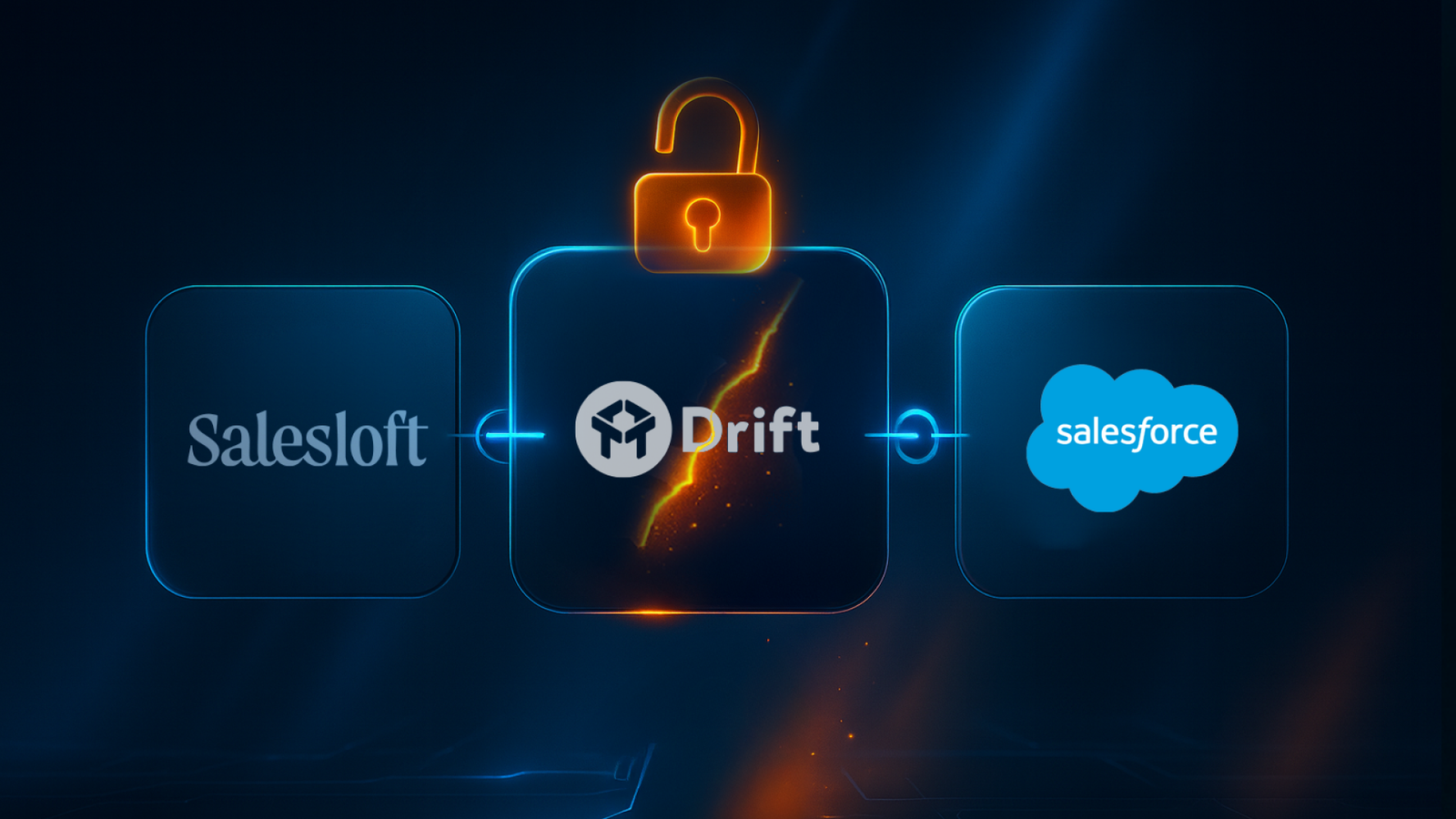
- Unlike traditional social engineering attacks, this breach exploited the trust between connected apps—specifically a compromised Drift chatbot integration—serving as a "master key" to access high-value platforms like Salesforce.
- The core vulnerability lies in shadow integrations and unsecured OAuth tokens that persist over time, creating blind spots in SaaS security where lateral movement and data exfiltration can occur unnoticed.
- Organizations must expand their security focus beyond user-to-app controls to monitor and manage app-to-app trust relationships, implement regular token audits, least privilege policies, and leverage tools like Grip for real-time detection and mitigation.
What’s the Problem?
The recent Salesforce breach reveals a troubling evolution in cyberattack tactics targeting SaaS platforms. Unlike traditional credential theft, this incident involved malicious actors exploiting OAuth tokens—digital skeleton keys that grant access across interconnected apps—embedded within a compromised integration between Salesloft and Salesforce via a Drift chatbot. By hijacking these tokens, which operate silently and often escape detection, perpetrators exfiltrated vast amounts of sensitive data from multiple Salesforce instances without triggering alerts or requiring phishing. This attack underscores a broader shift from focusing solely on user accounts to a more insidious threat landscape comprising shadow integrations—unmonitored links between applications that, if misconfigured or compromised, can serve as covert pathways for large-scale data theft. The breach raises urgent concerns about insufficient oversight of OAuth permissions, the persistence of tokens beyond employee tenure, and the implicit trust embedded in app-to-app relationships.
In response, cybersecurity experts emphasize that safeguarding SaaS environments now demands more than just user-focused defenses; it necessitates comprehensive inventorying of all OAuth-based integrations, proactive token management—including rotation and revocation—and rigorous monitoring of token activity for unusual lateral movements. The incident demonstrates that adversaries prefer the ease and stealth of hijacking app permissions over more conspicuous methods, exploiting trust relationships within the cloud ecosystem. Tools like Grip, which continuously identify risky integrations, detect suspicious token activity, and facilitate rapid remediation, are critical in closing these hidden vulnerabilities. Organizations must recognize that the real threat isn’t just isolated breaches but the complex web of trust that binds SaaS apps, and without vigilant oversight of these connections, they remain vulnerable to silently slipping into their most sensitive systems.
Risks Involved
Recent high-profile breaches, notably the Salesforce incident, highlight a dangerous evolution in cyber risks targeting SaaS environments, where attackers exploit OAuth tokens—often granted through seemingly benign app integrations—to silently exfiltrate sensitive data across multiple instances. Unlike traditional breaches driven by credential theft or phishing, these incidents leverage compromised or misconfigured integrations, bypassing multi-factor authentication and traditional security alerts, thus creating blind spots known as shadow integrations. This shift signifies a wider vulnerability: as organizations rely heavily on interconnected SaaS applications, the trust between these apps becomes a prime attack vector. Attackers increasingly focus on hijacking OAuth tokens, which act as master keys, to move laterally into high-value platforms like Salesforce, often without any user involvement or detection. This evolving threat landscape underscores the critical need for comprehensive visibility, continuous monitoring, and rigorous management of OAuth permissions and trust relationships—measures that, when neglected, leave organizations exposed to stealthy breaches capable of causing extensive data loss and reputational damage.
Fix & Mitigation
Promptly addressing the ‘Inside the Salesloft Breach: A New Era of Salesforce Attacks’ is crucial to prevent data loss, protect sensitive customer information, and maintain organizational integrity. When breaches occur, swift, effective action can mitigate damage and restore trust, while delay can lead to increased vulnerability, financial penalties, and reputational harm.
Containment Measures
- Isolate compromised accounts
- Disable suspect user access
- Suspend affected integrations
Investigation Procedures
- Conduct thorough forensic analysis
- Identify breach entry points
- Assess scope and impact
Communication Strategy
- Inform security teams and leadership
- Notify affected stakeholders
- Comply with legal and regulatory disclosures
Strengthening Security
- Reset passwords and credentials
- Enhance multi-factor authentication
- Review and tighten permissions
Preventive Actions
- Update and patch systems regularly
- Conduct security awareness training
- Implement continuous monitoring tools
Advance Your Cyber Knowledge
Explore career growth and education via Careers & Learning, or dive into Compliance essentials.
Understand foundational security frameworks via NIST CSF on Wikipedia.
Disclaimer: The information provided may not always be accurate or up to date. Please do your own research, as the cybersecurity landscape evolves rapidly. Intended for secondary references purposes only.
Cyberattacks-V1
