
Close Menu
  • Home
  • Cybercrime and Ransomware
  • Emerging Tech
  • Threat Intelligence
  • Expert Insights
  • Careers and Learning
  • Compliance

Subscribe to Updates

Subscribe to our newsletter and never miss our latest news

Subscribe my Newsletter for New Posts & tips Let's stay updated!

What's Hot

CISA Highlights Exploitation of Linux Root Access Vulnerability CVE-2026-31431

May 3, 2026

Security Flaw Triggers CI/CD Supply Chain Attack

May 2, 2026

Secure the Future: Why PAM with ITDR Is Key to 2026 Identity Defense

May 2, 2026
Facebook X (Twitter) Instagram
The CISO Brief
  • Home
  • Cybercrime and Ransomware
  • Emerging Tech
  • Threat Intelligence
  • Expert Insights
  • Careers and Learning
  • Compliance
Home » The Second Layer of Salesforce Security Many Teams Miss
Insights

The Second Layer of Salesforce Security Many Teams Miss

Staff WriterBy Staff WriterAugust 11, 2025Updated:August 17, 2025No Comments4 Mins Read9 Views
Facebook Twitter Pinterest LinkedIn Tumblr Email
Share
Facebook Twitter LinkedIn Pinterest WhatsApp Email


Automated tools give you visibility. Adversarial testing gives you clarity. In Salesforce environments, you need both.

The Problem with Checkbox Security in a Platform-Centric World

Salesforce has become more than just a CRM—it’s the backbone of how many organizations operate. It holds customer data, governs workflows, drives revenue, and connects to dozens of internal and third-party systems.

But that complexity is exactly what makes it hard to secure. And too often, security teams rely solely on generic scans or scheduled audits that were never designed to handle the nuance of Salesforce’s layered permissions, custom logic, and evolving integrations.

The result? A lot of surface-level findings—and a lot of assumptions about what those findings actually mean.

Automation Is Essential—But It’s Only One Layer

There’s no question that modern scanning tools play a vital role in Salesforce security. The right platforms can surface deeply nested permissions, cross-object access paths, and inheritance logic that would take weeks to map by hand.

They show you where access may be broader than expected. They highlight unusual configurations. They create a necessary first layer of awareness. Some newer tools, including the platform Raxis uses, are even beginning to decode Salesforce’s unique permission structures—mapping out who can access what in ways that were nearly impossible just a few years ago.

But here’s the thing: awareness is not the same as understanding.

Visibility tells you what exists. Adversarial testing tells you what’s possible.

That’s the distinction that matters when you’re trying to protect a live environment.

What Real Salesforce Penetration Testing Looks Like

Where scanning leaves off, real-world testing begins. A skilled adversarial tester doesn’t just read a report—they ask: Could someone use this? What could they do next? What happens if two seemingly minor issues are chained together?

That process includes:

Reviewing custom Apex code for unsafe methods, logic flaws, and injection risks
Mapping profile and permission interactions in context—not just listing them, but testing them
Validating tokens and third-party integrations to see how they behave in a real attack chain
Demonstrating proof-of-concept exploits to show which theoretical risks are actually exploitable—and how

It’s not about volume. It’s about impact.

From Potential Risk to Proven Reality

Policy analysis tools can identify where risks might exist. But in most environments, that’s just the start of the conversation. Without validation, it’s hard to prioritize—and harder to prove compliance.

That’s where Raxis comes in.

We take the data surfaced by those tools and pressure-test it—building out scenarios, testing assumptions, and proving (or disproving) whether a risk has real-world consequences. That proof isn’t just helpful for remediation; it’s often essential for audit and compliance teams that need evidence, not just alerts.

Of course, Salesforce is just one example. Raxis performs red team and penetration testing across environments—from cloud-native applications to internal networks to OT and IoT systems. What makes our work stand out is the methodology: creative, adversarial, and relentlessly focused on how systems fail in the real world.

Securing the Future: Remediation and Monitoring

Once a risk is proven, the next step is solving it. Our deliverables go beyond “here’s what’s broken”—they offer practical remediation guidance that dev and ops teams can actually use.

And because Salesforce environments change constantly, we also support ongoing visibility using Salesforce-aware scanning tools that informed the initial test. That means you’re not just reacting to issues after the fact—you’re watching for policy drift in real time.

Security Isn’t About Finding More. It’s About Knowing What Matters.

Good scanning tools are necessary. But they don’t tell the whole story—and they were never meant to.

When you pair automated visibility with human-led testing, you get more than just a list of potential problems. You get clarity. You get confidence. You get the kind of assurance that comes from knowing how your environment would hold up under pressure—not just hoping it will.

In a Salesforce environment, that’s the difference between checking the box—and closing the gap.

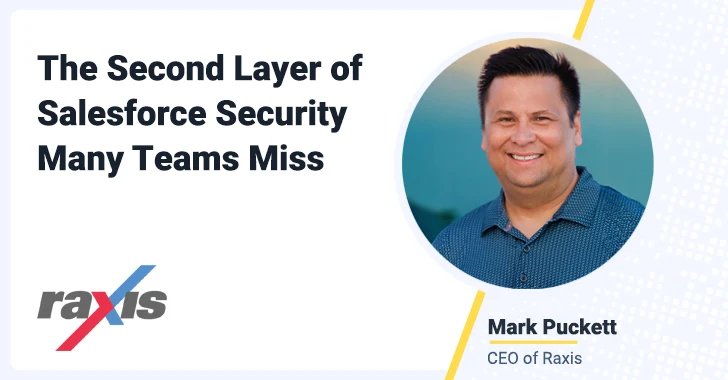
About the Author: Mark Puckett is CEO of Raxis, Forethreat, and Decrypted Systems. Cybersecurity leader and entrepreneur. Hobbies are photography and sports cars.

Mark Puckett — CEO of Raxis https://blogger.googleusercontent.com/img/b/R29vZ2xl/AVvXsEjryqq8-scEU2acTI7j4vhK3l0f0oQFZUonyweOWjijhWfqvmuhpjPmE29r6Lwvb-JocT00vRSXP71mjFxCKwCrMwu9Zv7Nrd9sfds2TApjN_1qUuFMeavBVOiSk0LFBwl0-dtoJ7hYJSG6NbIQyr4BOOximpFrlAT-Bv-6_XrWwN64-SMpjwixwZsXmFo/s728-rw-e365/Mark.png

Found this article interesting? This article is a contributed piece from one of our valued partners. Follow us on Twitter  and LinkedIn to read more exclusive content we post.


Source link

Share. Facebook Twitter Pinterest LinkedIn Tumblr Email
Previous ArticleUrgent: Update WinRAR Now to Shield Against Zero-Day Exploit!
Next Article Connex Credit Union Data Breach Exposes 172,000 Members
Avatar photo
Staff Writer
  • Website

John Marcelli is a staff writer for the CISO Brief, with a passion for exploring and writing about the ever-evolving world of technology. From emerging trends to in-depth reviews of the latest gadgets, John stays at the forefront of innovation, delivering engaging content that informs and inspires readers. When he's not writing, he enjoys experimenting with new tech tools and diving into the digital landscape.

Related Posts

Secure the Future: Why PAM with ITDR Is Key to 2026 Identity Defense

May 2, 2026

From DMV to Wallet: Unlocking the Power of Digital Credentials

May 1, 2026

Top 8 Practices Every CISO Must Follow for Effective Risk Reviews

April 29, 2026

Comments are closed.

Latest Posts

Trellix Breach: Hackers Gain Unauthorized Repository Access

May 2, 2026

Global Cyber Threat Brief: Identity Breaches, Supply Chain Attacks, and Organized Crime Surge

May 2, 2026

cPanelSniper: PoC Exploit Exposes 44,000 Servers

May 2, 2026

Inside the Revolt: GitHub Tensions, AI Data Deletion, and Claude Security Beta

May 1, 2026
Don't Miss

Secure the Future: Why PAM with ITDR Is Key to 2026 Identity Defense

By Staff WriterMay 2, 2026

Essential Insights Identity breaches are now more common than vulnerability exploits, emphasizing the need for…

From DMV to Wallet: Unlocking the Power of Digital Credentials

May 1, 2026

Top 8 Practices Every CISO Must Follow for Effective Risk Reviews

April 29, 2026

Subscribe to Updates

Subscribe to our newsletter and never miss our latest news

Subscribe my Newsletter for New Posts & tips Let's stay updated!

Recent Posts

  • CISA Highlights Exploitation of Linux Root Access Vulnerability CVE-2026-31431
  • Security Flaw Triggers CI/CD Supply Chain Attack
  • Secure the Future: Why PAM with ITDR Is Key to 2026 Identity Defense
  • 30,000 Facebook Accounts Compromised in Massive Phishing Scam
  • Trellix Breach: Hackers Gain Unauthorized Repository Access
About Us
About Us

Welcome to The CISO Brief, your trusted source for the latest news, expert insights, and developments in the cybersecurity world.

In today’s rapidly evolving digital landscape, staying informed about cyber threats, innovations, and industry trends is critical for professionals and organizations alike. At The CISO Brief, we are committed to providing timely, accurate, and insightful content that helps security leaders navigate the complexities of cybersecurity.

Facebook X (Twitter) Pinterest YouTube WhatsApp
Our Picks

CISA Highlights Exploitation of Linux Root Access Vulnerability CVE-2026-31431

May 3, 2026

Security Flaw Triggers CI/CD Supply Chain Attack

May 2, 2026

Secure the Future: Why PAM with ITDR Is Key to 2026 Identity Defense

May 2, 2026
Most Popular

Protecting MCP Security: Defeating Prompt Injection & Tool Poisoning

January 30, 202631 Views

Unlock the Power of Free WormGPT: Harnessing DeepSeek, Gemini, and Kimi-K2 AI Models

November 27, 202527 Views

The New Face of DDoS is Impacted by AI

August 4, 202526 Views

Archives

  • May 2026
  • April 2026
  • March 2026
  • February 2026
  • January 2026
  • December 2025
  • November 2025
  • October 2025
  • September 2025
  • August 2025
  • July 2025
  • June 2025

Categories

  • Compliance
  • Cyber Updates
  • Cybercrime and Ransomware
  • Editor's pick
  • Emerging Tech
  • Events
  • Featured
  • Insights
  • Most Read
  • Threat Intelligence
  • Uncategorized
© 2026 thecisobrief. Designed by thecisobrief.
  • Home
  • About Us
  • Advertise with Us
  • Contact Us
  • DMCA
  • Privacy Policy
  • Terms & Conditions

Type above and press Enter to search. Press Esc to cancel.