

Top Highlights
- Supply chain threats are escalating due to increased reliance on open-source, cloud-native, and third-party software, necessitating advanced security tools with real-time monitoring, threat intelligence, and compliance automation.
- The top security companies in 2025—such as Sonatype, Snyk, Synopsys, and JFrog—offer specialized solutions like AI-driven vulnerability detection, binary and artifact scanning, as well as managed third-party risk management, catering to enterprise and developer needs.
- Key features across these platforms include deep dependency analysis, behavioral malware detection, API and application security, and predictive risk analytics, which collectively aim to prevent supply chain attacks before they cause damage.
- Choosing the right solution depends on organizational size, focus (e.g., open-source governance, API security, or vendor management), with enterprise-grade platforms emphasizing scalability, integration, and comprehensive visibility to ensure supply chain resilience.
What’s the Problem?
The story discusses the escalating threats faced by the digital world in 2025, emphasizing the critical need for organizations to adopt advanced supply chain security solutions. As cyber threats like software vulnerabilities, data breaches, and supply chain attacks grow more complex—especially with reliance on open-source, third-party, and cloud-native software—companies must implement robust platforms that offer visibility, compliance, and real-time threat detection. The narrative introduces a curated list of the top 10 supply chain intelligence security firms for 2025, highlighting their specialized features such as AI-driven automation, continuous monitoring, and vulnerability scanning, catering to different organizational needs from enterprises to developers. These solutions are vital for maintaining business continuity amid increasing vulnerability landscapes, with each company selected for their unique strengths in areas like open-source governance, artifact security, and API protection, illustrating how technological innovation is shaping industry standards and defending against today’s sophisticated cyber threats.
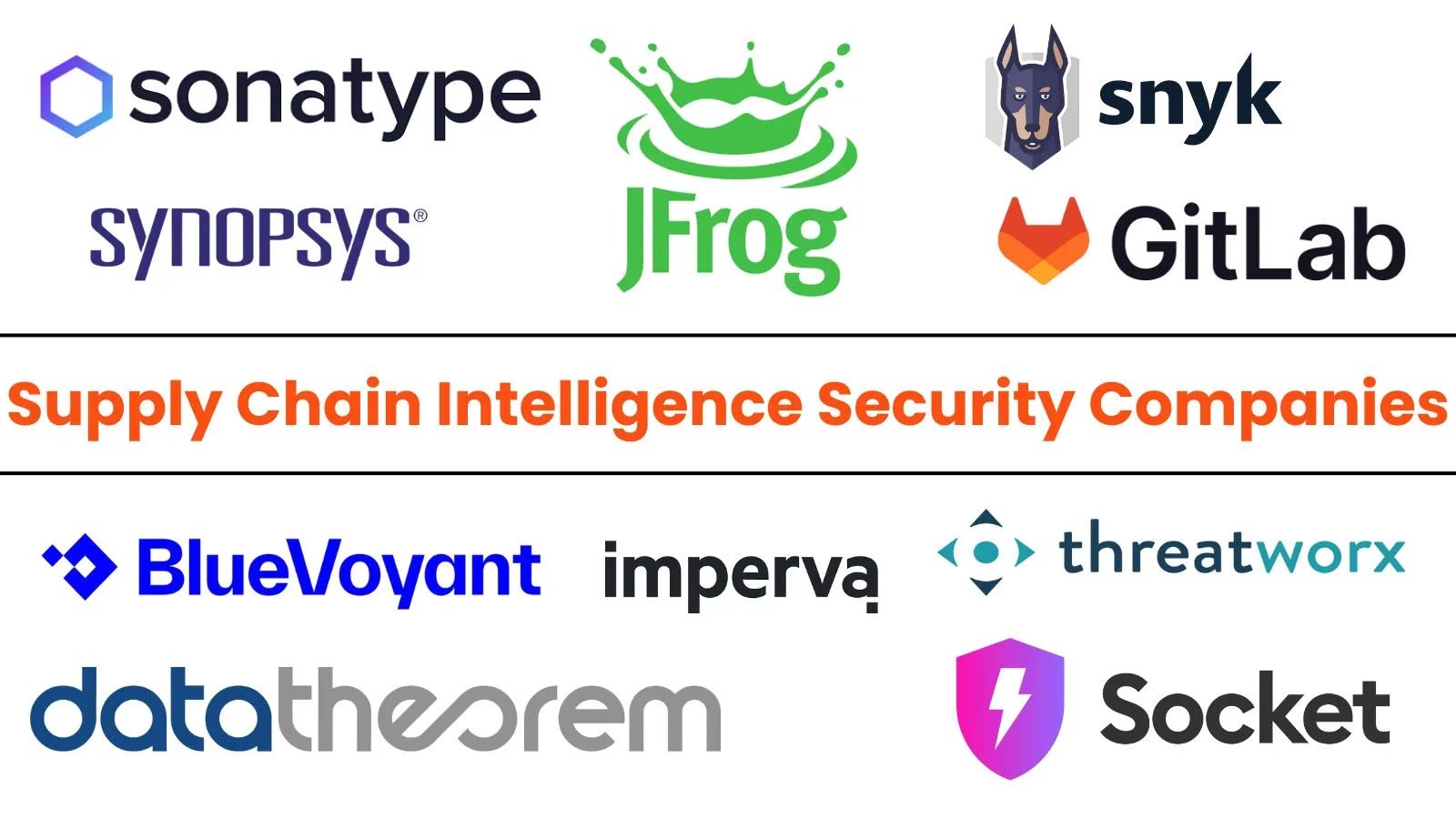
The report reveals that these companies—Sonatype, Snyk, Synopsys, JFrog, GitLab, BlueVoyant, Socket, Data Theorem, ThreatWorx, and Imperva—are reported by analysts and experts who have scrutinized their features, pros, cons, and suitability for specific organizational contexts. Their adoption is driven by the need to prevent supply chain attacks, mitigate risks swiftly, and ensure compliance in a rapidly evolving threat landscape. With capabilities spanning behavioral analysis, predictive threat intelligence, and comprehensive risk management, these platforms are essential tools for enterprises trying to safeguard their software ecosystems against malicious threats. Ultimately, the article underscores that selecting the right security platform is a decisive factor in preserving digital integrity and avoiding catastrophic cyber incidents in an increasingly interconnected software environment.
What’s at Stake?
In 2025, cybersecurity risks to digital supply chains intensify, driven by vulnerabilities in open-source software, third-party dependencies, and cloud-native applications, which expose organizations to data breaches, malicious code injection, dependency hijacking, and cyber supply chain attacks. These threats jeopardize business continuity, lead to significant financial losses, compromise sensitive data, and erode trust, making robust supply chain intelligence security solutions indispensable. Cutting-edge platforms—like Sonatype, Snyk, Synopsys, JFrog, GitLab, BlueVoyant, Socket, Data Theorem, ThreatWorx, and Imperva—offer critical features such as real-time vulnerability detection, behavioral malware analysis, compliance automation, and predictive threat analytics, enabling enterprises to monitor, prevent, and respond to risks proactively. As the complexity of modern development and vendor ecosystems grows, adopting integrated, scalable, and intelligent security tools becomes essential in safeguarding digital assets against evolving cyber threats and maintaining operational resilience.
Possible Actions
In the rapidly evolving landscape of supply chain security, timely remediation is essential to prevent vulnerabilities from escalating into costly breaches or disruptions, especially for the top supply chain intelligence security companies shaping the industry in 2025.
Actionable Steps:
- Rapid Incident Response
- Regular Security Audits
- Employee Training Initiatives
- Implementing Advanced Monitoring
- Threat Intelligence Sharing
Explore More Security Insights
Discover cutting-edge developments in Emerging Tech and industry Insights.
Explore engineering-led approaches to digital security at IEEE Cybersecurity.
Disclaimer: The information provided may not always be accurate or up to date. Please do your own research, as the cybersecurity landscape evolves rapidly. Intended for secondary references purposes only.
Cyberattacks-V1
