

Fast Facts
- Cybersecurity experts disclosed a critical vulnerability (CVE-2025-9242) in WatchGuard Fireware OS that allows unauthenticated attackers to execute arbitrary code via an out-of-bounds write in the VPN iked process, affecting multiple versions and addressed in recent updates.
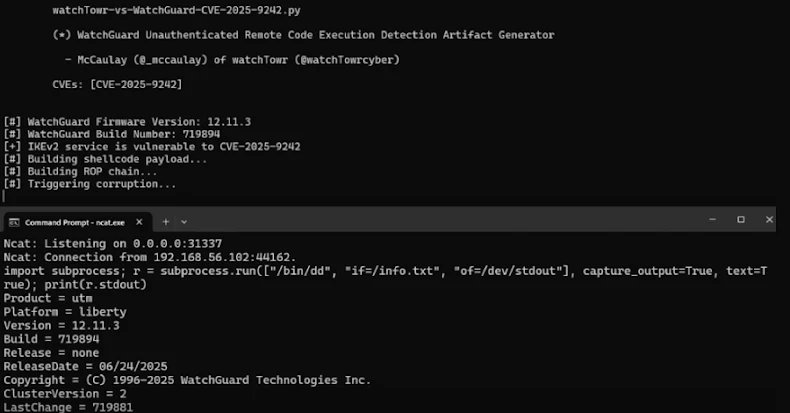
- The flaw stems from a missing length check in the "ike2_ProcessPayload_CERT" function, enabling remote code execution during VPN handshake without requiring authentication, with potential to spawn a Python shell and escalate to full Linux control.
- Attackers can exploit this vulnerability to bypass NX protections, weaponize the flaw to gain control over the instruction pointer, and ultimately execute malicious code, posing significant risks for exposed VPN services.
- This vulnerability is notable because it affects internet-facing services, can be exploited without authentication, and could facilitate further attacks, underscoring the importance of timely patching and security awareness.
Problem Explained
Cybersecurity experts have recently revealed a serious security flaw known as CVE-2025-9242 in WatchGuard Fireware OS, a widely used VPN management platform. This vulnerability, which has been patched in the latest updates, allows attackers who do not need any authentication to execute malicious code remotely by exploiting an out-of-bounds write error in the system’s “ike2_ProcessPayload_CERT” function. The flaw stems from insufficient length checks during a process that validates client SSL certificates, enabling hackers to overflow buffers and hijack the system’s control flow during VPN handshake negotiations. While the vulnerability does not provide direct access to the device’s command shell, skilled attackers could leverage this weakness to gain control over the device’s instruction pointer, ultimately spawning a Python-based shell and escalating to full system control. The report, issued by security analysts at watchTowr Labs, emphasizes that this flaw is particularly attractive to ransomware groups due to its remote exploitation potential and the ability to execute arbitrary code from afar, posing a significant threat to organizations relying on vulnerable VPN appliances.
Critical Concerns
Cyber risks pose a formidable threat to modern digital infrastructures, exemplified by recent vulnerabilities like WatchGuard’s CVE-2025-9242, which allows unverified attackers to execute arbitrary code via an out-of-bounds write flaw in VPN services—potentially leading to full system compromise and network control. Such flaws, particularly when exploited remotely and without authentication, can enable malicious actors, including ransomware gangs, to weaponize compromised systems for data theft, disruption, or further infiltration, extending the impact across enterprise operations. The exploitation process may involve advanced techniques such as buffer overflows, bypassing security measures like NX bits, and escalating privileges from web shells to complete system access, thereby magnifying damage potential—from data exfiltration and service disruption to infrastructure takeover. As these vulnerabilities often target internet-facing services, they underscore the urgent need for rigorous patch management, proactive vulnerability assessments, and layered security strategies to mitigate the substantial and multifaceted risks posed by cyber threats.
Possible Next Steps
Timely remediation of the WatchGuard VPN bug is crucial to prevent potential widespread cyberattacks that could compromise sensitive data, disrupt operations, and undermine organizational trust. Addressing vulnerabilities promptly ensures security integrity and minimizes the window of opportunity for malicious actors to exploit exposed systems.
Mitigation Strategies:
-
Update Firmware
Implement the latest software patches provided by WatchGuard to close the identified security loophole. -
Disable Vulnerable Features
Temporarily deactivate any affected VPN functionalities until official fixes are applied. -
Strengthen Access Controls
Enforce stricter login protocols, multi-factor authentication, and minimal privilege policies to reduce exposure. -
Monitor Network Traffic
Conduct continuous surveillance for unusual activity or unauthorized access attempts linked to the VPN. -
Conduct User Education
Inform users about potential threats and best practices for security hygiene, including recognizing suspicious activity. - Implement Additional Security Layers
Use intrusion detection systems (IDS) and intrusion prevention systems (IPS) to identify and block malicious exploits targeting the vulnerability.
Explore More Security Insights
Discover cutting-edge developments in Emerging Tech and industry Insights.
Access world-class cyber research and guidance from IEEE.
Disclaimer: The information provided may not always be accurate or up to date. Please do your own research, as the cybersecurity landscape evolves rapidly. Intended for secondary references purposes only.
Cyberattacks-V1
