
Close Menu
  • Home
  • Cybercrime and Ransomware
  • Emerging Tech
  • Threat Intelligence
  • Expert Insights
  • Careers and Learning
  • Compliance

Subscribe to Updates

Subscribe to our newsletter and never miss our latest news

Subscribe my Newsletter for New Posts & tips Let's stay updated!

What's Hot

Bajaj Auto Confirms Ransomware Attack Impacting Systems

June 23, 2026

Hackers’ Hidden Arsenal: Velociraptor, Cloudflare Tunnels, Zoho Assist & VS Code SSH

June 23, 2026

Algerian Man Busted for Operating Dual Cybercrime Marketplaces

June 23, 2026
Facebook X (Twitter) Instagram
The CISO Brief
  • Home
  • Cybercrime and Ransomware
  • Emerging Tech
  • Threat Intelligence
  • Expert Insights
  • Careers and Learning
  • Compliance
Home » 3 Shocking Truths Behind Copy/Paste Attacks Fueling Security Breaches
Cyber Updates

3 Shocking Truths Behind Copy/Paste Attacks Fueling Security Breaches

Staff WriterBy Staff WriterOctober 20, 2025Updated:October 25, 2025No Comments3 Mins Read6 Views
Facebook Twitter Pinterest LinkedIn Tumblr Email
Share
Facebook Twitter LinkedIn Pinterest WhatsApp Email

Quick Takeaways

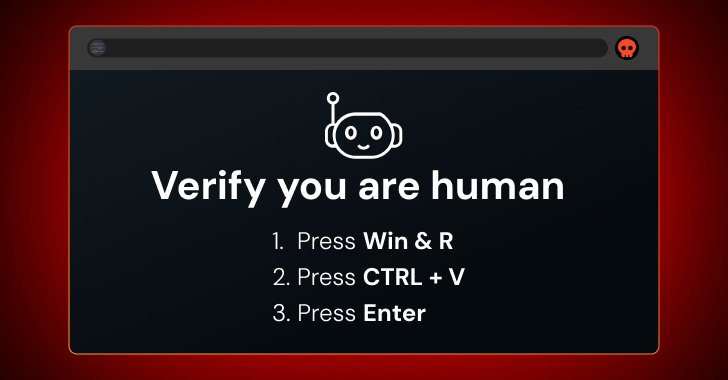
  1. Rising Threat: ClickFix attacks, where users inadvertently execute malicious scripts through deceptive browser interactions, are rapidly increasing, with ties to high-profile breaches and threat groups like Interlock ransomware.

  2. User Vulnerability: Lack of awareness creates a critical gap; users are trained to avoid conventional threats but are unaware of risks posed by triggering commands through seemingly benign webpage interactions.

  3. Evasion Tactics: ClickFix attacks evade detection by employing sophisticated techniques, including disguising domains and leveraging non-email delivery methods that bypass traditional security measures.

  4. Need for Proactive Defense: Relying on Endpoint Detection and Response (EDR) alone is insufficient; addressing ClickFix attacks requires early detection strategies, like Push Security’s browser-based malicious copy and paste detection, to mitigate risks effectively.

Reason 1: Users Aren’t Prepared for ClickFix

Users struggle to recognize ClickFix attacks. Traditional training often emphasizes caution with email links and downloads. However, ClickFix attacks involve direct interaction with malicious scripts, prompting users to execute commands themselves. This diverges from users’ established training, leading to diminished suspicion. Moreover, these attacks often occur behind the scenes, using JavaScript to manipulate the clipboard without users’ knowledge. As attackers craft increasingly legitimate-looking lures, users find it challenging to discern threats. As a result, many fall victim unwittingly.

Reason 2: ClickFix Avoids Detection During Delivery

ClickFix attacks often evade detection through various cunning strategies. Modern phishing tactics camouflage malicious sites, using constantly changing domains to avoid blocklists. Since attackers now exploit SEO poisoning and malvertising, they reach users via legitimate search results and ads. This method significantly reduces the chances of detection. Furthermore, traditional security measures focus heavily on email communications, creating a gap when attackers utilize alternative vectors. In essence, ClickFix’s adaptability makes it hard for security tools to spot and flag the impostors.

Reason 3: EDR is Not Foolproof

Endpoint Detection and Response (EDR) systems generally act as the last line of defense against ClickFix attacks. However, their effectiveness relies on specific conditions. Because the malicious code often runs at the user’s initiation, it lacks context that would flag suspicious activity. This limitation results in overlooked instances of malware execution. Attackers may even design their scripts to bypass detection mechanisms. Thus, organizations depending solely on EDR can find themselves vulnerable. If the security system fails to catch a threat, the attack goes unnoticed, exposing potential risks.

Stay Ahead with the Latest Tech Trends

Learn how the Internet of Things (IoT) is transforming everyday life.

Access comprehensive resources on technology by visiting Wikipedia.

DataProtection-V1

Share. Facebook Twitter Pinterest LinkedIn Tumblr Email
Previous ArticleCyber Breach Alert: Rootkits, Pixnapping & EtherHiding Exposed!
Next Article Europe’s SIM Farm Bust: Seven Arrested
Avatar photo
Staff Writer
  • Website

John Marcelli is a staff writer for the CISO Brief, with a passion for exploring and writing about the ever-evolving world of technology. From emerging trends to in-depth reviews of the latest gadgets, John stays at the forefront of innovation, delivering engaging content that informs and inspires readers. When he's not writing, he enjoys experimenting with new tech tools and diving into the digital landscape.

Related Posts

Bridging the Critical Confidence Gap in Enterprise AI Security

June 16, 2026

Legal Industry VPNs: Falling to Modern Threats

June 15, 2026

Closing the Gap: The Rising Threat of Third-Party Privileged Access

June 14, 2026

Comments are closed.

Latest Posts

Bajaj Auto Confirms Ransomware Attack Impacting Systems

June 23, 2026

Hackers’ Hidden Arsenal: Velociraptor, Cloudflare Tunnels, Zoho Assist & VS Code SSH

June 23, 2026

Algerian Man Busted for Operating Dual Cybercrime Marketplaces

June 23, 2026

LastPass Customer Data Exposed in Supply Chain Attack

June 23, 2026
Don't Miss

Bridging the Critical Confidence Gap in Enterprise AI Security

By Staff WriterJune 16, 2026

Summary Points Current AI security testing methods, like tabletop exercises, fail to reveal how AI…

Legal Industry VPNs: Falling to Modern Threats

June 15, 2026

Closing the Gap: The Rising Threat of Third-Party Privileged Access

June 14, 2026

Subscribe to Updates

Subscribe to our newsletter and never miss our latest news

Subscribe my Newsletter for New Posts & tips Let's stay updated!

Recent Posts

  • Bajaj Auto Confirms Ransomware Attack Impacting Systems
  • Hackers’ Hidden Arsenal: Velociraptor, Cloudflare Tunnels, Zoho Assist & VS Code SSH
  • Algerian Man Busted for Operating Dual Cybercrime Marketplaces
  • Trump order accelerates federal shift to vulnerable post-quantum crypto
  • LastPass Customer Data Exposed in Supply Chain Attack
About Us
About Us

Welcome to The CISO Brief, your trusted source for the latest news, expert insights, and developments in the cybersecurity world.

In today’s rapidly evolving digital landscape, staying informed about cyber threats, innovations, and industry trends is critical for professionals and organizations alike. At The CISO Brief, we are committed to providing timely, accurate, and insightful content that helps security leaders navigate the complexities of cybersecurity.

Facebook X (Twitter) Pinterest YouTube WhatsApp
Our Picks

Bajaj Auto Confirms Ransomware Attack Impacting Systems

June 23, 2026

Hackers’ Hidden Arsenal: Velociraptor, Cloudflare Tunnels, Zoho Assist & VS Code SSH

June 23, 2026

Algerian Man Busted for Operating Dual Cybercrime Marketplaces

June 23, 2026
Most Popular

Protecting MCP Security: Defeating Prompt Injection & Tool Poisoning

January 30, 202633 Views

Unlock the Power of Free WormGPT: Harnessing DeepSeek, Gemini, and Kimi-K2 AI Models

November 27, 202530 Views

The New Face of DDoS is Impacted by AI

August 4, 202528 Views

Archives

  • June 2026
  • May 2026
  • April 2026
  • March 2026
  • February 2026
  • January 2026
  • December 2025
  • November 2025
  • October 2025
  • September 2025
  • August 2025
  • July 2025
  • June 2025

Categories

  • Compliance
  • Cyber Updates
  • Cybercrime and Ransomware
  • Editor's pick
  • Emerging Tech
  • Events
  • Featured
  • Insights
  • Most Read
  • Threat Intelligence
  • Uncategorized
© 2026 thecisobrief. Designed by thecisobrief.
  • Home
  • About Us
  • Advertise with Us
  • Contact Us
  • DMCA
  • Privacy Policy
  • Terms & Conditions

Type above and press Enter to search. Press Esc to cancel.