
Close Menu
  • Home
  • Cybercrime and Ransomware
  • Emerging Tech
  • Threat Intelligence
  • Expert Insights
  • Careers and Learning
  • Compliance

Subscribe to Updates

Subscribe to our newsletter and never miss our latest news

Subscribe my Newsletter for New Posts & tips Let's stay updated!

What's Hot

Atlassian CVE-2026-21589 expose to remote code execution

October 7, 2026

Urgent: FortiBleed Still Active After Leaking 86,644 Device Credentials

October 7, 2026

Unauthorized breach imminent; escalate security measures immediately

October 7, 2026
Facebook X (Twitter) Instagram
The CISO Brief
  • Home
  • Cybercrime and Ransomware
  • Emerging Tech
  • Threat Intelligence
  • Expert Insights
  • Careers and Learning
  • Compliance
Home » A MythBusting Special — 9 Myths about File-based Threats
Events

A MythBusting Special — 9 Myths about File-based Threats

Staff WriterBy Staff WriterJuly 19, 2025No Comments1 Min Read3 Views
Facebook Twitter Pinterest LinkedIn Tumblr Email
Share
Facebook Twitter LinkedIn Pinterest WhatsApp Email


Bad actors love to deliver threats in files. Persistent and persuasive messages convince unsuspecting victims to accept and open files from unknown sources, executing the first step in a cyber attack. 

This continues to happen whether the file is an EXE or a Microsoft Excel document. Far too often, end users have an illusion of security, masked by good faith efforts of other users and (ineffective) security controls. This creates a virality effect for ransomware, malware, spyware, and annoying grayware and adware to be spread easily from user to user and machine to machine. To stop users from saying “I reject your reality and substitute my own!” – it’s time to bust some myths about file-based attacks.

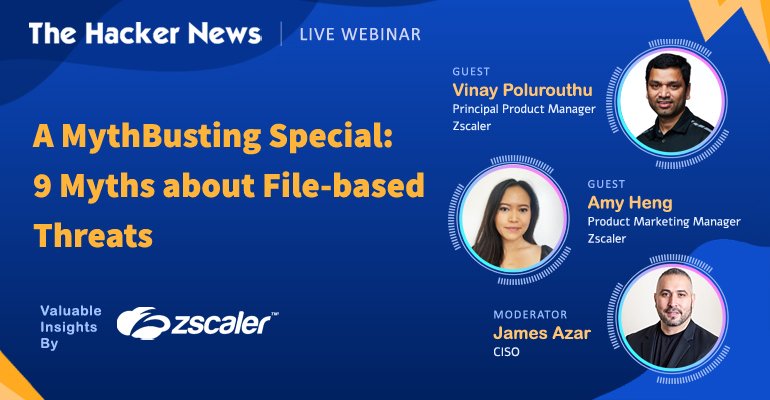
Testing in three! Two! One! Join Zscaler’s Vinay Polurouthu, Principal Product Manager, and Amy Heng, Product Marketing Manager, to:


Bust the 9 most common assumptions and myths about file-based threats
Uncover the latest evasion trends and detect stealthy delivery methods
Prevent patient zero infections and zero-day security events from unknown files


Source link

Share. Facebook Twitter Pinterest LinkedIn Tumblr Email
Previous ArticleSilobreaker Backs NATO CCDCOE with New Cyber Threat Repor
Next Article Weekly Cybertech Roundup: Highlights of the Week
Avatar photo
Staff Writer
  • Website

John Marcelli is a staff writer for the CISO Brief, with a passion for exploring and writing about the ever-evolving world of technology. From emerging trends to in-depth reviews of the latest gadgets, John stays at the forefront of innovation, delivering engaging content that informs and inspires readers. When he's not writing, he enjoys experimenting with new tech tools and diving into the digital landscape.

Related Posts

Azure Local in San Francisco: SQL Server Now Generally Available

September 29, 2026

Seattle: Microsoft Leads in Container Management Excellence for 2026

September 10, 2026

London: Unlocking AI Value and ROI through Effective Governance

September 10, 2026
Leave A Reply Cancel Reply

Latest Posts

Malicious Servers Divide Instructions to Force AI Agents to Leak Secrets

October 4, 2026

DeadLock Ransomware Escalates Threats by Exploiting Polygon Smart Contracts

October 1, 2026

Kimwolf v7 Android Botnet: Cloaking DDoS Traffic as Legitimate Browsing

September 28, 2026

Attackers Exploit SharePoint Authentication Bypass Post-PoC Release

September 25, 2026
Don't Miss

Azure Local in San Francisco: SQL Server Now Generally Available

By Original SourceSeptember 29, 2026

Azure Local in San Francisco: SQL Server Now Generally Available [What is SQL Server on…

Seattle: Microsoft Leads in Container Management Excellence for 2026

September 10, 2026

London: Unlocking AI Value and ROI through Effective Governance

September 10, 2026

Subscribe to Updates

Subscribe to our newsletter and never miss our latest news

Subscribe my Newsletter for New Posts & tips Let's stay updated!

Recent Posts

  • Atlassian CVE-2026-21589 expose to remote code execution
  • Urgent: FortiBleed Still Active After Leaking 86,644 Device Credentials
  • Unauthorized breach imminent; escalate security measures immediately
  • Fake Cloudflare Checks Facilitate LunexStealer Deployment via Compromised Sites
  • AI Hacking Amplifies Threats via Fragmented Communication Channels
About Us
About Us

Welcome to The CISO Brief, your trusted source for the latest news, expert insights, and developments in the cybersecurity world.

In today’s rapidly evolving digital landscape, staying informed about cyber threats, innovations, and industry trends is critical for professionals and organizations alike. At The CISO Brief, we are committed to providing timely, accurate, and insightful content that helps security leaders navigate the complexities of cybersecurity.

Facebook X (Twitter) Pinterest YouTube WhatsApp
Our Picks

Atlassian CVE-2026-21589 expose to remote code execution

October 7, 2026

Urgent: FortiBleed Still Active After Leaking 86,644 Device Credentials

October 7, 2026

Unauthorized breach imminent; escalate security measures immediately

October 7, 2026
Most Popular

Gefährliche Angriffe: Wie Cyberkriminelle Ihre Identität angreifen

January 29, 2026260 Views

CISA Alerts: Critical Vulnerability in Splunk Enterprise Under Active Attack

June 19, 2026214 Views

Salesforce Disables Klue App After Data Breach from Token Abuse

June 19, 2026210 Views

Archives

  • October 2026
  • September 2026
  • August 2026
  • July 2026
  • June 2026
  • May 2026
  • April 2026
  • March 2026
  • February 2026
  • January 2026
  • December 2025
  • November 2025
  • October 2025
  • September 2025
  • August 2025
  • July 2025
  • June 2025

Categories

  • Compliance
  • Cyber Updates
  • Cybercrime and Ransomware
  • Editor's pick
  • Emerging Tech
  • Events
  • Featured
  • Insights
  • Most Read
  • Threat Intelligence
  • Uncategorized
© 2026 thecisobrief. Designed by thecisobrief.
  • Home
  • About Us
  • Advertise with Us
  • Contact Us
  • DMCA
  • Privacy Policy
  • Terms & Conditions

Type above and press Enter to search. Press Esc to cancel.