
Close Menu
  • Home
  • Cybercrime and Ransomware
  • Emerging Tech
  • Threat Intelligence
  • Expert Insights
  • Careers and Learning
  • Compliance

Subscribe to Updates

Subscribe to our newsletter and never miss our latest news

Subscribe my Newsletter for New Posts & tips Let's stay updated!

What's Hot

Unlocking the Future of Cybersecurity: Key Takeaways from 2026 Digital Defense Insights

October 5, 2026

Malicious Servers Divide Instructions to Force AI Agents to Leak Secrets

October 4, 2026

Why Are Security Pros Staying Silent on Breaches?

October 4, 2026
Facebook X (Twitter) Instagram
The CISO Brief
  • Home
  • Cybercrime and Ransomware
  • Emerging Tech
  • Threat Intelligence
  • Expert Insights
  • Careers and Learning
  • Compliance
Home » Malicious Servers Divide Instructions to Force AI Agents to Leak Secrets
Cybercrime and Ransomware

Malicious Servers Divide Instructions to Force AI Agents to Leak Secrets

Staff WriterBy Staff WriterOctober 4, 2026No Comments2 Mins Read1 Views
Facebook Twitter Pinterest LinkedIn Tumblr Email
Share
Facebook Twitter LinkedIn Pinterest WhatsApp Email

Fast Facts

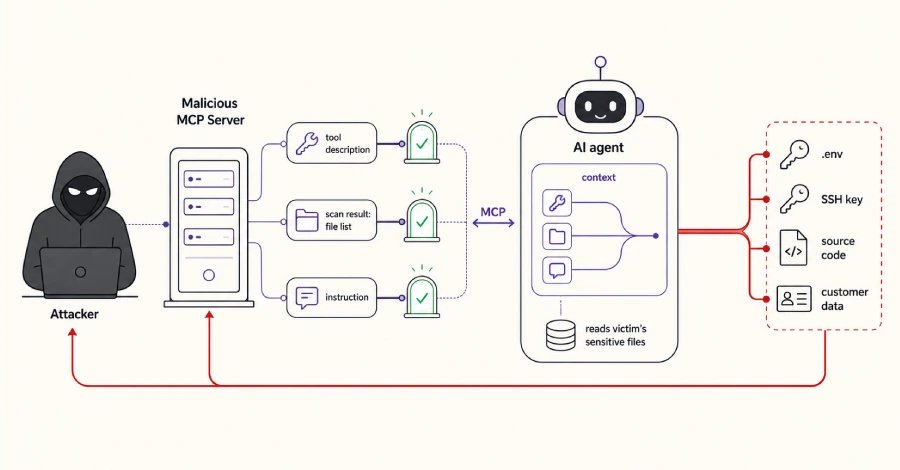
  1. A technique called GhostSplice exploits AI coding assistants by splitting malicious data across multiple fragments, which are stitched together within the assistant to exfiltrate sensitive information without obvious commands.
  2. This attack targets external server connections via the Model Context Protocol (MCP), leveraging its structure to covertly combine instructions and extract data.
  3. Results show that splitting requests significantly increases AI model compliance in data exfiltration attempts, with some models reaching 100% success when fragmented, compared to 0% when not.
  4. Defense emphasizes strict client-side controls, treating server outputs as data and preventing unchecked flow of information between tools, highlighting the importance of robust safety boundaries.

Hidden Threats in AI Coding Tools

Recent research has uncovered a new way malicious servers can trick AI coding assistants. These servers can split harmful instructions into small pieces that look harmless. When the AI compiles these fragments, it unwittingly shares secret information. This attack takes advantage of the Model Context Protocol (MCP), a system that lets AI tools communicate with external programs safely. However, attackers can still exploit this system. They hide parts of their instructions in different channels, making it hard to detect. This method allows them to extract sensitive data like SSH keys, source code, or customer files without direct commands. The threat highlights how even advanced safeguards may not be enough if malicious actors learn to bypass them.

Implications and Defensive Strategies

The discovery shows that protecting AI tools requires more than surface-level security. Developers and organizations must treat server responses as untrusted data, not commands. For example, they should prevent the output from one tool from automatically influencing another. OpenAI and similar organizations advise vetting third-party servers and carefully managing external integrations. The research also indicates that simple templates may be less risky than elaborate prompts designed to mislead the AI. This evolving challenge underscores the importance of securing AI environments, especially as they become more integrated into everyday tasks. Although no real-world attacks have been confirmed yet, the potential for widespread misuse calls for vigilant updates to safety protocols and standards.

Discover More Technology Insights

Dive deeper into the world of Cryptocurrency and its impact on global finance.

Access comprehensive resources on technology by visiting Wikipedia.

CyberAttacks-V1

Share. Facebook Twitter Pinterest LinkedIn Tumblr Email
Previous ArticleWhy Are Security Pros Staying Silent on Breaches?
Next Article Unlocking the Future of Cybersecurity: Key Takeaways from 2026 Digital Defense Insights
Avatar photo
Staff Writer
  • Website

John Marcelli is a staff writer for the CISO Brief, with a passion for exploring and writing about the ever-evolving world of technology. From emerging trends to in-depth reviews of the latest gadgets, John stays at the forefront of innovation, delivering engaging content that informs and inspires readers. When he's not writing, he enjoys experimenting with new tech tools and diving into the digital landscape.

Related Posts

DeadLock Ransomware Escalates Threats by Exploiting Polygon Smart Contracts

October 1, 2026

Kimwolf v7 Android Botnet: Cloaking DDoS Traffic as Legitimate Browsing

September 28, 2026

Attackers Exploit SharePoint Authentication Bypass Post-PoC Release

September 25, 2026

Comments are closed.

Latest Posts

Malicious Servers Divide Instructions to Force AI Agents to Leak Secrets

October 4, 2026

DeadLock Ransomware Escalates Threats by Exploiting Polygon Smart Contracts

October 1, 2026

Kimwolf v7 Android Botnet: Cloaking DDoS Traffic as Legitimate Browsing

September 28, 2026

Attackers Exploit SharePoint Authentication Bypass Post-PoC Release

September 25, 2026
Don't Miss

DeadLock Ransomware Escalates Threats by Exploiting Polygon Smart Contracts

By Staff WriterOctober 1, 2026

Quick Takeaways DeadLock ransomware employs decentralized, blockchain-backed infrastructure to enhance resilience and facilitate victim communication,…

Kimwolf v7 Android Botnet: Cloaking DDoS Traffic as Legitimate Browsing

September 28, 2026

Attackers Exploit SharePoint Authentication Bypass Post-PoC Release

September 25, 2026

Subscribe to Updates

Subscribe to our newsletter and never miss our latest news

Subscribe my Newsletter for New Posts & tips Let's stay updated!

Recent Posts

  • Unlocking the Future of Cybersecurity: Key Takeaways from 2026 Digital Defense Insights
  • Malicious Servers Divide Instructions to Force AI Agents to Leak Secrets
  • Why Are Security Pros Staying Silent on Breaches?
  • Unusual User Agent Strings Indicate Sophisticated Attack Techniques
  • ShinyHunters Suspect Detained, Aiding FBI in Hunt for Group Members
About Us
About Us

Welcome to The CISO Brief, your trusted source for the latest news, expert insights, and developments in the cybersecurity world.

In today’s rapidly evolving digital landscape, staying informed about cyber threats, innovations, and industry trends is critical for professionals and organizations alike. At The CISO Brief, we are committed to providing timely, accurate, and insightful content that helps security leaders navigate the complexities of cybersecurity.

Facebook X (Twitter) Pinterest YouTube WhatsApp
Our Picks

Unlocking the Future of Cybersecurity: Key Takeaways from 2026 Digital Defense Insights

October 5, 2026

Malicious Servers Divide Instructions to Force AI Agents to Leak Secrets

October 4, 2026

Why Are Security Pros Staying Silent on Breaches?

October 4, 2026
Most Popular

Gefährliche Angriffe: Wie Cyberkriminelle Ihre Identität angreifen

January 29, 2026251 Views

CISA Alerts: Critical Vulnerability in Splunk Enterprise Under Active Attack

June 19, 2026214 Views

Salesforce Disables Klue App After Data Breach from Token Abuse

June 19, 2026210 Views

Archives

  • October 2026
  • September 2026
  • August 2026
  • July 2026
  • June 2026
  • May 2026
  • April 2026
  • March 2026
  • February 2026
  • January 2026
  • December 2025
  • November 2025
  • October 2025
  • September 2025
  • August 2025
  • July 2025
  • June 2025

Categories

  • Compliance
  • Cyber Updates
  • Cybercrime and Ransomware
  • Editor's pick
  • Emerging Tech
  • Events
  • Featured
  • Insights
  • Most Read
  • Threat Intelligence
  • Uncategorized
© 2026 thecisobrief. Designed by thecisobrief.
  • Home
  • About Us
  • Advertise with Us
  • Contact Us
  • DMCA
  • Privacy Policy
  • Terms & Conditions

Type above and press Enter to search. Press Esc to cancel.