
Close Menu
  • Home
  • Cybercrime and Ransomware
  • Emerging Tech
  • Threat Intelligence
  • Expert Insights
  • Careers and Learning
  • Compliance

Subscribe to Updates

Subscribe to our newsletter and never miss our latest news

Subscribe my Newsletter for New Posts & tips Let's stay updated!

What's Hot

Singapore Crafts National AI Governance Strategy

June 3, 2026

Secure the Future: Protecting Code, Agents, and Models Throughout Development

June 2, 2026

Ransomware novice breaches core operational security protocol

June 2, 2026
Facebook X (Twitter) Instagram
The CISO Brief
  • Home
  • Cybercrime and Ransomware
  • Emerging Tech
  • Threat Intelligence
  • Expert Insights
  • Careers and Learning
  • Compliance
Home » Rising Threat: New Malware Tools Unleashed
Uncategorized

Rising Threat: New Malware Tools Unleashed

Staff WriterBy Staff WriterSeptember 3, 2025No Comments3 Mins Read6 Views
Facebook Twitter Pinterest LinkedIn Tumblr Email
Share
Facebook Twitter LinkedIn Pinterest WhatsApp Email

Essential Insights

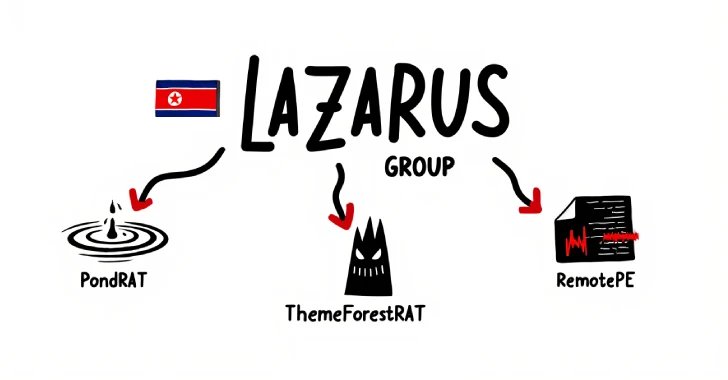
  1. Lazarus Group Attack: A North Korea-affiliated hacking group, Lazarus, executed a sophisticated social engineering campaign targeting a DeFi organization, leveraging cross-platform malware including PondRAT, ThemeForestRAT, and RemotePE.

  2. Social Engineering Tactics: The attack involved impersonating an employee via Telegram and using fake scheduling websites to gain trust for access to sensitive systems.

  3. Malware Evolution: The attack chain involved deploying multiple Remote Access Trojans (RATs), initially using the basic PondRAT, then transitioning to the more advanced ThemeForestRAT and RemotePE, indicating a strategic escalation in techniques.

  4. Complex Features: While PondRAT serves as a primitive entry point, ThemeForestRAT offers enhanced functionalities, including file manipulation and command execution, positioning it as a stealthier option for ongoing reconnaissance and control.

Lazarus Group’s New Malware Trilogy

The Lazarus Group has expanded its malware capabilities with three new tools: PondRAT, ThemeForestRAT, and RemotePE. These pieces of malware are designed to infiltrate systems through social engineering tactics. The group, linked to North Korea, targeted a company in the decentralized finance sector. They impersonated an employee and created fake meeting schedules on platforms like Calendly. Eventually, this led to compromising an employee’s system. Experts explain this attack showcases the group’s ability to effectively exploit human psychology.

Moreover, the attack begins with the deployment of a loader, PerfhLoader, which introduces PondRAT. This malware allows for basic functions such as reading files and executing commands. In tandem, it uses additional tools like keyloggers and proxy programs to enhance data collection. The Lazarus Group has applied these methods over the past few years, utilizing different RATs for various stages of their attacks.

Understanding the Threat Landscape

ThemeForestRAT adds another layer of functionality, enabling further actions within the compromised system. This malware can monitor Remote Desktop sessions and execute multiple commands like enumerating files or executing additional tasks. Its stealthy nature allows it to operate without being detected.

In contrast, RemotePE, a more advanced RAT, targets high-value victims and provides extensive capabilities. Experts note that while PondRAT serves basic needs, its primary goal remains clear: establishing a foothold for more complex operations. The evolution of these malware tools signifies a troubling trend in cyber threats, emphasizing the need for heightened security awareness in organizations. As tactics become more sophisticated, the imperative to stay informed grows stronger.

Stay Ahead with the Latest Tech Trends

Explore the future of technology with our detailed insights on Artificial Intelligence.

Explore past and present digital transformations on the Internet Archive.

DataProtection-V1

Share. Facebook Twitter Pinterest LinkedIn Tumblr Email
Previous ArticleCybersecurity Giants Hit Hard: Latest Data Breach Shakes Top Cloud Providers
Next Article Cloudflare Data Breach: Hackers Steal Customer Data from Salesforce Instances
Avatar photo
Staff Writer
  • Website

John Marcelli is a staff writer for the CISO Brief, with a passion for exploring and writing about the ever-evolving world of technology. From emerging trends to in-depth reviews of the latest gadgets, John stays at the forefront of innovation, delivering engaging content that informs and inspires readers. When he's not writing, he enjoys experimenting with new tech tools and diving into the digital landscape.

Related Posts

Critical RCE Vulnerability Allows Any Authenticated User to Execute Arbitrary Code

May 28, 2026

Critical Breach: Internal Repositories Compromised via Malicious Nx Console Extension

May 21, 2026

Grafana GitHub Breach: TanStack npm Attack Exposes Source Code

May 20, 2026

Comments are closed.

Latest Posts

Mustang Panda Deploys PlugX RAT via Multi-Stage LNK and PowerShell Attack Chain

June 2, 2026

Anthropic extends Project Glasswing Claude Mythos preview to 150 new organizations

June 2, 2026

Urgent: Two-Year-Old Oracle WebLogic Vulnerability Under Active Attack

June 2, 2026

CISA Warns of PAN-OS Vulnerability Exploited in Attacks

June 2, 2026
Don't Miss

Critical RCE Vulnerability Allows Any Authenticated User to Execute Arbitrary Code

By Staff WriterMay 28, 2026

Top Highlights A critical vulnerability in Gogs allows authenticated users to execute arbitrary code via…

Critical Breach: Internal Repositories Compromised via Malicious Nx Console Extension

May 21, 2026

Grafana GitHub Breach: TanStack npm Attack Exposes Source Code

May 20, 2026

Subscribe to Updates

Subscribe to our newsletter and never miss our latest news

Subscribe my Newsletter for New Posts & tips Let's stay updated!

Recent Posts

  • Singapore Crafts National AI Governance Strategy
  • Secure the Future: Protecting Code, Agents, and Models Throughout Development
  • Ransomware novice breaches core operational security protocol
  • FBI-Flagged Phishing Kit Kali365 Extends Its Reach
  • Gamaredon Uses WinRAR to Deploy GammaWorm and GammaSteel Malware
About Us
About Us

Welcome to The CISO Brief, your trusted source for the latest news, expert insights, and developments in the cybersecurity world.

In today’s rapidly evolving digital landscape, staying informed about cyber threats, innovations, and industry trends is critical for professionals and organizations alike. At The CISO Brief, we are committed to providing timely, accurate, and insightful content that helps security leaders navigate the complexities of cybersecurity.

Facebook X (Twitter) Pinterest YouTube WhatsApp
Our Picks

Singapore Crafts National AI Governance Strategy

June 3, 2026

Secure the Future: Protecting Code, Agents, and Models Throughout Development

June 2, 2026

Ransomware novice breaches core operational security protocol

June 2, 2026
Most Popular

Protecting MCP Security: Defeating Prompt Injection & Tool Poisoning

January 30, 202632 Views

Unlock the Power of Free WormGPT: Harnessing DeepSeek, Gemini, and Kimi-K2 AI Models

November 27, 202530 Views

The New Face of DDoS is Impacted by AI

August 4, 202528 Views

Archives

  • June 2026
  • May 2026
  • April 2026
  • March 2026
  • February 2026
  • January 2026
  • December 2025
  • November 2025
  • October 2025
  • September 2025
  • August 2025
  • July 2025
  • June 2025

Categories

  • Compliance
  • Cyber Updates
  • Cybercrime and Ransomware
  • Editor's pick
  • Emerging Tech
  • Events
  • Featured
  • Insights
  • Most Read
  • Threat Intelligence
  • Uncategorized
© 2026 thecisobrief. Designed by thecisobrief.
  • Home
  • About Us
  • Advertise with Us
  • Contact Us
  • DMCA
  • Privacy Policy
  • Terms & Conditions

Type above and press Enter to search. Press Esc to cancel.