

Essential Insights
- The researchers analyzed 380,000 posts across 90 Facebook groups involved in illicit Indian call centers sharing “Crime-as-a-Service,” highlighting prevalent scam activities like tech support and phishing.
- Despite reporting numerous groups to Meta, only a few have been removed; hundreds remain active, illustrating challenges in content moderation.
- Examples include groups selling fake tech support calls, phishing kits, and services like email blasting and money laundering facilitation, with some admins operating across multiple groups.
- Advanced tech developed by academic partners enables large-scale analysis of these scam posts, crucial for understanding evolving cybercrime trends and informing countermeasures.
The Core Issue
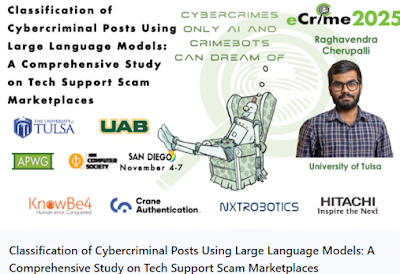
Raghavendra Cherupalli, a researcher involved in studying cybercrime, will present at the upcoming APWG eCrime conference, sharing findings from a comprehensive analysis of Facebook Groups that facilitate illicit Indian call centers offering “Crime-as-a-Service.” His team examined 380,000 posts from 90 such groups to identify patterns, with ongoing work expanding the dataset to nearly a million posts from hundreds of similar groups. Despite efforts to report and shut down these groups—some groups have been terminated, others remain active and unmoderated—many posts promoting scams such as fake tech support calls, phishing kits, and money laundering services persist, often by admins like Manoj Singh and Brijesh Mohan. These scammers advertise services like email blasts impersonating major companies, fake pop-up alerts targeting older adults, and financial accounts for laundering illicit gains. The research, developed with advanced technological tools from the University of Tulsa, aims to better understand these scams’ scope and tactics. The presentation promises to shed light on the severity and sophistication of these operations, emphasizing the importance of ongoing monitoring and reporting efforts.
Risk Summary
Cyber risks stemming from illicit Facebook groups that facilitate “Crime-as-a-Service” offerings pose significant threats to individuals, organizations, and public trust. These groups, often clandestine and rapidly evolving, share posts promoting tech support scams, phishing kits, and illicit payment services used for money laundering and fraud, exemplified by posts offering fake support calls, phishing tools, and payment accounts. Our research reveals the sheer scale of this underground activity—analyzing over 380,000 posts from 90 groups initially, with nearly a million more from additional sources—highlighting the widespread nature of these cybercriminal networks. Despite efforts to report and dismantle these groups, many remain operational, underscoring their resilience and the challenge of enforcement. The impact is profound: victims are ensnared into scams, financial losses occur, and trust in digital platforms erodes, all while cybercriminals exploit the dark corners of social media to perpetuate their schemes. Advancements in machine learning and bulk message analysis are critical to understanding and combating these threats, and ongoing research, like Raghavendra Cherupalli’s upcoming presentation at APWG eCrime, is vital to disrupting these illicit ecosystems.
Possible Remediation Steps
Prompt action is crucial in addressing the rising menace of tech support scam Facebook groups, as delays can allow these deceptive networks to expand, harm more users, and undermine trust in online communities. Swift and effective remediation not only curtails ongoing exploitation but also signals a strong stance against cybercrime, deterring future offenses.
Mitigation Strategies
-
Group Monitoring
Regularly scan and track Facebook groups to identify and assess suspicious activities or misleading content related to tech support scams. -
Reporting & Takedown
Quickly report scam groups to Facebook for urgent review, leveraging platform tools to request removal and prevent further victimization. -
User Education
Implement targeted awareness campaigns directly within or around these groups, informing users about common scam tactics and how to recognize genuine support. -
Collaborative Action
Coordinate with cybersecurity agencies, law enforcement, and Facebook to share intelligence and jointly dismantle scam operations. -
Account Verification
Encourage users to verify official support channels and avoid engaging with unverified groups or profiles associated with scams. -
Policy Enforcement
Strengthen content moderation policies to swiftly remove malicious posts and ban offending accounts engaging in scam activities. -
Technical Measures
Utilize AI and machine learning tools for real-time detection of scam content and automated alerts that prompt quick intervention. - Legal Enforcement
Engage legal channels where possible to pursue prosecution of individuals behind tech support scams, discouraging future offenders.
Advance Your Cyber Knowledge
Stay informed on the latest Threat Intelligence and Cyberattacks.
Access world-class cyber research and guidance from IEEE.
Disclaimer: The information provided may not always be accurate or up to date. Please do your own research, as the cybersecurity landscape evolves rapidly. Intended for secondary references purposes only.
Cyberattacks-V1
