

Fast Facts
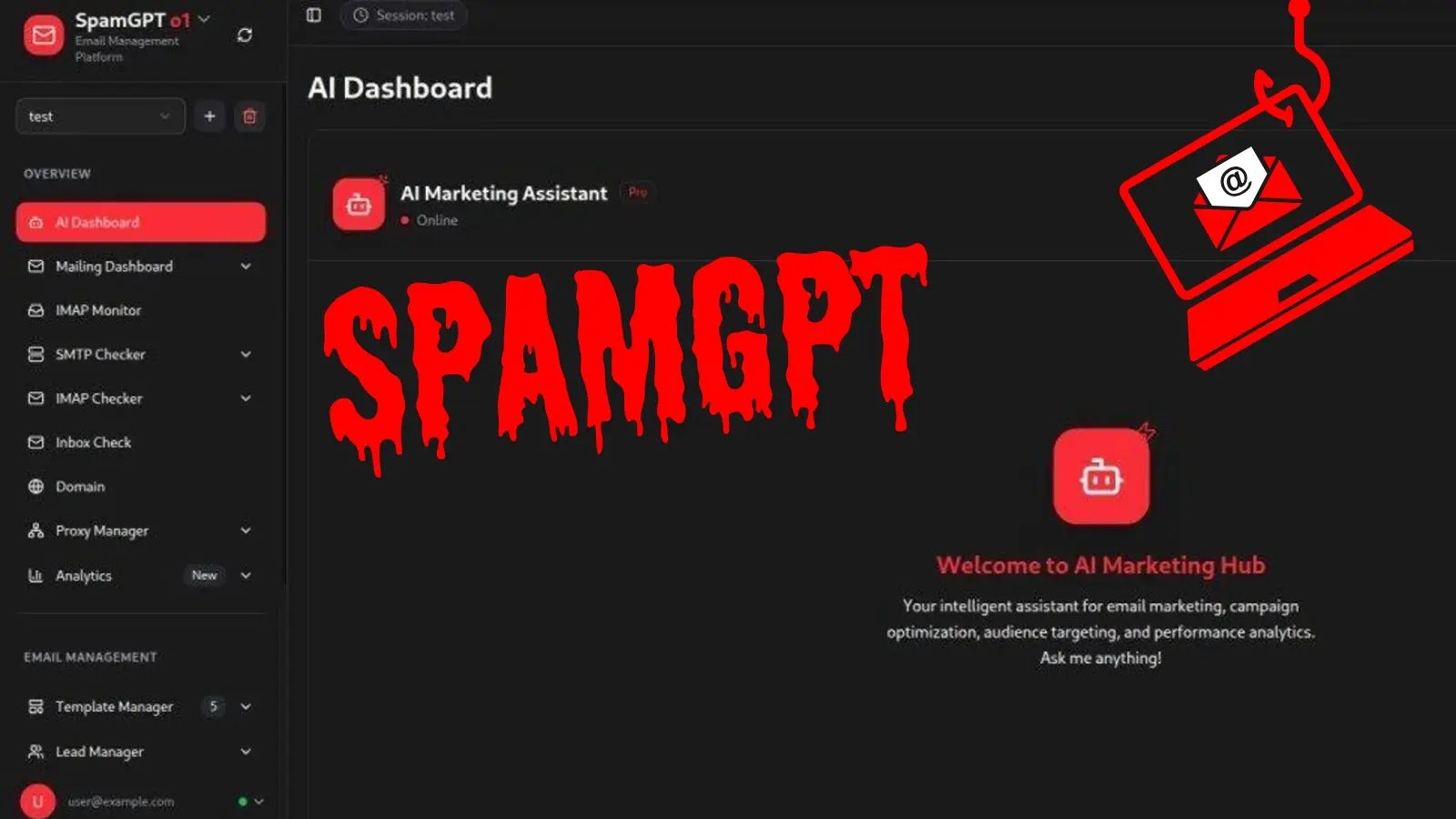
- SpamGPT is a dark web "spam-as-a-service" platform that uses AI to automate and enhance large-scale phishing campaigns, lowering technical barriers for cybercriminals.
- The platform mimics legitimate marketing tools, offering features like campaign management, email testing, and real-time analytics, with an AI assistant called KaliGPT to generate convincing phishing content.
- It facilitates sophisticated spoofing techniques, automates infrastructure management, and includes training on SMTP cracking, enabling even low-skilled actors to execute effective, undetectable attacks.
- To combat such threats, organizations must strengthen email authentication protocols (DMARC, SPF, DKIM) and deploy AI-enabled security solutions to identify AI-generated phishing content.
The Core Issue
The story reports on a cutting-edge cybercrime platform called SpamGPT, which is being marketed on the dark web as a “spam-as-a-service” toolkit that dramatically lowers the technical barriers for carrying out large-scale phishing attacks. Created to mimic legitimate marketing software, SpamGPT leverages artificial intelligence, specifically an integrated AI assistant dubbed “KaliGPT,” to generate convincing scam emails, craft engaging subject lines, and provide targeting advice. This platform automates many aspects of cybercrimes—such as setting up mail servers, testing email delivery, and monitoring campaign success—making it accessible even to low-skilled criminals who pay $5,000 for training on “SMTP cracking.” Attackers armed with SpamGPT can bypass standard security checks like SPF and DKIM by spoofing trusted domains and exploiting cloud services like Amazon AWS and SendGrid, greatly increasing the sophistication, scale, and success rate of phishing operations. The report is issued by cybersecurity experts warning organizations about how this automation-driven tool is fueling an alarming escalation in cyber threats, emphasizing the urgent need for reinforced email security protocols and advanced detection measures to combat this new wave of AI-powered cybercrime.
Risks Involved
SpamGPT represents a groundbreaking yet perilous advancement in cybercrime, seamlessly blending artificial intelligence with professional email marketing functionalities to enable scaleable, persuasive, and automated phishing campaigns. Marketed as a “spam-as-a-service” platform on the dark web, it simplifies complex operations—such as crafting convincing scam emails, bypassing security protocols, and managing vast infrastructures—making sophisticated cyberattacks accessible even to low-skilled actors. Its AI assistant, KaliGPT, can generate targeted content and optimize campaigns, while features for spoofing, credential validation, and delivery testing significantly enhance attack effectiveness and evasion. The platform’s automation and deep integration of advanced tools drastically inflate the risk and impact of phishing, threatening organizational security and financial integrity. To combat this evolution, organizations must reinforce email authentication protocols (DMARC, SPF, DKIM) and deploy AI-powered detection solutions capable of identifying AI-generated malicious content, emphasizing the critical need for proactive and adaptive cybersecurity defenses in an era where cybercriminals leverage automation to amplify their reach and sophistication.
Fix & Mitigation
Timely remediation is crucial when facing an AI-powered email attack tool used by hackers to conduct massive phishing campaigns, as swift action can significantly limit damage, protect sensitive information, and restore trust in communication channels.
Detection
- Implement advanced email filtering and AI-based threat detection systems
- Monitor network traffic and email logs for unusual patterns
- Conduct regular security audits and vulnerability assessments
Containment
- Isolate affected systems and revoke malicious email access
- Alert users about ongoing phishing threats and provide guidance
- Disable compromised accounts promptly
Eradication
- Remove malicious email tools and associated malware from systems
- Update and patch software vulnerabilities exploited by attackers
- Change affected credentials and enforce strong authentication measures
Recovery
- Restore email systems from clean backups
- Notify stakeholders and comply with reporting regulations
- Reinforce employee training on phishing awareness
Prevention
- Deploy multi-factor authentication across systems
- Conduct ongoing security awareness training
- Regularly update security protocols and software defenses
Explore More Security Insights
Discover cutting-edge developments in Emerging Tech and industry Insights.
Explore engineering-led approaches to digital security at IEEE Cybersecurity.
Disclaimer: The information provided may not always be accurate or up to date. Please do your own research, as the cybersecurity landscape evolves rapidly. Intended for secondary references purposes only.
Cyberattacks-V1
