
Close Menu
  • Home
  • Cybercrime and Ransomware
  • Emerging Tech
  • Threat Intelligence
  • Expert Insights
  • Careers and Learning
  • Compliance

Subscribe to Updates

Subscribe to our newsletter and never miss our latest news

Subscribe my Newsletter for New Posts & tips Let's stay updated!

What's Hot

Cybercriminal phishing tactics: prediction, prioritization, and prevention

June 3, 2026

Singapore Crafts National AI Governance Strategy

June 3, 2026

Secure the Future: Protecting Code, Agents, and Models Throughout Development

June 2, 2026
Facebook X (Twitter) Instagram
The CISO Brief
  • Home
  • Cybercrime and Ransomware
  • Emerging Tech
  • Threat Intelligence
  • Expert Insights
  • Careers and Learning
  • Compliance
Home » Measuring the Invisible: Tampa General Hospital’s Cyber Risk Strategy
Cybercrime and Ransomware

Measuring the Invisible: Tampa General Hospital’s Cyber Risk Strategy

Staff WriterBy Staff WriterSeptember 3, 2025No Comments4 Mins Read4 Views
Facebook Twitter Pinterest LinkedIn Tumblr Email
Share
Facebook Twitter LinkedIn Pinterest WhatsApp Email

Essential Insights

  1. Effective cybersecurity management requires quantifying and communicating risks in relatable terms, especially to non-technical executives, to promote informed decision-making.
  2. Healthcare faces high costs from data breaches, averaging $7.42 million per incident, with longer detection times, emphasizing the need for robust security practices.
  3. Strong partnerships between CIOs and CISOs, sharing a common language and strategic collaboration, are crucial for aligning security with organizational growth and innovation.
  4. Proactive CISO involvement in vendor selection, contract negotiation, and risk mitigation significantly reduces third-party vulnerabilities and enhances overall enterprise security posture.

Problem Explained

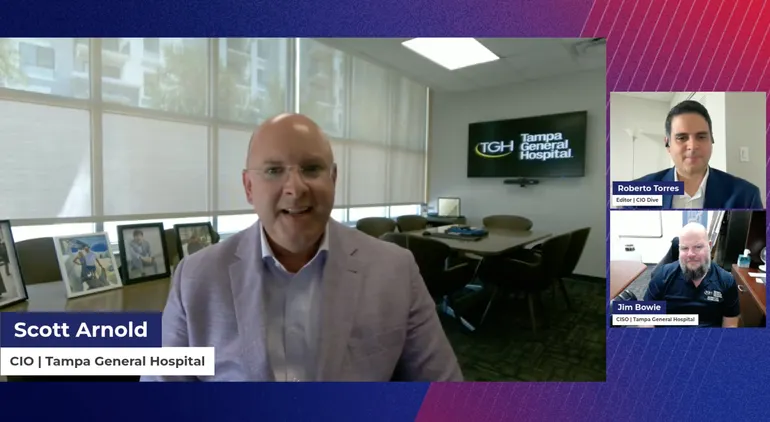
During a recent virtual event, cybersecurity leaders at Tampa General Hospital highlighted how they have shifted their approach to managing cyber risks by clearly communicating the financial and operational impacts of security threats to the hospital’s leadership and board. Instead of relying solely on technical metrics that can confuse non-technical executives, CISO James Bowie and CIO Scott Arnold emphasized quantifying risks in relatable terms, helping decision-makers understand the potential costs of security breaches—an especially critical concern in healthcare, where breaches have consistently caused enormous financial damage and prolonged recovery times. Their strategy involves integrating security considerations into decision-making processes, such as vendor contracts, to proactively mitigate risks like third-party vulnerabilities and legacy system weaknesses, which are prevalent and complex in healthcare environments.

The story underscores that these efforts have improved collaboration and security posture at Tampa General, enabling the hospital to safely pursue growth and innovation while managing escalating cyber threats. Bowie’s role as a cybersecurity advocate within the organization demonstrates the importance of partnerships between CIOs and CISOs who are aligned in their goals to protect sensitive data and organizational resources. The hospital’s experience reveals that fostering open communication and translating technical risks into understandable business impacts are crucial for securing support from executive leadership, ultimately reducing enterprise exposure to costly cyberattacks and strengthening defenses in a high-stakes sector.

Potential Risks

Cyber risks pose significant threats across industries, with healthcare experiencing the highest financial impact, averaging $7.42 million per breach and taking over 279 days to contain, highlighting the immense costs of security lapses. These risks stem from vulnerabilities in legacy systems, vendor-related vulnerabilities, insider threats, and the complexities of safeguarding sensitive research data, especially amid regulatory constraints. As organizations push toward digital transformation, the challenge lies in balancing innovation with security, often leading to exposure through outdated equipment and third-party vulnerabilities. Effective risk management hinges on quantifying these threats in terms relatable to executives, ensuring cybersecurity considerations are integrated into decision-making processes. Strong collaboration between CIOs and CISOs, emphasizing clear communication and proactive risk mitigation—such as vetting vendors under attack—can significantly reduce exposure and safeguard organizational assets, underscoring the critical importance of cybersecurity in sustaining operational growth and financial stability.

Possible Remediation Steps

Understanding how Tampa General Hospital quantified cyber risk underscores the critical importance of timely remediation, as rapid action can significantly reduce vulnerabilities, protect sensitive patient data, and maintain operational continuity in a high-stakes environment.

Mitigation Strategies

  • Risk Assessment: Conduct comprehensive evaluations to identify potential cyber threats and gaps.

  • Employee Training: Educate staff on cybersecurity best practices to prevent human error.

  • Access Control: Implement strict authorization protocols to limit unnecessary data access.

Remediation Approaches

  • Patch Management: Regularly update software and systems to close security holes.

  • Incident Response Plan: Develop and test procedures for swift action during a cyber incident.

  • System Segmentation: Isolate critical systems to contain potential breaches and minimize impact.

Continue Your Cyber Journey

Discover cutting-edge developments in Emerging Tech and industry Insights.

Access world-class cyber research and guidance from IEEE.

Disclaimer: The information provided may not always be accurate or up to date. Please do your own research, as the cybersecurity landscape evolves rapidly. Intended for secondary references purposes only.

Cyberattacks-V1

CISO Update Cybersecurity MX1
Share. Facebook Twitter Pinterest LinkedIn Tumblr Email
Previous ArticleCyware and Trustmarque Join Forces for Enhanced Threat Intelligence in the UK
Next Article AI in Cybersecurity: Safety-Critical Industries on High Alert
Avatar photo
Staff Writer
  • Website

John Marcelli is a staff writer for the CISO Brief, with a passion for exploring and writing about the ever-evolving world of technology. From emerging trends to in-depth reviews of the latest gadgets, John stays at the forefront of innovation, delivering engaging content that informs and inspires readers. When he's not writing, he enjoys experimenting with new tech tools and diving into the digital landscape.

Related Posts

Cybercriminal phishing tactics: prediction, prioritization, and prevention

June 3, 2026

Secure the Future: Protecting Code, Agents, and Models Throughout Development

June 2, 2026

Ransomware novice breaches core operational security protocol

June 2, 2026

Comments are closed.

Latest Posts

Mustang Panda Deploys PlugX RAT via Multi-Stage LNK and PowerShell Attack Chain

June 2, 2026

Anthropic extends Project Glasswing Claude Mythos preview to 150 new organizations

June 2, 2026

Urgent: Two-Year-Old Oracle WebLogic Vulnerability Under Active Attack

June 2, 2026

CISA Warns of PAN-OS Vulnerability Exploited in Attacks

June 2, 2026
Don't Miss

Cybercriminal phishing tactics: prediction, prioritization, and prevention

By Staff WriterJune 3, 2026

Quick Takeaways Phishing remains the leading cyber threat in finance, exploiting human fallibility through increasingly…

Secure the Future: Protecting Code, Agents, and Models Throughout Development

June 2, 2026

Ransomware novice breaches core operational security protocol

June 2, 2026

Subscribe to Updates

Subscribe to our newsletter and never miss our latest news

Subscribe my Newsletter for New Posts & tips Let's stay updated!

Recent Posts

  • Cybercriminal phishing tactics: prediction, prioritization, and prevention
  • Singapore Crafts National AI Governance Strategy
  • Secure the Future: Protecting Code, Agents, and Models Throughout Development
  • Ransomware novice breaches core operational security protocol
  • FBI-Flagged Phishing Kit Kali365 Extends Its Reach
About Us
About Us

Welcome to The CISO Brief, your trusted source for the latest news, expert insights, and developments in the cybersecurity world.

In today’s rapidly evolving digital landscape, staying informed about cyber threats, innovations, and industry trends is critical for professionals and organizations alike. At The CISO Brief, we are committed to providing timely, accurate, and insightful content that helps security leaders navigate the complexities of cybersecurity.

Facebook X (Twitter) Pinterest YouTube WhatsApp
Our Picks

Cybercriminal phishing tactics: prediction, prioritization, and prevention

June 3, 2026

Singapore Crafts National AI Governance Strategy

June 3, 2026

Secure the Future: Protecting Code, Agents, and Models Throughout Development

June 2, 2026
Most Popular

Protecting MCP Security: Defeating Prompt Injection & Tool Poisoning

January 30, 202632 Views

Unlock the Power of Free WormGPT: Harnessing DeepSeek, Gemini, and Kimi-K2 AI Models

November 27, 202530 Views

The New Face of DDoS is Impacted by AI

August 4, 202528 Views

Archives

  • June 2026
  • May 2026
  • April 2026
  • March 2026
  • February 2026
  • January 2026
  • December 2025
  • November 2025
  • October 2025
  • September 2025
  • August 2025
  • July 2025
  • June 2025

Categories

  • Compliance
  • Cyber Updates
  • Cybercrime and Ransomware
  • Editor's pick
  • Emerging Tech
  • Events
  • Featured
  • Insights
  • Most Read
  • Threat Intelligence
  • Uncategorized
© 2026 thecisobrief. Designed by thecisobrief.
  • Home
  • About Us
  • Advertise with Us
  • Contact Us
  • DMCA
  • Privacy Policy
  • Terms & Conditions

Type above and press Enter to search. Press Esc to cancel.