

Essential Insights
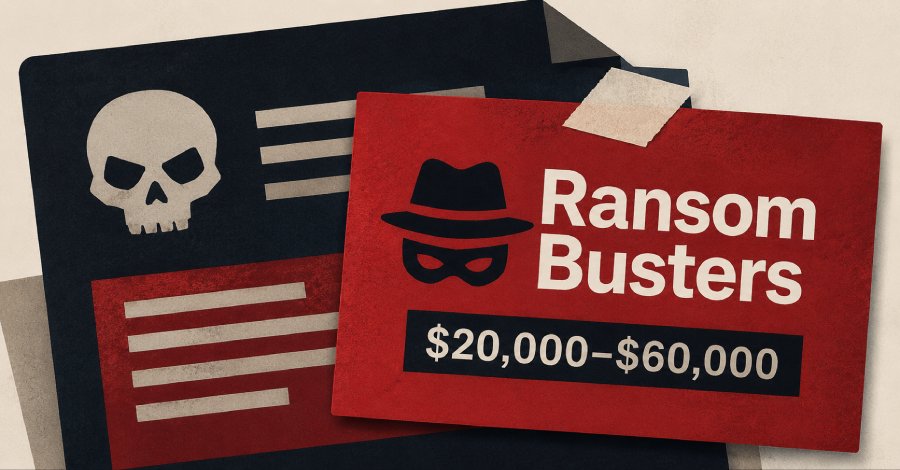
- A ransomware affiliate, "Ransom Busters," is proactively emailing victims offering to delete stolen data for $20,000–$60,000, which is unusual and likely illegitimate.
- Ransom Busters claims to have found vulnerabilities in ransomware groups’ servers and accessed data for over three years, but their tactics suggest deception and potential law violations.
- The group shares tools and techniques across incidents, indicating a single operator behind multiple attacks, and may be betraying its own criminal partners for profit.
- The ransomware landscape is evolving with new groups, increased fragmentation, and more sophisticated tactics like credential harvesting, deep system infiltration, and blending malicious with legitimate activities.
Ransom Busters Offers a Deceptive Solution for Ransomware Victims
Recently, a group calling itself Ransom Busters has emerged with an unusual approach to dealing with ransomware attacks. Unlike typical cybersecurity firms, which usually offer help after an attack becomes public, this group proactively contacts affected organizations. They claim to be able to delete stolen data from ransomware servers for a fee that ranges from $20,000 to $60,000. This method raises questions about their legitimacy, as experts believe their actions are likely illegal and suspicious. The group contacts victims’ CEOs or IT leaders and says they have found vulnerabilities in attacker’s administrative panels. They also claim to have accessed stolen data and offer to help organizations recover and delete backups held by ransomware groups. Cybersecurity analysts warn that paying such a group does not guarantee the removal of stolen data and that trusting them could be a mistake. Instead, these offers seem to be a hoax designed to exploit vulnerable organizations further.
Similarities Suggest a Single Operator Behind Multiple Incidents
Investigations into Ransom Busters’ activities reveal striking similarities across different cases. Security experts identified recurring tools used in their attacks, such as network scanning software and data exfiltration tools. They also found common tactics, like creating backup accounts with weak passwords and using the same hostname across intrusions. These patterns suggest a single operator, possibly an affiliate working within multiple ransomware networks, is behind these efforts. The techniques are consistent, indicating they might be acting without legal awareness or concern. Experts emphasize that victims should remain cautious, as cybercriminals often pretend to be helpful when they are really trying to deceive. Overall, the case of Ransom Busters highlights the importance of trusting established cybersecurity practices rather than falling for false promises of quick fixes.
Expand Your Tech Knowledge
Dive deeper into the world of Cryptocurrency and its impact on global finance.
Access comprehensive resources on technology by visiting Wikipedia.
DataProtection-V1
