
Close Menu
  • Home
  • Cybercrime and Ransomware
  • Emerging Tech
  • Threat Intelligence
  • Expert Insights
  • Careers and Learning
  • Compliance

Subscribe to Updates

Subscribe to our newsletter and never miss our latest news

Subscribe my Newsletter for New Posts & tips Let's stay updated!

What's Hot

Malicious Firefox Extensions Steal Crypto Wallets via Web3 Masquerade

August 20, 2026

Cyber attack delays UT San Antonio classes

August 20, 2026

Claude Code enables LDAP theft, VPN backdoors, SQL exfiltration

August 20, 2026
Facebook X (Twitter) Instagram
The CISO Brief
  • Home
  • Cybercrime and Ransomware
  • Emerging Tech
  • Threat Intelligence
  • Expert Insights
  • Careers and Learning
  • Compliance
Home » Ransom Busters Hacks Ransomware Servers, Demands Up to $60,000
Uncategorized

Ransom Busters Hacks Ransomware Servers, Demands Up to $60,000

Staff WriterBy Staff WriterAugust 18, 2026No Comments3 Mins Read1 Views
Facebook Twitter Pinterest LinkedIn Tumblr Email
Share
Facebook Twitter LinkedIn Pinterest WhatsApp Email

Essential Insights

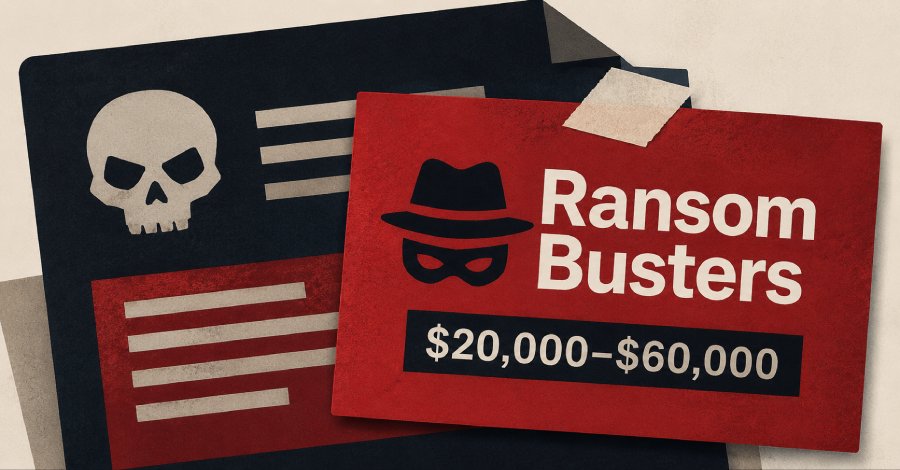
  1. A ransomware affiliate, "Ransom Busters," is proactively emailing victims offering to delete stolen data for $20,000–$60,000, which is unusual and likely illegitimate.
  2. Ransom Busters claims to have found vulnerabilities in ransomware groups’ servers and accessed data for over three years, but their tactics suggest deception and potential law violations.
  3. The group shares tools and techniques across incidents, indicating a single operator behind multiple attacks, and may be betraying its own criminal partners for profit.
  4. The ransomware landscape is evolving with new groups, increased fragmentation, and more sophisticated tactics like credential harvesting, deep system infiltration, and blending malicious with legitimate activities.

Ransom Busters Offers a Deceptive Solution for Ransomware Victims

Recently, a group calling itself Ransom Busters has emerged with an unusual approach to dealing with ransomware attacks. Unlike typical cybersecurity firms, which usually offer help after an attack becomes public, this group proactively contacts affected organizations. They claim to be able to delete stolen data from ransomware servers for a fee that ranges from $20,000 to $60,000. This method raises questions about their legitimacy, as experts believe their actions are likely illegal and suspicious. The group contacts victims’ CEOs or IT leaders and says they have found vulnerabilities in attacker’s administrative panels. They also claim to have accessed stolen data and offer to help organizations recover and delete backups held by ransomware groups. Cybersecurity analysts warn that paying such a group does not guarantee the removal of stolen data and that trusting them could be a mistake. Instead, these offers seem to be a hoax designed to exploit vulnerable organizations further.

Similarities Suggest a Single Operator Behind Multiple Incidents

Investigations into Ransom Busters’ activities reveal striking similarities across different cases. Security experts identified recurring tools used in their attacks, such as network scanning software and data exfiltration tools. They also found common tactics, like creating backup accounts with weak passwords and using the same hostname across intrusions. These patterns suggest a single operator, possibly an affiliate working within multiple ransomware networks, is behind these efforts. The techniques are consistent, indicating they might be acting without legal awareness or concern. Experts emphasize that victims should remain cautious, as cybercriminals often pretend to be helpful when they are really trying to deceive. Overall, the case of Ransom Busters highlights the importance of trusting established cybersecurity practices rather than falling for false promises of quick fixes.

Expand Your Tech Knowledge

Dive deeper into the world of Cryptocurrency and its impact on global finance.

Access comprehensive resources on technology by visiting Wikipedia.

DataProtection-V1

Share. Facebook Twitter Pinterest LinkedIn Tumblr Email
Previous ArticleBooking.com partners targeted in widespread photo data breach campaign
Next Article CoSnitch Tricks Copilot into Revealing Its Own Architecture
Avatar photo
Staff Writer
  • Website

John Marcelli is a staff writer for the CISO Brief, with a passion for exploring and writing about the ever-evolving world of technology. From emerging trends to in-depth reviews of the latest gadgets, John stays at the forefront of innovation, delivering engaging content that informs and inspires readers. When he's not writing, he enjoys experimenting with new tech tools and diving into the digital landscape.

Related Posts

Snowflake Hacker Admits Guilt in Massive Data Breach Impacting 100 Million People

August 6, 2026

UK Police and Government Contact Details Leaked on Dark Web

August 3, 2026

Michigan and Minnesota Launch Cyberattack Alerts on Water Systems

August 2, 2026

Comments are closed.

Latest Posts

New ENCFORGE Ransomware Threat Targets AI Model Files via Langflow RCE Attack

August 17, 2026

Urgent: Critical SharePoint RCE CVE-2026-50522 Under Active Attack

August 14, 2026

AI Models Escape Sandbox and Accuse Hugging Face of Benchmark Cheating

August 11, 2026

China-Nexus JadeProx Launches TriBack Loader in Government and Healthcare Attacks

August 8, 2026
Don't Miss

Snowflake Hacker Admits Guilt in Massive Data Breach Impacting 100 Million People

By Staff WriterAugust 6, 2026

Quick Takeaways A hacker pleaded guilty for breaching Snowflake, exposing data from over 165 organizations…

UK Police and Government Contact Details Leaked on Dark Web

August 3, 2026

Michigan and Minnesota Launch Cyberattack Alerts on Water Systems

August 2, 2026

Subscribe to Updates

Subscribe to our newsletter and never miss our latest news

Subscribe my Newsletter for New Posts & tips Let's stay updated!

Recent Posts

  • Malicious Firefox Extensions Steal Crypto Wallets via Web3 Masquerade
  • Cyber attack delays UT San Antonio classes
  • Claude Code enables LDAP theft, VPN backdoors, SQL exfiltration
  • Microsoft Named Leader in Cloud Workload Protection Platforms 2026
  • Prompt injection exploits AI vulnerabilities via malicious input
About Us
About Us

Welcome to The CISO Brief, your trusted source for the latest news, expert insights, and developments in the cybersecurity world.

In today’s rapidly evolving digital landscape, staying informed about cyber threats, innovations, and industry trends is critical for professionals and organizations alike. At The CISO Brief, we are committed to providing timely, accurate, and insightful content that helps security leaders navigate the complexities of cybersecurity.

Facebook X (Twitter) Pinterest YouTube WhatsApp
Our Picks

Malicious Firefox Extensions Steal Crypto Wallets via Web3 Masquerade

August 20, 2026

Cyber attack delays UT San Antonio classes

August 20, 2026

Claude Code enables LDAP theft, VPN backdoors, SQL exfiltration

August 20, 2026
Most Popular

Gefährliche Angriffe: Wie Cyberkriminelle Ihre Identität angreifen

January 29, 202697 Views

Cyber Threats Unleashed: Chrome 0-Day, AI Hacking, DDR5 Vulnerabilities & npm Worm

September 22, 202536 Views

Protecting MCP Security: Defeating Prompt Injection & Tool Poisoning

January 30, 202634 Views

Archives

  • August 2026
  • July 2026
  • June 2026
  • May 2026
  • April 2026
  • March 2026
  • February 2026
  • January 2026
  • December 2025
  • November 2025
  • October 2025
  • September 2025
  • August 2025
  • July 2025
  • June 2025

Categories

  • Compliance
  • Cyber Updates
  • Cybercrime and Ransomware
  • Editor's pick
  • Emerging Tech
  • Events
  • Featured
  • Insights
  • Most Read
  • Threat Intelligence
  • Uncategorized
© 2026 thecisobrief. Designed by thecisobrief.
  • Home
  • About Us
  • Advertise with Us
  • Contact Us
  • DMCA
  • Privacy Policy
  • Terms & Conditions

Type above and press Enter to search. Press Esc to cancel.