
Close Menu
  • Home
  • Cybercrime and Ransomware
  • Emerging Tech
  • Threat Intelligence
  • Expert Insights
  • Careers and Learning
  • Compliance

Subscribe to Updates

Subscribe to our newsletter and never miss our latest news

Subscribe my Newsletter for New Posts & tips Let's stay updated!

What's Hot

Secure Tomorrow: Start Testing Post-Quantum Certificate Ecosystems Today

October 9, 2026

ARTEX AI: Unmasking Data Theft Attacks on South Korean Financial Firms

October 9, 2026

Japan Faces Surge in Data Leaks Due to API Abuse and Attacks

October 8, 2026
Facebook X (Twitter) Instagram
The CISO Brief
  • Home
  • Cybercrime and Ransomware
  • Emerging Tech
  • Threat Intelligence
  • Expert Insights
  • Careers and Learning
  • Compliance
Home » ARTEX AI: Unmasking Data Theft Attacks on South Korean Financial Firms
Uncategorized

ARTEX AI: Unmasking Data Theft Attacks on South Korean Financial Firms

Staff WriterBy Staff WriterOctober 9, 2026No Comments3 Mins Read0 Views
Facebook Twitter Pinterest LinkedIn Tumblr Email
Share
Facebook Twitter LinkedIn Pinterest WhatsApp Email

Quick Takeaways

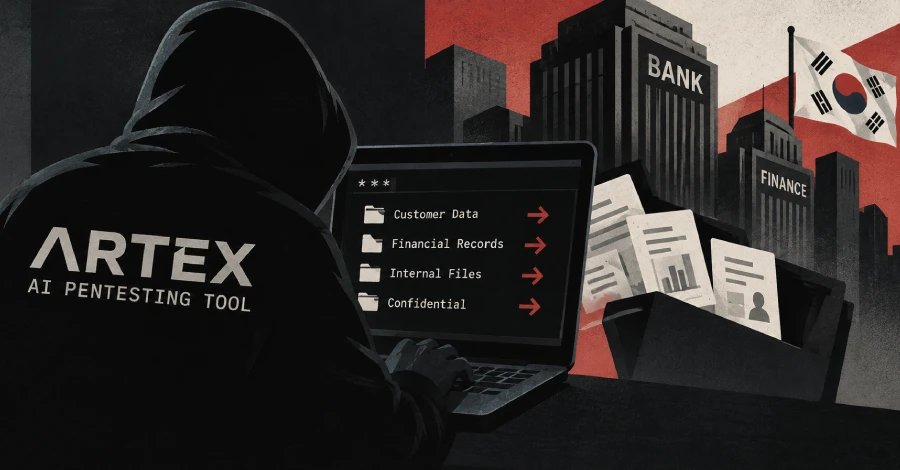
  1. Cyberattack on Korean financial institutions used AI-powered tool ARTEX, developed in China, for cyber espionage and data theft, with open directories exposing sensitive session and configuration files.
  2. ARTEX, a multi-agent LLM-driven system, was misused for malicious activities, prompting its developer Autumn-27 to shut it down and switch to closed-source to prevent abuse.
  3. The threat actor involved showed intent to sell Korean breach data on Telegram and sought information on Korean data sales, indicating financial motives and targeted intelligence gathering.
  4. Separately, the SCARLET LOOP platform automates credential stuffing and account takeover by employing AI for target classification and login, demonstrating increased threat actor sophistication via AI integration.

AI Tool Used in Data Breaches of South Korean Financial Firms

Cybersecurity researchers have uncovered a concerning campaign targeting South Korean financial companies. The attack involved an open-source AI pentesting tool called ARTEX, which is typically designed for security testing. However, cybercriminals repurposed it to carry out data theft activities. The campaign lasted from late September to early October 2026 and resulted in significant data exfiltration. According to reports, the malicious actors used ARTEX with advanced AI language models to identify vulnerabilities and access sensitive information. This demonstrates how tools intended for security research can be exploited for harmful purposes. The campaign was traced back to a Hong Kong-based server, but no specific threat group has been officially identified. Nonetheless, evidence points to a Chinese-speaking operator driven by financial motives. The use of AI-powered tools like ARTEX highlights the evolving threat landscape and the growing role of automation in cyberattacks.

Autumn-27 Restricts ARTEX After Malicious Use

Following the misuse of ARTEX, the developers of the tool, Autumn-27, decided to make it closed source. They emphasized that the original purpose of ARTEX was educational and aimed at helping organizations improve security. The developers distanced themselves from the malicious activities, stating that the tool’s misuse violates its intended use. They announced that ARTEX would no longer receive updates or support and would be kept closed to prevent further abuse. This move reflects the challenges faced by cybersecurity professionals when open-source tools are exploited by cybercriminals. While the decision limits potential future enhancements, it also raises questions about how to balance open access with security concerns. The incident illustrates a broader issue of how technological advancements, such as AI, can be turned against the very systems meant to protect us.

Stay Ahead with the Latest Tech Trends

Stay informed on the revolutionary breakthroughs in Quantum Computing research.

Explore past and present digital transformations on the Internet Archive.

DataProtection-V1

Share. Facebook Twitter Pinterest LinkedIn Tumblr Email
Previous ArticleJapan Faces Surge in Data Leaks Due to API Abuse and Attacks
Next Article Secure Tomorrow: Start Testing Post-Quantum Certificate Ecosystems Today
Avatar photo
Staff Writer
  • Website

John Marcelli is a staff writer for the CISO Brief, with a passion for exploring and writing about the ever-evolving world of technology. From emerging trends to in-depth reviews of the latest gadgets, John stays at the forefront of innovation, delivering engaging content that informs and inspires readers. When he's not writing, he enjoys experimenting with new tech tools and diving into the digital landscape.

Related Posts

Japan Faces Surge in Data Leaks Due to API Abuse and Attacks

October 8, 2026

Urgent: FortiBleed Still Active After Leaking 86,644 Device Credentials

October 7, 2026

FBI Fires Contractor as Patch Failure Sparks Breach Response

October 6, 2026

Comments are closed.

Latest Posts

Malicious Servers Divide Instructions to Force AI Agents to Leak Secrets

October 4, 2026

DeadLock Ransomware Escalates Threats by Exploiting Polygon Smart Contracts

October 1, 2026

Kimwolf v7 Android Botnet: Cloaking DDoS Traffic as Legitimate Browsing

September 28, 2026

Attackers Exploit SharePoint Authentication Bypass Post-PoC Release

September 25, 2026
Don't Miss

Japan Faces Surge in Data Leaks Due to API Abuse and Attacks

By Staff WriterOctober 8, 2026

Summary Points Attackers exploited API vulnerabilities and known software flaws, especially in Metabase, to leak…

Urgent: FortiBleed Still Active After Leaking 86,644 Device Credentials

October 7, 2026

FBI Fires Contractor as Patch Failure Sparks Breach Response

October 6, 2026

Subscribe to Updates

Subscribe to our newsletter and never miss our latest news

Subscribe my Newsletter for New Posts & tips Let's stay updated!

Recent Posts

  • Secure Tomorrow: Start Testing Post-Quantum Certificate Ecosystems Today
  • ARTEX AI: Unmasking Data Theft Attacks on South Korean Financial Firms
  • Japan Faces Surge in Data Leaks Due to API Abuse and Attacks
  • New scripts reveal AI agent attack reconstruction techniques
  • UAC-0099 Targets Ukrainian Officials with ASHVEIN RAT, Command Hiding
About Us
About Us

Welcome to The CISO Brief, your trusted source for the latest news, expert insights, and developments in the cybersecurity world.

In today’s rapidly evolving digital landscape, staying informed about cyber threats, innovations, and industry trends is critical for professionals and organizations alike. At The CISO Brief, we are committed to providing timely, accurate, and insightful content that helps security leaders navigate the complexities of cybersecurity.

Facebook X (Twitter) Pinterest YouTube WhatsApp
Our Picks

Secure Tomorrow: Start Testing Post-Quantum Certificate Ecosystems Today

October 9, 2026

ARTEX AI: Unmasking Data Theft Attacks on South Korean Financial Firms

October 9, 2026

Japan Faces Surge in Data Leaks Due to API Abuse and Attacks

October 8, 2026
Most Popular

Gefährliche Angriffe: Wie Cyberkriminelle Ihre Identität angreifen

January 29, 2026265 Views

CISA Alerts: Critical Vulnerability in Splunk Enterprise Under Active Attack

June 19, 2026214 Views

Salesforce Disables Klue App After Data Breach from Token Abuse

June 19, 2026210 Views

Archives

  • October 2026
  • September 2026
  • August 2026
  • July 2026
  • June 2026
  • May 2026
  • April 2026
  • March 2026
  • February 2026
  • January 2026
  • December 2025
  • November 2025
  • October 2025
  • September 2025
  • August 2025
  • July 2025
  • June 2025

Categories

  • Compliance
  • Cyber Updates
  • Cybercrime and Ransomware
  • Editor's pick
  • Emerging Tech
  • Events
  • Featured
  • Insights
  • Most Read
  • Threat Intelligence
  • Uncategorized
© 2026 thecisobrief. Designed by thecisobrief.
  • Home
  • About Us
  • Advertise with Us
  • Contact Us
  • DMCA
  • Privacy Policy
  • Terms & Conditions

Type above and press Enter to search. Press Esc to cancel.