

Summary Points
-
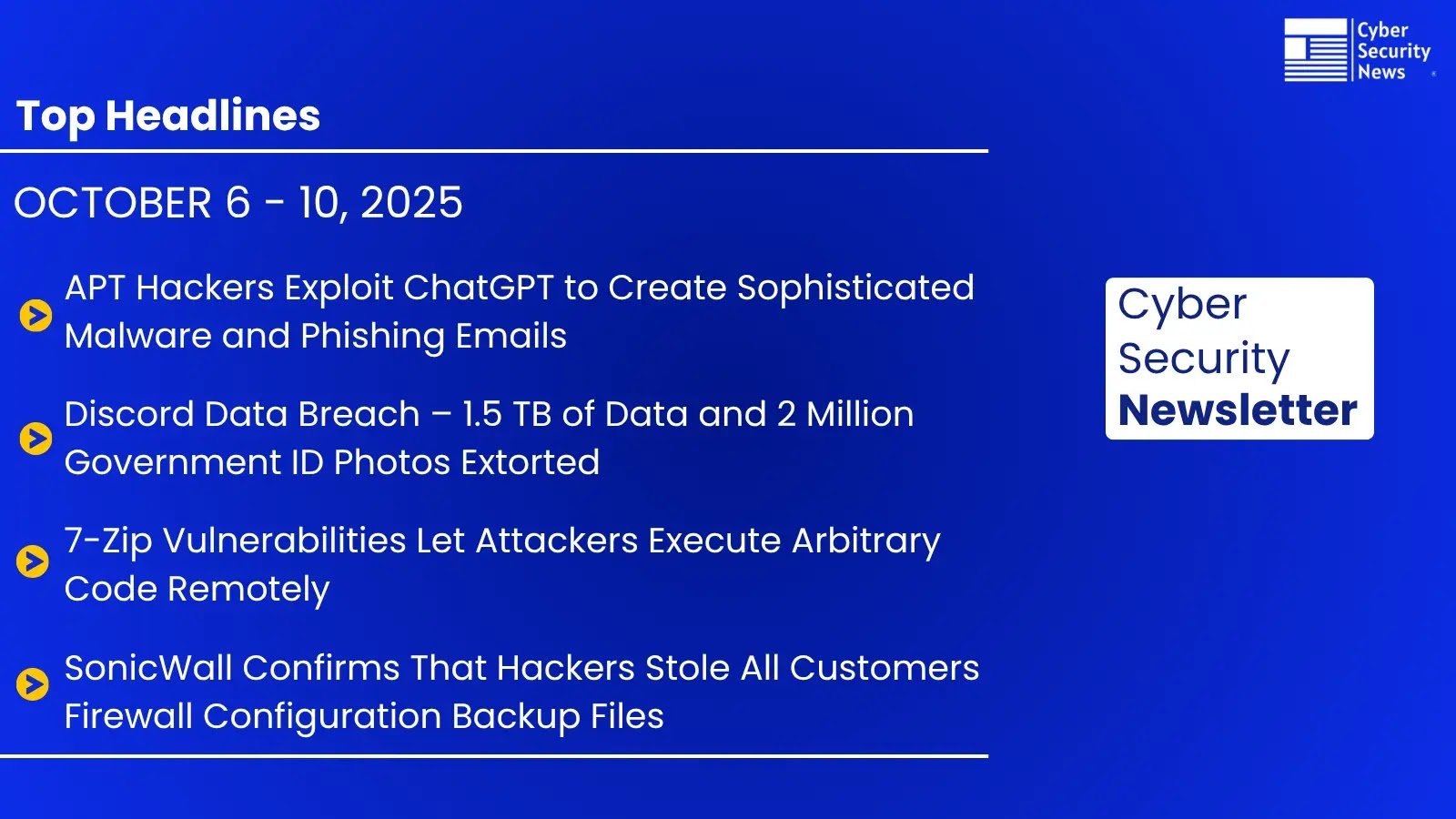
Recent cyber incidents highlight critical vulnerabilities—including a Discord breach exposing user data, a Red Hat leak compromising enterprise credentials, and critical flaws in 7-Zip and SonicWall firewalls—underscoring the need for proactive patching and monitoring.
-
Threat actors are advancing tactics with stealthy backdoors like WARMCOOKIE, abusing legitimate remote access tools, weaponizing AI (ChatGPT and GPT-4) for malware and phishing, and exploiting cloud and open-source tools like Velociraptor for persistent, evasive attacks.
-
Major vulnerabilities such as Oracle E-Business Suite CVE-2025-61882, Windows privilege escalations, zero-day Cisco VPN and Palo Alto firewall flaws, and Linux kernel exploits are actively being exploited or pose high risks, urging immediate patching and rigorous security audits.
- Widespread service outages across Microsoft 365, Azure, and Windows, alongside new attack techniques including DLL side-loading and supply chain compromises, reveal the increasing complexity and interconnectedness of cloud and enterprise cybersecurity challenges requiring vigilant monitoring and rapid response.
The Issue
This week’s cybersecurity report reveals a series of alarming incidents and vulnerabilities exposing enterprises and users to significant threats. Key events include a breach on the Discord platform, which exposed sensitive user data such as photos and emails, and a Red Hat leak that compromised over 32 million files from numerous major clients, including Vodafone and HSBC, highlighting the danger of sophisticated cyberattacks targeting cloud and supply chain infrastructure. Meanwhile, cybercriminals and state-sponsored actors have advanced their tactics: the malicious WARMCOOKIE backdoor has been enhanced for stealth, ransomware gangs exploit remote access tools like AnyDesk, and a China-linked APT group has weaponized OpenAI’s ChatGPT to craft malware and convincing phishing schemes—demonstrating the rapid evolution of attack methods. The incidents are reported by cybersecurity organizations, government agencies such as the UK’s NCSC, and the affected companies themselves, emphasizing the critical need for improved security measures, timely patching, and vigilant monitoring to guard against emerging threats in the digital ecosystem.
Simultaneously, numerous vulnerabilities in widely used software such as Oracle E-Business Suite, Windows, and popular tools like 7-Zip and Redis have been disclosed, many of which are actively exploited by attackers to achieve remote code execution, privilege escalation, or data exfiltration. For instance, a critical zero-day in Oracle’s BI Publisher and a Linux kernel flaw have been identified, prompting urgent patches and mitigations. Additionally, disruptions caused by outages in Microsoft’s cloud services, including Teams and Azure, underscore the fragility of enterprise cloud infrastructures. Overall, these developments underscore the urgent necessity for organizations to adopt proactive security practices—applying patches swiftly, enforcing strict access controls, and enhancing threat detection—to deflect increasingly sophisticated cyberattacks and safeguard vital digital assets.
Risks Involved
Cyber risks in today’s rapidly evolving digital environment pose profound and multifaceted threats that can have devastating impacts on organizations and individuals alike. Breaches such as the Discord platform leak, exposing sensitive user data, and the Red Hat compromise, which led to the exfiltration of millions of files from enterprise clients, demonstrate how cybercriminals exploit vulnerabilities to access and leak critical information, often with far-reaching consequences across sectors like finance, healthcare, and government. Advanced malware techniques, including stealthy backdoors like WARMCOOKIE, AI-enhanced malware generation with ChatGPT, and novel attack vectors like cache smuggling, underscore the increasing sophistication of threat actors seeking persistent access and data exfiltration. Cloud and software vulnerabilities—ranging from zero-day exploits in Oracle E-Business Suite, Windows privilege escalation flaws, to shifts in attack techniques against firewalls like SonicWall—highlight systemic weaknesses vulnerable to exploitation, leading to potential system takeovers, service disruptions, or data theft. The impact is magnified by cyber-espionage and nation-state activity, exemplified by APT groups weaponizing AI and leveraging cloud misconfigurations, underscoring the need for relentless patching, vigilant monitoring, and proactive defense strategies. As organizations grapple with these expanding threats, the cumulative effect threatens to undermine trust, disrupt operations, and inflict substantial financial and reputational damage, emphasizing the critical importance of robust cybersecurity measures in safeguarding the digital future.
Possible Next Steps
Addressing cybersecurity threats swiftly is essential to protect sensitive data and maintain organizational integrity. Delays in remediation can lead to widespread vulnerabilities, data loss, and reputational damage, making prompt actions critical in the evolving landscape of digital threats.
Mitigation Measures:
-
Discord Security:
Implement two-factor authentication, monitor server activity logs, and restrict administrator privileges. -
Data Breach Response:
Conduct thorough investigations, notify affected stakeholders, and enhance data encryption protocols. -
7-Zip Vulnerabilities:
Apply the latest software updates, disable unsafe features, and run security scans to detect exploitation attempts. - SonicWall Firewall Hack:
Update firmware, reset compromised credentials, and reinforce access controls.
Remediation Actions:
-
Incident Analysis:
Identify breach points and entry vectors to prevent recurrence. -
Communication:
Notify users and authorities promptly, maintaining transparency. -
System Patching:
Deploy patches and updates to close known security gaps. - Security Audits:
Perform regular vulnerability assessments and penetration testing to ensure effective defense measures are in place.
Advance Your Cyber Knowledge
Stay informed on the latest Threat Intelligence and Cyberattacks.
Understand foundational security frameworks via NIST CSF on Wikipedia.
Disclaimer: The information provided may not always be accurate or up to date. Please do your own research, as the cybersecurity landscape evolves rapidly. Intended for secondary references purposes only.
Cyberattacks-V1
